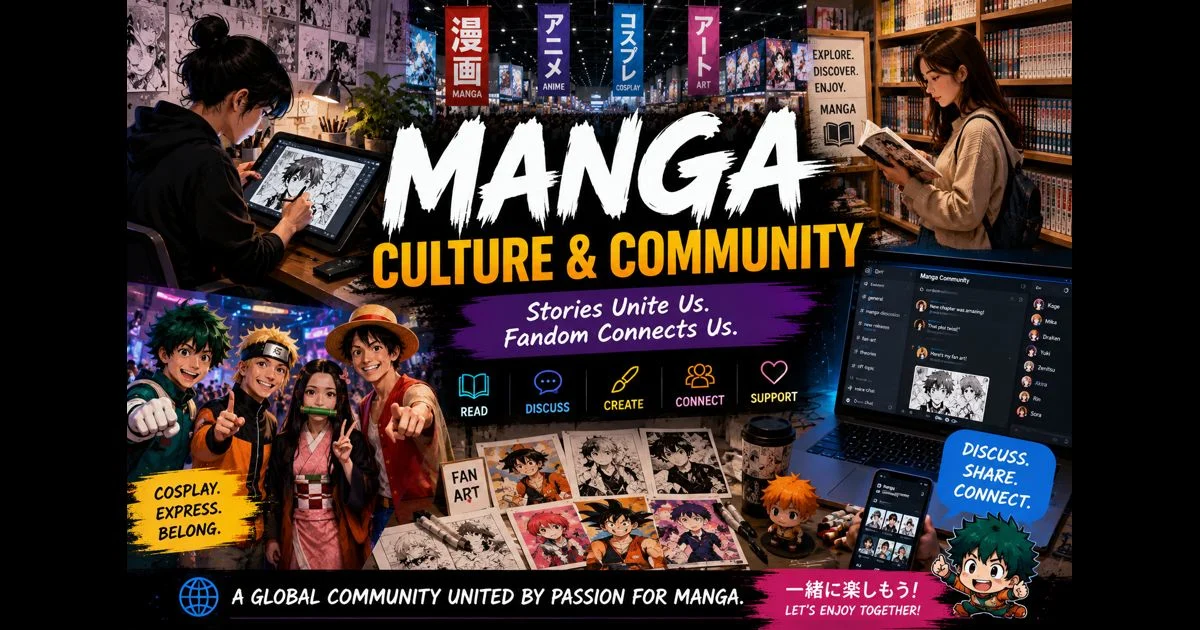
Manga culture and community have grown around something deeply personal: the experience of entering a story through images, dialogue, pacing, and emotion. A reader may begin alone with a single volume, but that experience often expands into conversations, recommendations, collections, creative work, local clubs, and friendships with people who value the same stories.
This is what makes manga culture larger than the medium itself. It includes the people who create and publish manga, the readers who interpret it, the librarians and booksellers who help others discover it, and the communities that keep stories alive long after their final chapters appear.
Manga fandom now crosses languages, age groups, and national borders. Yet its strength does not come from size alone. It comes from the many ways people participate while respecting the work, its creators, and one another.
Manga Culture Begins with the Reading Experience
Manga combines written storytelling with visual direction. Panel size, page composition, facial expressions, silence, backgrounds, and transitions all influence how a scene feels. Readers do not simply follow dialogue; they interpret movement, timing, mood, and details placed throughout the page.
The traditional right-to-left format also shapes the experience. For new readers, this direction may initially feel unfamiliar, but it soon becomes part of the rhythm of the work. Preserving the original page order allows illustrations and visual sequences to remain closer to the creator’s intended composition.
Manga also serves many different audiences. It can explore adventure, romance, sport, history, horror, comedy, family life, identity, work, food, science fiction, and quiet everyday experiences. Labels such as shōnen, shōjo, seinen, and josei can provide useful publishing context, but they should not be treated as rigid limits on who may enjoy a story.
This range gives readers space to develop individual tastes rather than follow a single definition of what manga should be.
From Japanese Publishing to International Readership
Manga is rooted in Japanese language, publishing practices, artistic traditions, and social context. Its international growth has introduced those traditions to readers who may approach them from very different cultural backgrounds.
Translation and localization make this exchange possible, but the process involves more than replacing Japanese words with English ones. Translators, editors, and letterers must consider tone, humor, honorifics, sound effects, wordplay, and references that may not have a direct equivalent in another language.
A thoughtful translation helps readers understand the story without erasing its cultural character. It also encourages curiosity. Readers may begin researching unfamiliar customs, historical periods, foods, places, or forms of expression after encountering them in a manga.
However, cultural interest should be accompanied by care. A single manga does not represent every aspect of Japan, just as one story cannot explain an entire society. Readers gain a more balanced understanding by recognizing the difference between fiction, genre convention, historical setting, and contemporary life.
How Community Changes the Way Manga Is Read
Reading may be private, but interpretation often becomes social. Two people can respond to the same scene in completely different ways based on their experiences, expectations, and understanding of the characters.
Community discussion gives readers an opportunity to compare those interpretations. Conversations may examine character decisions, artistic symbolism, pacing, translation choices, unresolved themes, or the meaning of an ending. This exchange can reveal details that an individual reader missed without suggesting that only one interpretation is acceptable.
Communities also help with discovery. A thoughtful recommendation based on mood, preferred themes, series length, or storytelling style is usually more useful than a generic list of popular titles. Longtime readers can guide newcomers without expecting them to understand every demographic label, publication format, or genre convention immediately.
The best communities make manga more approachable while allowing readers to form their own opinions.
Where Manga Communities Develop
Manga communities exist in both physical and digital spaces, and each environment offers a different kind of connection.
Libraries and independent bookshops may host reading groups, display themed collections, recommend age-appropriate titles, or introduce readers to works outside the most visible series. School and university clubs can create structured spaces for discussing art, language, publishing, and cultural influence.
Friends also form small informal communities by exchanging volumes, comparing collections, or recommending stories based on one another’s interests. These quieter relationships are just as meaningful as large public fandoms.
Digital spaces allow participation across distance. Forums, group chats, reading trackers, social platforms, and other online communities make it possible to discuss chapters, share recommendations, join read-alongs, and meet readers with highly specific interests.
Online discussion moves quickly, however. Clear spoiler rules, consistent moderation, and respect for personal boundaries are essential when thousands of readers may be following a series at different stages.
The People Behind Manga Culture
Although readers often associate a series with its credited creator, manga reaches the public through the work of many people.
Manga artists and writers develop the central vision. Depending on the project, they may be responsible for story planning, dialogue, character design, layouts, finished artwork, or a combination of these tasks. Assistants may contribute backgrounds, effects, research, and production support.
Editors help shape drafts, identify pacing problems, maintain continuity, and prepare a series for publication. Publishers manage printing, distribution, licensing, collected editions, and digital availability. Translation teams make international editions readable while working within the tone and space of the original pages.
Booksellers, librarians, reviewers, educators, and event organizers form another important layer. Their work helps readers discover titles, understand genres, access collections, and participate in discussions.
Fans contribute differently. They do not own the original work, but their recommendations, reviews, reading groups, and creative responses can extend its cultural life.
Fan Creativity and Shared Expression
Manga fandom is highly participatory. Readers often respond to stories by drawing, writing, performing, collecting, reviewing, or studying the techniques used by professional creators.
Fan art allows artists to explore character design, composition, colour, anatomy, and personal style. Some recreate a familiar character, while others imagine a different costume, setting, or visual interpretation. Constructive communities can give developing artists useful feedback without comparing every beginner to a professional.
Fan fiction approaches the same engagement through writing. It may explore a missing scene, alternate decision, background character, or possible future. Its value often lies in the writing process itself: developing dialogue, structure, emotion, and an understanding of established characters.
Cosplay combines design, sewing, prop-making, makeup, photography, and performance. It can be a personal creative project or a collaborative activity involving several people with different skills.
These forms of expression are healthiest when participants credit artists, avoid presenting fan work as official material, respect community rules, and understand that appreciation does not remove the original creator’s rights.
Conventions, Clubs, and In-Person Belonging
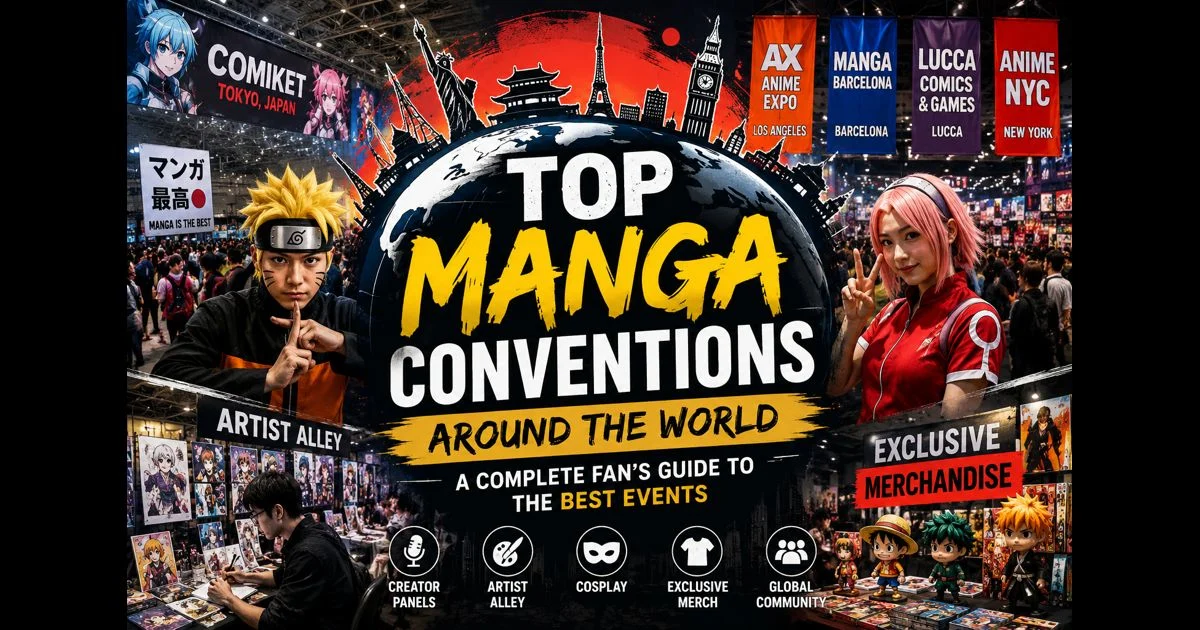
Physical gatherings give manga culture a different energy. At manga conventions, fans may attend panels, explore artist spaces, take part in cosplay, meet other collectors, or discover independent work.
Smaller events can be equally valuable. Library clubs, university societies, bookshop meetings, drawing groups, and local cultural events often make it easier to have meaningful conversations. They can also feel more accessible to people who find large conventions overwhelming or expensive.
Good event culture depends on consent and courtesy. Cosplayers should be asked before being photographed. Artists’ products should not be copied or handled carelessly. Queues, venue rules, age restrictions, and personal space should be respected.
A shared interest creates an opportunity for connection, but it does not remove the need for ordinary social boundaries.
Collecting as a Form of Cultural Participation
For some readers, collecting physical manga is an important part of fandom. A collection may reflect years of changing interests, memories connected to particular stories, or appreciation for cover design and print quality.
Collectors may focus on complete series, individual creators, special editions, older printings, art books, or titles with personal significance. There is no required collection size. Owning a few carefully chosen volumes can be as meaningful as maintaining an extensive library.
Digital reading provides a different form of access. It can reduce storage concerns and make certain titles easier to obtain, especially where physical releases are limited. Libraries can also help readers explore unfamiliar series before deciding whether to purchase them.
Collecting should remain a personal choice rather than a measure of how committed someone is to the community. Access, budget, location, and available space differ for every reader.
Responsible Participation in Manga Communities
A healthy manga community is not defined by agreement. Readers can prefer different genres, dislike popular series, interpret characters differently, or criticize aspects of a story. What matters is how those opinions are expressed.
Constructive participation includes:
- Marking spoilers clearly and respecting official release schedules
- Disagreeing with ideas without attacking the person expressing them
- Giving artists credit and not reposting their work without permission
- Avoiding assumptions about someone’s knowledge or commitment
- Allowing beginners to ask basic questions
- Respecting age ratings and content boundaries
- Separating verified information from rumours
- Supporting official releases when reasonably available
- Reporting harassment rather than encouraging public conflict
Gatekeeping weakens a community. The number of volumes someone owns, how early they discovered a series, or whether they prefer print or digital formats does not determine whether their interest is genuine.
Accessibility and Inclusion Matter
Manga communities include readers with different languages, abilities, identities, financial situations, and levels of experience. Small choices can make participation easier.
Image descriptions can help people using assistive technology understand artwork shared in discussions. Captions improve video content. Clear content notices allow readers to make informed choices, while spoiler labels protect people who are not following the newest releases.
Beginner-friendly explanations are also a form of accessibility. Unexplained terminology can make a community feel closed even when exclusion is not intentional.
Inclusion does not require every space to serve every possible interest. A specialist group may focus on a particular genre, creator, or collecting format. It should still communicate its purpose clearly and treat people respectfully.
Choosing the Right Community
The largest group is not always the best one. A useful community matches the way a reader prefers to participate.
Someone looking for detailed analysis may prefer a slower forum or book club. A reader who enjoys live reactions may feel more comfortable in a moderated group chat. Artists may benefit from a smaller creative community where feedback is specific and respectful.
Before joining, it helps to observe how existing members behave. Look at how moderators handle spoilers, harassment, artwork credit, disagreements, and sensitive content. Written rules matter, but everyday behaviour reveals whether those rules are consistently applied.
A worthwhile community should make it easier to enjoy manga, discover new perspectives, and contribute without unnecessary pressure.
The Future of Manga Fandom
The future of manga culture will be shaped by both access and behaviour. Digital publication can reduce the delay between regional releases, while improved localization can help more readers experience stories in their preferred languages. Libraries, bookshops, and educational institutions can continue introducing manga to audiences who may not discover it through social media.
Online and physical communities are also likely to remain connected. A discussion may begin around a digital chapter, continue through a local reading group, and lead to a creative project or convention meeting.
Technology will change how readers find and discuss manga, but the community’s long-term value will still depend on human qualities: curiosity, interpretation, creativity, fairness, and respect for the people behind the work.
Final Thoughts
Manga culture and community turn individual reading into a shared cultural experience. Creators and publishing teams produce the stories, while readers carry them into discussions, collections, clubs, artwork, cosplay, and friendships.
The most valuable fandom spaces do more than celebrate popular titles. They preserve room for different tastes, help newcomers learn, acknowledge cultural context, support creators, and encourage responsible creativity.
A person does not need a large collection, expert knowledge, or constant online activity to belong. Genuine curiosity and respectful participation are enough to become part of the wider manga community.
Frequently Asked Questions
What does manga culture include?
Manga culture includes reading, collecting, criticism, fan creativity, cosplay, conventions, clubs, online discussion, publishing practices, and the shared customs that develop around Japanese comics.
Why are manga communities important?
They help readers discover stories, exchange interpretations, learn about visual storytelling, develop creative skills, and connect with people who share similar interests.
Can someone join a manga community as a beginner?
Yes. Good communities welcome beginners and explain unfamiliar terms without judging their experience. New members should review the rules, observe spoiler practices, and participate at a comfortable pace.
How can fans support manga creators?
Readers can purchase or borrow official editions, use authorized reading services, recommend legitimate releases, respect copyright, and avoid distributing complete unauthorized chapters.
Is collecting required to be part of manga culture?
No. Collecting is one form of participation, but readers can also join discussions, borrow manga from libraries, attend clubs, create art, or simply enjoy stories privately.