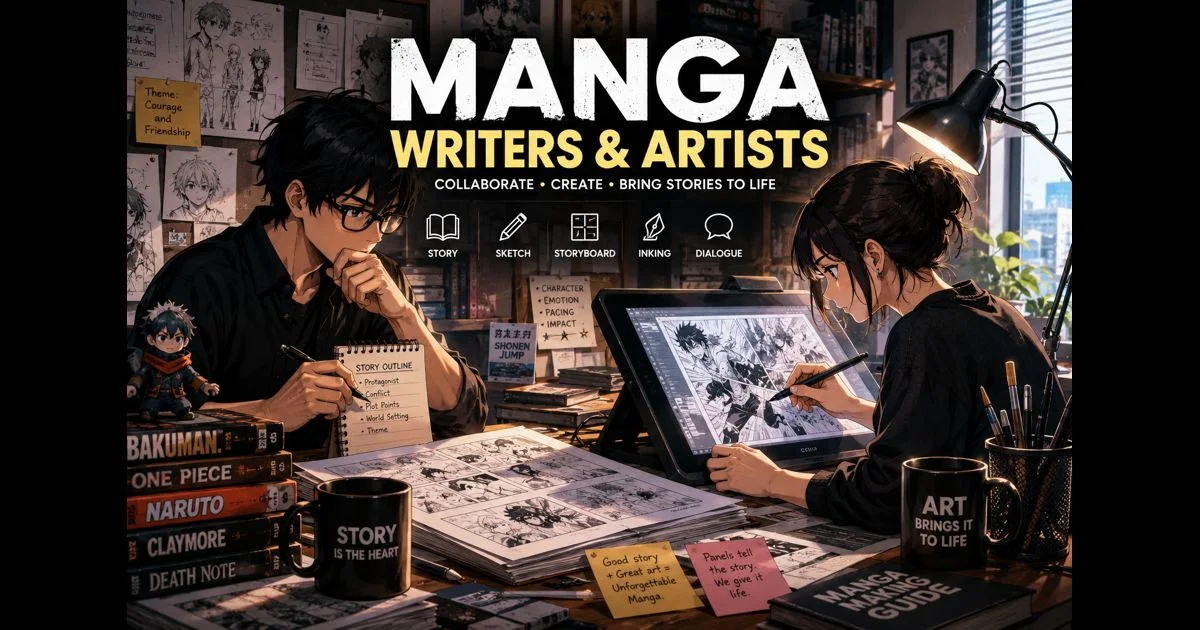
Behind every memorable manga series is more than artistic talent. Great stories are often the result of thoughtful collaboration, where writers and artists combine different strengths to create characters, worlds, and emotional moments that neither could achieve alone. While some manga creators handle every stage of production independently, many successful projects rely on partnerships built on trust, communication, and a shared creative vision.
Collaboration in manga is not simply about dividing responsibilities. It is an ongoing creative process where ideas evolve through discussion, experimentation, and constructive feedback. Writers shape narratives and character development, while artists translate those ideas into visual storytelling that gives each page rhythm, emotion, and personality. When both perspectives complement one another, the finished work feels natural and engaging rather than fragmented.
Whether you’re planning an original manga, launching a webcomic, or assembling a creative team for long-term publishing, understanding how effective collaboration works can help you avoid common challenges while building stronger creative partnerships.
This guide explores the principles behind successful manga collaboration, from defining creative roles and choosing compatible partners to establishing productive workflows that support both artistic quality and long-term consistency.
Why Collaboration Matters in Manga Creation
Creating manga requires a wide range of skills.
Story development, dialogue, pacing, character design, page composition, background illustration, lettering, editing, and production all demand time, creativity, and technical ability. While some creators successfully manage every aspect themselves, collaboration allows specialists to focus on their strongest skills.
Instead of one person carrying every responsibility, creative partners can divide the workload while improving the overall quality of the project.
Some of the biggest advantages include:
- More polished storytelling.
- Stronger visual consistency.
- Faster production schedules.
- Fresh creative perspectives.
- Better problem-solving during development.
- Shared motivation throughout long projects.
- Greater opportunities for professional growth.
Successful collaboration isn’t about reducing individual creativity—it allows each contributor to develop ideas more effectively through shared expertise.
Understanding the Different Creative Roles
Every manga project develops its own workflow, but most successful collaborations begin with clearly defined responsibilities.
Although responsibilities may overlap, understanding each contributor’s primary role helps reduce confusion throughout production.
The Writer
The writer provides the foundation of the story.
Responsibilities commonly include:
- Developing the original concept.
- Building the fictional world.
- Creating character backgrounds.
- Planning story arcs.
- Writing dialogue.
- Establishing pacing.
- Maintaining narrative consistency.
Strong writers focus not only on exciting plots but also on creating believable characters whose decisions naturally move the story forward.
Rather than controlling every visual detail, experienced writers leave room for artists to contribute their own creative interpretation.
The Artist
The artist transforms written ideas into visual experiences.
This involves much more than drawing attractive characters.
Artists shape how readers experience the story through:
- Character design.
- Facial expressions.
- Panel composition.
- Camera angles and perspective.
- Visual pacing.
- Background environments.
- Action choreography.
- Emotional atmosphere.
A well-designed page guides readers naturally from one panel to the next while strengthening the emotional impact of each scene.
In many collaborations, artists also suggest visual improvements that enhance storytelling without changing the original narrative.
Editors and Additional Contributors
Larger manga projects often involve more than two people.
Editors, assistants, letterers, graphic designers, translators, and production specialists all contribute to the final publication.
Editors may help:
- Strengthen story structure.
- Improve pacing.
- Identify continuity issues.
- Refine dialogue.
- Maintain publication schedules.
Meanwhile, assistants frequently support artists by preparing backgrounds, organizing references, applying screen tones, or handling repetitive production tasks.
Although readers usually focus on writers and artists, successful manga often reflects the combined efforts of an entire creative team.
Choosing the Right Creative Partner
Finding a collaborator should involve more than matching artistic ability.
Long-term compatibility depends on shared expectations, professional reliability, and mutual respect.
Before beginning a project, creators should discuss important questions such as:
- What type of manga do we want to create?
- Who is the intended audience?
- How much time can each person realistically commit?
- What are our long-term goals?
- How will creative decisions be made?
- How will disagreements be handled?
These conversations help establish realistic expectations before significant work begins.
Many collaborations struggle not because of limited talent, but because partners assume different priorities without discussing them openly.
Shared Vision Creates Stronger Stories
Even highly skilled creators may struggle if they imagine completely different projects.
A writer might envision a serious psychological drama, while the artist naturally prefers energetic comedy. Both ideas may be excellent independently, but combining them without careful planning can create an inconsistent reading experience.
Successful creative teams invest time developing a shared vision before production begins.
This often includes agreeing on:
- Overall tone.
- Genre.
- Target audience.
- Visual style.
- Story length.
- Publishing goals.
- Creative influences.
Establishing these foundations early allows future discussions to focus on improving the work rather than redefining the project’s identity.
Respect Builds Better Collaboration
Creative partnerships thrive when every contributor feels respected.
Writers should trust artists to solve visual storytelling challenges without dictating every panel.
Likewise, artists should recognize the narrative structure that supports emotional pacing instead of focusing only on individual illustrations.
Healthy collaboration encourages thoughtful discussion rather than competition.
Constructive feedback should improve the project rather than criticize the person behind the work.
When both partners remain open to new ideas, they often discover creative solutions that neither would have developed independently.
Over time, this mutual respect becomes one of the most valuable strengths of any successful manga partnership.
Building a Creative Workflow That Supports Both Partners
Strong collaboration depends on more than talent. Even the best ideas can lose momentum without an organized workflow that allows writers and artists to move forward together.
Every creative team develops its own process, but successful projects usually follow a clear sequence from concept to finished pages. Establishing this structure early reduces confusion, prevents duplicated work, and makes deadlines easier to manage.
A practical workflow often includes:
- Developing the core concept.
- Creating character profiles.
- Planning the overall story.
- Preparing chapter outlines.
- Reviewing rough layouts.
- Producing finished artwork.
- Editing and quality checking.
- Preparing files for publication.
Following a consistent process helps both collaborators focus on creativity without constantly revisiting earlier decisions.
Creating a Shared Story Foundation
Before the first page is illustrated, both collaborators should have a clear understanding of the world they are building.
Instead of relying on memory, many creative teams prepare a simple reference document that keeps important information organized.
Useful information may include:
- Main characters and their personalities.
- Supporting cast relationships.
- Important locations.
- Timeline of major events.
- World-building rules.
- Visual references.
- Recurring symbols or themes.
As the project grows, this document becomes an important reference that helps maintain consistency across every chapter.
It also reduces the risk of continuity errors that become more difficult to correct later.
Communicating Throughout Production
Good communication is one of the strongest predictors of successful creative partnerships.
Regular conversations help identify potential issues before they become major problems.
Rather than waiting until an entire chapter is finished, experienced teams often review progress in smaller stages.
Common review points include:
- Story outlines.
- Character sketches.
- Rough page layouts.
- Dialogue revisions.
- Completed illustrations.
- Final proofing.
This gradual review process allows both collaborators to make improvements without repeating large amounts of work.
Open communication also creates an environment where ideas can evolve naturally throughout production.
Giving Feedback That Improves the Project
Feedback should always focus on strengthening the work rather than proving one person’s ideas are better than another’s.
Helpful feedback is usually specific, respectful, and solution-oriented.
Instead of saying:
“This page doesn’t work.”
A more constructive approach would be:
“The emotional moment may feel stronger if the conversation has a little more space before the final panel.”
This type of feedback identifies a clear objective while leaving room for creative discussion.
Both writers and artists should approach revisions with curiosity rather than defensiveness.
The goal is not to protect every original idea but to produce the strongest possible story.
Solving Creative Differences
Disagreements are a natural part of collaboration.
Different perspectives often lead to better solutions, provided discussions remain focused on the project rather than personal preferences.
When creative opinions differ, teams often benefit from asking questions such as:
- Does this choice improve the story?
- Will readers understand this scene more clearly?
- Does it remain consistent with earlier chapters?
- Does it strengthen character development?
- Is there a compromise that combines both ideas?
By evaluating decisions according to the needs of the story, collaborators can resolve many disagreements without unnecessary conflict.
Respectful discussion often produces stronger results than immediate compromise.
Balancing Creative Freedom and Consistency
Every creator brings unique artistic strengths to a project.
At the same time, readers expect consistency throughout a series.
Finding the right balance between creative freedom and visual continuity is essential.
Successful teams usually establish shared standards for:
- Character appearance.
- Clothing and accessories.
- Background design.
- Panel style.
- Dialogue presentation.
- Sound effects.
- Typography.
- Visual tone.
These guidelines create consistency while still allowing artists to experiment with composition, expressions, and dramatic presentation.
Readers may not consciously notice this consistency, but it contributes significantly to a polished reading experience.
Managing Long-Term Projects
Producing manga over many months—or even years—requires sustainable working habits.
Creative burnout becomes much more likely when production depends entirely on last-minute effort.
Long-term collaborations often benefit from:
- Realistic production schedules.
- Manageable chapter goals.
- Regular planning sessions.
- Flexible deadlines when possible.
- Organized file management.
- Time for creative breaks.
- Periodic reviews of workflow efficiency.
Healthy production habits protect both creativity and motivation throughout the life of a project.
Maintaining a steady pace often produces better results than rushing to meet unrealistic expectations.
Learning From Every Chapter
One of the greatest advantages of collaboration is continuous improvement.
Each completed chapter provides valuable insight into what worked well and what could be refined before the next release.
Teams may evaluate questions such as:
- Which scenes had the strongest emotional impact?
- Did the pacing feel natural?
- Were important moments visually clear?
- Did readers understand the intended message?
- Which production steps caused unnecessary delays?
Reviewing completed work encourages gradual improvement without disrupting the project’s overall direction.
Small adjustments made consistently over time often lead to significant improvements in storytelling, artwork, and production quality.
Collaboration Builds Better Creators
Working alongside another creative professional develops skills that independent projects often cannot.
Writers gain a deeper appreciation for visual storytelling, while artists strengthen their understanding of narrative structure and character development.
This exchange of knowledge benefits both contributors.
Over time, collaborators frequently become more adaptable, better communicators, and more confident problem-solvers because they regularly evaluate ideas from multiple perspectives.
Rather than limiting creative independence, collaboration expands each creator’s understanding of the craft and often leads to stronger individual work in future projects.
Protecting Creative Work from the Beginning
Creative enthusiasm often encourages collaborators to begin drawing immediately, but protecting the project should be considered just as important as developing the story itself.
Clear agreements help prevent misunderstandings while allowing both creators to concentrate on producing their best work.
These agreements do not need to be unnecessarily complicated, but they should explain how the partnership will operate from the beginning.
Important topics to discuss include:
- Ownership of the story.
- Ownership of character designs.
- Revenue distribution if the project earns income.
- Credit for every contributor.
- Permission for future adaptations.
- Decision-making responsibilities.
- Conditions for ending the collaboration.
Having these conversations early creates transparency and strengthens trust throughout the project.
Defining Intellectual Property Clearly
Every manga project contains valuable creative assets.
Characters, fictional worlds, original artwork, logos, titles, and story concepts may all become part of the project’s intellectual property.
When collaborators understand who owns each element, future opportunities become much easier to manage.
For example, if the series later expands into printed books, merchandise, or licensing opportunities, previously agreed ownership terms help avoid unnecessary disputes.
Protecting intellectual property is not about limiting creativity—it ensures that every contributor receives appropriate recognition for their work.
Preparing for Publication
Completing a manga chapter is only one stage of the creative journey.
Before publication, successful teams carefully review the project to ensure it meets professional quality standards.
Typical review areas include:
- Story consistency.
- Character continuity.
- Artwork quality.
- Dialogue clarity.
- Lettering readability.
- Grammar and spelling.
- Image resolution.
- File organization.
This final review allows collaborators to correct small issues before readers encounter them.
Attention to detail at this stage reflects professionalism and respect for the audience.
Building a Professional Reputation
Creative ability attracts attention, but professionalism encourages long-term opportunities.
Publishers, editors, and fellow creators often remember collaborators who consistently communicate well, meet commitments, and respect deadlines.
Professional habits include:
- Responding respectfully.
- Delivering agreed work on time whenever possible.
- Accepting constructive feedback.
- Communicating schedule changes early.
- Keeping organized project files.
- Crediting contributors appropriately.
A positive reputation often leads to future collaborations, recommendations, and publishing opportunities.
Many successful creative partnerships continue for years because both contributors value reliability as highly as artistic skill.
Common Challenges Creative Teams Face
Every collaboration experiences obstacles.
Recognizing common challenges makes them easier to manage before they affect the project.
Some of the most frequent difficulties include:
- Different creative expectations.
- Uneven workloads.
- Missed deadlines.
- Changing project goals.
- Communication gaps.
- Creative fatigue.
- Difficulty accepting revisions.
- Loss of motivation during long projects.
These challenges are normal.
The important factor is how collaborators respond when difficulties arise.
Teams that address issues openly usually recover more effectively than those that ignore problems until frustration builds.
Practical Ways to Maintain Momentum
Long-term manga projects require consistent motivation.
Instead of focusing only on the finished series, many successful teams celebrate smaller milestones throughout production.
Examples include:
- Completing character designs.
- Finishing the first chapter.
- Publishing a pilot release.
- Receiving constructive reader feedback.
- Reaching personal production goals.
- Improving artistic techniques.
Recognizing progress keeps enthusiasm high while reminding collaborators how much the project continues to develop.
Small achievements often provide the motivation needed to complete much larger creative goals.
Learning Through Collaboration
Every partnership offers opportunities to improve.
Writers often discover new approaches to visual storytelling after observing how artists interpret scenes.
Likewise, artists frequently develop stronger narrative instincts by discussing pacing, dialogue, and character development with writers.
Over time, both contributors gain valuable experience in:
- Creative problem-solving.
- Story planning.
- Visual communication.
- Project organization.
- Constructive discussion.
- Professional teamwork.
These lessons remain valuable even when creators later pursue independent projects.
Creating Partnerships That Last
The strongest creative partnerships are built on more than technical ability.
They are supported by mutual respect, shared goals, honest communication, and a willingness to continue learning together.
Successful collaborators understand that every project will involve revisions, unexpected challenges, and creative differences.
Instead of viewing these moments as setbacks, they treat them as opportunities to improve both the story and the working relationship.
This mindset allows creative teams to remain productive while continually refining their skills.
Whether producing a short one-shot or developing a long-running manga series, strong partnerships often become one of the greatest advantages a creator can have.
The Future of Creative Collaboration in Manga
The way manga is created continues to evolve as technology, publishing models, and reader expectations change. While the principles of good storytelling remain the same, creative teams now have more opportunities than ever to work together regardless of location.
Remote collaboration has become increasingly common, allowing writers, artists, editors, and designers to contribute to the same project from different cities or even different countries. This flexibility has opened the door to diverse creative partnerships that would have been difficult to establish in the past.
At the same time, the fundamentals of successful collaboration remain unchanged. Clear communication, mutual respect, careful planning, and a shared creative vision continue to be far more important than the tools used to complete the work.
Technology Is Improving Creative Workflows
Digital tools have made collaboration faster and more organized without replacing the creative decisions made by people.
Modern production environments help teams:
- Share artwork securely.
- Review pages more efficiently.
- Organize project files.
- Track revisions.
- Maintain visual consistency.
- Coordinate production schedules.
These improvements reduce administrative work and allow creators to spend more time developing stories and refining artwork.
Technology works best when it supports creativity rather than directing it.
New Publishing Opportunities for Creative Teams
Today’s creators are no longer limited to a single publishing path.
Many manga projects now begin as independent releases before expanding into larger opportunities through growing readership and positive community support.
Creative partnerships may explore different publication approaches, including:
- Self-published print editions.
- Digital manga platforms.
- Independent webcomic releases.
- Crowdfunded projects.
- Community-supported publishing.
- Collaboration with established publishers.
Each option offers different advantages depending on the team’s goals, available resources, and long-term plans.
Rather than focusing only on immediate success, many creators choose publishing methods that allow them to improve gradually while building a loyal audience.
Growing Opportunities for International Collaboration
Interest in manga continues to expand around the world, creating new opportunities for creators from different cultural backgrounds to work together.
Writers, artists, translators, editors, and designers increasingly contribute to projects that reach readers across multiple countries.
International collaboration encourages:
- Broader creative perspectives.
- Diverse storytelling influences.
- Improved cultural understanding.
- Wider readership.
- Shared professional knowledge.
When collaborators respect each other’s experiences while maintaining a unified creative direction, the final work often becomes richer and more engaging for global audiences.
Qualities That Define Successful Creative Partnerships
Although every collaboration is unique, long-term success usually depends on several consistent principles.
Strong creative teams often demonstrate:
- Mutual trust.
- Respect for each contributor’s expertise.
- Honest communication.
- Professional reliability.
- Willingness to accept constructive feedback.
- Shared commitment to improving the project.
- Flexibility when unexpected challenges arise.
These qualities help partnerships remain productive even during demanding production schedules.
Creative ability may begin a collaboration, but professionalism and trust are what allow it to continue.
Final Thoughts
Great manga is rarely the result of talent alone. Behind every compelling chapter lies thoughtful planning, open communication, and a creative partnership built on mutual respect.
Writers contribute memorable characters, meaningful dialogue, and carefully structured narratives, while artists transform those ideas into expressive visual experiences that capture emotion, movement, and atmosphere. When both perspectives work together effectively, readers experience stories that feel complete, immersive, and emotionally satisfying.
Successful collaboration is not about eliminating creative differences. Instead, it involves using those different perspectives to strengthen every stage of the project—from the earliest concept sketches to the final published pages.
Whether you’re creating your first one-shot or developing an ambitious long-running series, investing time in strong communication, clear expectations, and professional working habits will help build partnerships capable of producing lasting creative work.
As the manga industry continues to grow internationally, collaboration will remain one of its greatest strengths, bringing together talented creators whose combined ideas inspire readers across cultures and generations.
Frequently Asked Questions
Why do many manga creators work in teams?
Creating manga involves writing, illustration, page composition, editing, lettering, and production. Working as a team allows contributors to focus on their strongest skills while improving efficiency and maintaining high creative standards.
What makes a successful writer and artist partnership?
Successful partnerships are built on shared creative goals, honest communication, mutual respect, reliable work habits, and a willingness to refine ideas together throughout the project.
Can creators collaborate remotely on manga projects?
Yes. Many creative teams successfully collaborate from different locations by sharing scripts, artwork, feedback, and production updates through digital communication and file-sharing tools.
How should collaborators handle creative disagreements?
Disagreements should focus on improving the story rather than defending personal opinions. Open discussion, careful review of the project’s goals, and respect for each contributor’s expertise usually lead to stronger creative decisions.
Is a written agreement important for manga collaborations?
Yes. A clear agreement helps define ownership, responsibilities, credit, revenue arrangements, and decision-making processes, reducing misunderstandings as the project develops.
Can independent creators publish successful manga together?
Absolutely. Many independent teams begin with original projects released through digital platforms or self-publishing before expanding their audience and exploring larger publishing opportunities. Consistent quality, professionalism, and collaboration often play an important role in that growth.