Shojo manga has remained one of the most influential categories in Japanese comics for decades, captivating readers through heartfelt storytelling, memorable characters, and expressive artwork. While romance is often associated with the genre, shojo offers far more than love stories. It explores friendship, family, ambition, identity, personal growth, fantasy adventures, historical drama, mystery, and everyday life with an emotional depth that few other genres consistently achieve.
Originally created for teenage girls in Japan, shojo manga has grown into a global phenomenon with readers spanning every age group and background. Many acclaimed series have inspired successful anime adaptations, live-action films, stage productions, novels, and merchandise, making shojo one of the driving forces behind modern manga culture. Its influence extends beyond entertainment into fashion, art, publishing, and digital storytelling, proving that emotionally driven narratives resonate across cultures.
Today’s shojo landscape is more diverse than ever. Traditional school romances continue to thrive alongside fantasy kingdoms, workplace relationships, supernatural adventures, historical epics, and contemporary slice-of-life stories. Digital publishing has also introduced new voices and broadened international access, allowing readers around the world to discover both classic masterpieces and exciting new releases through legal platforms.
Whether you’re completely new to manga or looking to explore beyond action-focused series, understanding shojo provides valuable insight into one of the industry’s richest storytelling traditions. This guide explains how the genre developed, what defines its unique style, the themes that continue attracting millions of readers, and where shojo manga is heading in the years ahead.
Understanding Shojo Manga
What Is Shojo Manga?
The Japanese word shojo literally means “young girl.” Within the publishing industry, it refers to manga primarily serialized in magazines aimed at teenage girls rather than describing a specific storytelling formula. Because of this, shojo encompasses a surprisingly wide variety of genres, tones, and artistic styles.
Unlike action-oriented categories that often prioritize battles or competition, shojo generally emphasizes character relationships and emotional development. The central conflict usually revolves around how people grow through friendships, family bonds, romance, dreams, and difficult life choices. This emotional focus gives many shojo stories a timeless quality that continues attracting readers long after their original publication.
Although romance remains a defining element for many titles, it is not a requirement. Numerous shojo series focus on fantasy adventures, mystery investigations, political intrigue, music, sports, supernatural events, historical settings, or professional careers while maintaining the emotional storytelling style associated with the demographic.
Today, the distinction between manga demographics has become increasingly flexible. Many adults regularly read shojo, while readers who usually enjoy shonen or seinen manga frequently appreciate well-written shojo series for their compelling characters and sophisticated emotional storytelling. The demographic label reflects the original target publication rather than limiting who can enjoy the work.
The Evolution of Shojo Manga
Shojo manga has undergone remarkable transformation since the middle of the twentieth century. Early works often featured simple adventures, educational stories, and lighthearted romances designed for younger audiences. As Japanese society evolved, creators began experimenting with more mature themes and increasingly complex narratives.
A major turning point arrived during the 1970s through the work of influential female creators often referred to collectively as the Year 24 Group. Artists such as Moto Hagio, Keiko Takemiya, and several of their contemporaries fundamentally changed the direction of shojo manga by introducing psychological storytelling, literary influences, sophisticated symbolism, and cinematic visual techniques.
Their innovations demonstrated that manga could explore identity, grief, family conflict, social expectations, and human psychology with remarkable depth. These creative breakthroughs influenced countless artists across every manga demographic and helped establish shojo as one of Japan’s most respected storytelling traditions.
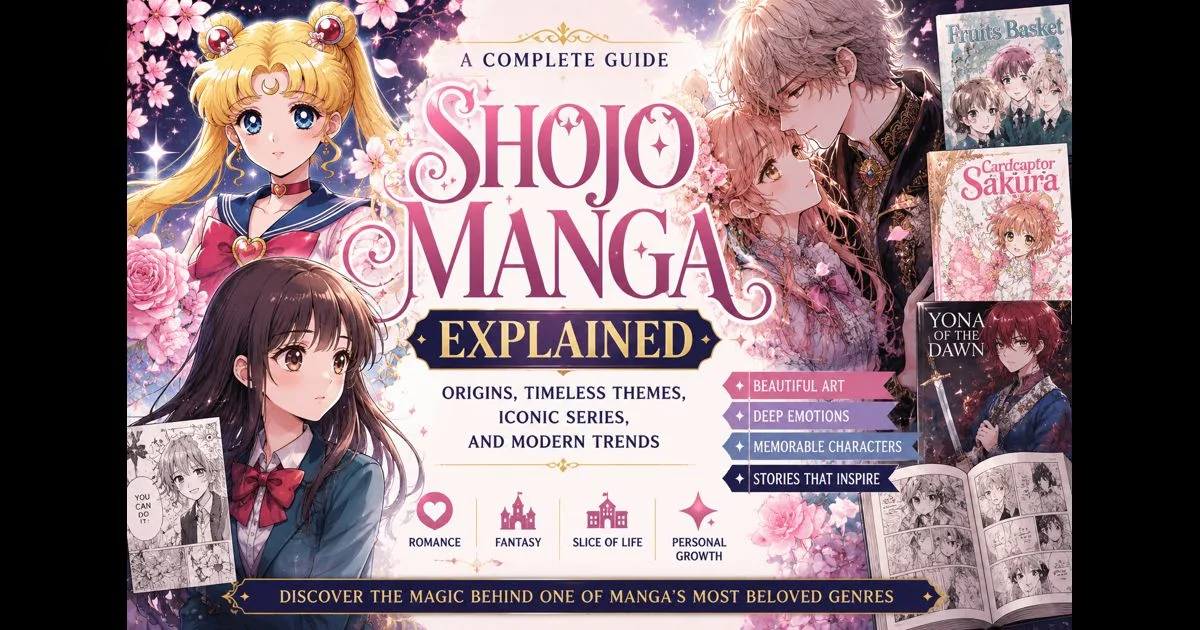
During the 1990s, internationally recognized titles such as Sailor Moon and Cardcaptor Sakura introduced millions of readers outside Japan to shojo storytelling. Their success helped expand manga publishing worldwide and encouraged publishers to license many additional series for global audiences.
The following decades brought even greater diversity. Historical dramas, workplace romances, fantasy epics, supernatural mysteries, and emotionally grounded slice-of-life stories expanded the genre’s reach. Digital publishing, official translation services, and simultaneous international releases have since made shojo manga more accessible than at any previous point in its history.
Rather than remaining tied to one formula, modern shojo continues evolving while preserving the emotional authenticity that has always defined its greatest works.
The Core Themes That Define Shojo Manga
Romance That Prioritizes Character Growth
Romance remains one of shojo manga’s most recognizable elements, but the strongest stories treat love as part of a broader journey of personal development rather than the ultimate destination.
Relationships often evolve gradually through shared experiences, misunderstandings, vulnerability, and mutual trust. Characters learn to communicate honestly, confront insecurities, overcome personal fears, and discover what healthy relationships truly require. Instead of relying solely on dramatic confessions or idealized fairy-tale endings, many modern shojo series focus on emotional maturity and realistic interpersonal growth.
This approach allows readers to connect with characters on a deeper level because the emotional conflicts frequently mirror real-life experiences. Moments of uncertainty, jealousy, forgiveness, and self-discovery often carry greater narrative weight than grand romantic gestures.
Series such as Kimi ni Todoke, Ao Haru Ride, A Sign of Affection, and Love Me, Love Me Not illustrate how romance can serve as a catalyst for confidence, empathy, and personal transformation rather than functioning as the story’s only objective.
Friendship, Family, and Personal Identity
While romance often receives the most attention, lasting friendships and family relationships are equally important throughout shojo manga.
Many beloved series emphasize that emotional support extends far beyond romantic partners. Friends encourage one another during difficult moments, classmates become chosen family, mentors inspire personal growth, and even rivals contribute to character development by challenging long-held beliefs.
Family relationships frequently introduce additional emotional complexity. Some stories explore generational expectations, sibling dynamics, parental pressure, adoption, grief, or healing from difficult childhood experiences. These themes provide emotional depth while helping readers understand why characters make certain decisions.
Identity also remains a central focus. Shojo protagonists often question where they belong, what they truly value, and who they wish to become as they transition into adulthood. Rather than portraying perfection, these stories celebrate gradual self-improvement, resilience, and emotional honesty.
This combination of romance, friendship, family, and self-discovery gives shojo manga a multidimensional quality that continues appealing to readers across generations.
Popular Shojo Manga That Shaped the Genre
Classic Series That Continue Inspiring Readers
Every major manga demographic has landmark titles that influence future creators, and shojo is no exception. Many classic series remain essential reading because they established storytelling techniques, artistic conventions, and character archetypes that continue shaping modern manga.
The Rose of Versailles demonstrated that shojo could successfully tackle political history, social inequality, and personal sacrifice through emotionally rich storytelling. Its dramatic artwork and ambitious narrative expanded perceptions of what shojo manga could achieve.
Sailor Moon redefined the magical girl genre by blending action, friendship, romance, and heroism into a globally recognized phenomenon. Beyond its commercial success, it inspired countless female-led adventure stories across manga, anime, and international animation.
Cardcaptor Sakura became celebrated for its imaginative fantasy, beautifully detailed artwork, and heartfelt coming-of-age story. Its gentle pacing and memorable character relationships continue attracting new readers decades after its debut.
Another landmark series, Fruits Basket, elevated emotional storytelling through its exploration of trauma, acceptance, forgiveness, and family healing. Rather than relying solely on romance, it examined how compassion and understanding can gradually transform damaged relationships.
Even titles like Banana Fish, despite their crime-focused narratives, demonstrated the remarkable flexibility of shojo publishing by proving emotionally driven storytelling could thrive across completely different genres.
These classics remain influential because they prioritize authentic human experiences over temporary trends, allowing each generation of readers to discover something meaningful within their pages.
Modern Shojo Series Expanding the Genre
Contemporary shojo creators continue honoring the genre’s emotional foundations while introducing fresh perspectives and increasingly diverse storytelling.
A Sign of Affection has received widespread praise for portraying communication, disability awareness, and emotional intimacy with remarkable sensitivity. Rather than treating these subjects as obstacles, the series presents them as natural parts of everyday relationships.
Yona of the Dawn combines political intrigue, fantasy adventure, and character development through the story of a sheltered princess forced to become a capable leader. Its emphasis on responsibility and resilience demonstrates how shojo can successfully balance romance with large-scale worldbuilding.
Snow White with the Red Hair replaces traditional fairy-tale expectations with a heroine whose intelligence, determination, and professional ambitions define her journey as much as her romantic relationships.
Series like A Condition Called Love, Love Me, Love Me Not, and In the Clear Moonlit Dusk examine modern relationships with greater emotional nuance, exploring healthy communication, emotional boundaries, personal independence, and changing social expectations.
Meanwhile, fantasy romance has experienced renewed popularity through stories inspired by otome games and reincarnation narratives. These works often combine political strategy, court intrigue, and self-improvement with traditional shojo storytelling, creating fresh experiences while preserving the genre’s emotional core.
The continued success of these diverse series illustrates that shojo remains one of manga’s most adaptable and innovative categories.
The Distinctive Art Style of Shojo Manga
A Visual Language Built Around Emotion
One of shojo manga’s defining characteristics is its expressive visual storytelling. Rather than focusing primarily on physical movement or dramatic action sequences, artists often use composition, symbolism, and atmosphere to communicate emotional experiences that dialogue alone cannot fully express.
Large, highly expressive eyes remain one of the genre’s most recognizable artistic features. Subtle changes in facial expression frequently reveal hesitation, excitement, fear, affection, or vulnerability without requiring lengthy explanations.
Delicate linework, flowing hair, decorative backgrounds, and elegant clothing designs create an aesthetic that emphasizes beauty without distracting from character interactions. Background elements frequently become symbolic rather than literal, transforming flowers, stars, feathers, rain, or light into visual representations of a character’s emotional state.
Negative space also plays an important role. Instead of filling every panel with detailed scenery, many artists intentionally leave open space that allows readers to focus entirely on a character’s emotions or a significant moment within the story.
These artistic choices create an immersive reading experience where visual presentation becomes inseparable from emotional storytelling.
Fashion and Character Design
Fashion has always been an important storytelling tool within shojo manga.
School uniforms, casual clothing, formal dresses, accessories, hairstyles, and seasonal wardrobes often reflect each character’s personality and emotional development. Rather than functioning as simple costume changes, outfits frequently symbolize growth, confidence, or changing relationships.
Designers carefully distinguish characters through posture, body language, and personal style. Reserved characters may wear simple, understated clothing, while outgoing personalities often display more colorful or fashionable appearances. As stories progress, these visual changes subtly reinforce character development.
Many fashion trends have even moved beyond manga into real-world culture, influencing cosplay, youth fashion, beauty products, and seasonal clothing collections inspired by beloved series.
How Visual Storytelling Enhances Emotional Impact
Shojo artists frequently control pacing through thoughtful panel composition.
A meaningful glance, hesitant smile, or brief moment of silence may occupy an entire page, encouraging readers to fully experience a character’s emotions rather than rushing through plot events.
Close-up panels often emphasize small gestures such as trembling hands, gentle smiles, or uncertain expressions that communicate complex feelings more effectively than extended dialogue. Decorative backgrounds shift with emotional intensity, becoming brighter during joyful moments or darker during periods of sadness and uncertainty.
Speech bubbles, typography, and panel borders also contribute to emotional rhythm. Soft dialogue may appear in spacious layouts, while moments of tension use tighter compositions to increase dramatic impact.
This sophisticated integration of artwork and storytelling explains why shojo manga often feels deeply personal despite relatively simple plot structures.
Shojo Manga’s Lasting Influence on Global Popular Culture
Shaping Fashion, Beauty, and Creative Expression
The influence of shojo manga extends far beyond printed pages.
Character designs have inspired generations of fashion trends, particularly through elegant hairstyles, school-inspired outfits, floral accessories, pastel color palettes, and romantic styling. Cosplayers frequently recreate iconic shojo costumes, while fashion brands occasionally collaborate with popular manga franchises to release limited collections.
Beauty trends have also borrowed heavily from shojo aesthetics. Soft makeup, glossy lips, natural blush, expressive eyes, and delicate accessories reflect the visual identity established by many beloved heroines.
Stationery, jewelry, phone accessories, home décor, and lifestyle products continue incorporating floral patterns, celestial themes, ribbons, and elegant typography associated with classic shojo artwork.
Beyond visual design, shojo storytelling has influenced romance narratives throughout anime, television dramas, novels, webcomics, and young adult fiction. Slow-burn relationships, emotional introspection, found-family dynamics, and character-focused storytelling have become familiar narrative techniques across entertainment industries worldwide.
Its impact demonstrates that emotionally driven stories possess universal appeal regardless of language or culture.
Global Growth and Cross-Media Success
Shojo manga has achieved remarkable international success through translations, anime adaptations, streaming platforms, and digital publishing. For many readers outside Japan, anime serves as the first introduction to a series before they continue the story through the original manga.
Popular adaptations such as Fruits Basket, Ouran High School Host Club, Kimi ni Todoke, Yona of the Dawn, and Cardcaptor Sakura have introduced millions of viewers to the genre. These adaptations often inspire renewed interest in printed editions, collector’s volumes, official merchandise, and special anniversary releases.
International publishers have also played an important role in expanding accessibility. Libraries, bookstores, and online retailers now carry significantly larger selections of shojo titles than they did a decade ago, making it easier for new readers to explore both classic and contemporary works.
Digital platforms have further accelerated global growth by offering official translations shortly after Japanese publication. Faster releases reduce waiting times while encouraging readers to support licensed editions that directly benefit creators and publishers.
Beyond publishing, shojo stories continue expanding into live-action television dramas, animated films, stage musicals, art exhibitions, and collectible merchandise. This cross-media approach allows fans to experience favorite stories through multiple creative formats while introducing entirely new audiences to the genre.
How Shojo Manga Influences Modern Storytelling
Shojo’s storytelling techniques now influence creators far beyond traditional manga publishing.
Many contemporary romance novels adopt its emphasis on gradual emotional development rather than immediate relationships. Character-focused pacing, internal monologues, alternating viewpoints, and carefully developed emotional tension have become common narrative techniques in young adult fiction around the world.
Webcomics and digital comics have also embraced many visual conventions first popularized by shojo artists. Expressive reactions, decorative backgrounds, symbolic imagery, and emotionally driven panel composition frequently appear across romance-focused comics published in numerous countries.
The publishing industry has likewise adopted several shojo-inspired ideas. Illustrated chapter pages, character profile sections, bonus comics, and special collector’s editions help readers connect more deeply with fictional worlds while extending the overall reading experience.
Universities and cultural institutions increasingly recognize shojo manga as an important artistic medium worthy of academic study. Courses in literature, visual storytelling, media studies, gender studies, and Japanese culture regularly examine influential shojo works to explore themes such as identity, emotional expression, representation, and narrative design.
This growing academic recognition reflects the genre’s lasting cultural significance rather than viewing it solely as entertainment.
Regional Communities and Worldwide Fandom
Shojo manga has developed passionate fan communities across every major region of the world.
In Europe, particularly France, manga enjoys widespread popularity through dedicated bookstores, annual conventions, and extensive translation programs. Shojo titles consistently appear alongside shonen and seinen works, reflecting their established place within the broader manga market.
Across North America, manga sections continue expanding in bookstores and public libraries. Reading clubs, anime conventions, cosplay competitions, and online communities regularly feature discussions centered on classic and newly released shojo series.
Southeast Asia has become another thriving market where local artists frequently incorporate shojo-inspired visual storytelling into original comics and webtoon productions. Readers enthusiastically support both Japanese releases and locally produced romance comics influenced by the genre’s artistic traditions.
Latin America has also embraced shojo through vibrant fan communities, cultural festivals, and growing availability of translated editions. Social media platforms further strengthen these communities by allowing readers worldwide to exchange recommendations, artwork, cosplay photography, and thoughtful discussions regardless of geographic location.
These international communities demonstrate that the emotional themes explored within shojo manga transcend cultural boundaries and continue connecting readers through shared experiences.
Emerging Trends in Shojo Manga
More Diverse Characters and Stories
Modern shojo manga reflects a broader range of experiences than ever before.
Recent works increasingly feature protagonists from diverse family backgrounds, different cultures, and varying personal circumstances. Stories now explore disability, mental health, career ambitions, intercultural relationships, social expectations, and personal identity with greater sensitivity and realism.
Heroines have also become increasingly multidimensional. Rather than waiting for change to happen around them, many actively pursue education, careers, leadership positions, artistic goals, entrepreneurship, or political reform within fantasy settings.
Fantasy series now combine romance with diplomacy, military strategy, historical inspiration, and complex moral questions. Workplace romances examine adult responsibilities instead of limiting stories to school environments, while slice-of-life narratives explore university life, professional careers, marriage, and family relationships.
Representation continues expanding as creators introduce characters with increasingly varied perspectives and life experiences while maintaining the emotional sincerity that defines the genre.
Digital Publishing Is Transforming Shojo
Technology has fundamentally changed how readers discover and enjoy shojo manga.
Official digital platforms allow readers to legally access thousands of chapters from smartphones, tablets, and computers. Simultaneous international releases help global audiences follow ongoing series without long publication delays.
Digital-first publishing has also created opportunities for emerging creators who may not begin through traditional magazine serialization. Independent artists can build audiences online before securing commercial publishing opportunities, encouraging greater creative diversity throughout the industry.
Social media has become another important part of the shojo ecosystem. Readers actively share artwork, character analyses, cosplay, book recommendations, and discussion videos that introduce popular series to entirely new audiences.
Publishers likewise benefit from stronger communication with readers, gaining valuable insight into audience interests while promoting upcoming releases through online campaigns, livestreams, interviews, and exclusive bonus content.
As digital distribution continues expanding worldwide, shojo manga will likely become even more accessible to international readers than ever before.
The Future of Shojo Manga
Shojo manga continues evolving while preserving the emotional storytelling that has defined the genre for generations. Rather than abandoning its foundations, modern creators are expanding what shojo can represent by combining traditional relationship-focused narratives with fresh settings, mature themes, and increasingly ambitious worldbuilding.
Fantasy adventures are becoming more politically complex, historical dramas continue gaining popularity, and contemporary stories increasingly explore university life, professional careers, entrepreneurship, and personal independence. This evolution allows readers to follow characters through different stages of life instead of ending their journeys after high school.
Genre blending is expected to become even more common. Romance now naturally coexists with mystery, science fiction, supernatural fiction, historical fiction, psychological drama, and political fantasy. This flexibility enables creators to reach wider audiences without sacrificing the emotional authenticity that defines excellent shojo storytelling.
International demand is also encouraging faster translations, simultaneous global releases, and greater investment in licensed digital services. As manga readership continues expanding worldwide, publishers increasingly recognize that shojo deserves the same level of visibility and marketing as other major manga demographics.
Advances in digital publishing, improved accessibility features, and stronger international partnerships will likely make discovering new shojo series easier than ever. At the same time, beautifully produced collector’s editions, anniversary releases, and deluxe print volumes continue attracting readers who value physical collections.
Challenges and Opportunities
Despite its lasting popularity, shojo manga faces several important challenges.
Competition for readers has intensified as entertainment options continue multiplying. Streaming platforms, web novels, webtoons, mobile games, and short-form social media content all compete for the same audience’s attention. Publishers must therefore find new ways to help exceptional series stand out in an increasingly crowded marketplace.
Piracy remains another significant concern. Unauthorized distribution affects creators, translators, editors, and publishers whose work depends on sustainable sales. Supporting official releases helps ensure talented artists can continue producing the stories readers enjoy.
Platform fragmentation can also create confusion. Different publishers often license different titles, requiring readers to subscribe to multiple services to access their favorite series legally. Greater collaboration and broader digital availability would benefit both readers and the industry.
Yet the opportunities remain substantial.
Growing international readership continues opening new markets for publishers and creators alike. Independent bookstores, libraries, schools, and literary festivals increasingly recognize manga as an important form of contemporary storytelling, introducing shojo to audiences that may never have explored it otherwise.
New creators also benefit from digital publishing, online competitions, and global fan communities that make building an audience more achievable than in previous decades. Fresh artistic voices, diverse cultural perspectives, and innovative storytelling approaches continue strengthening the genre’s future.
Most importantly, shojo manga possesses something that never goes out of style—genuine emotional connection. Readers consistently return to stories that make them laugh, cry, reflect, and care deeply about memorable characters.
Why Shojo Manga Continues to Matter
Shojo manga has never been defined solely by romance. At its heart, it celebrates empathy, resilience, friendship, hope, and the courage to grow through life’s uncertainties. Whether the setting is a modern classroom, a royal palace, a magical kingdom, or a quiet neighborhood, its greatest stories remind readers that meaningful relationships are built through trust, understanding, and personal growth.
The genre’s remarkable adaptability explains why it has remained relevant for generations. While artistic styles, publishing methods, and audience expectations continue evolving, the emotional honesty that defines shojo has remained remarkably consistent.
For newcomers, classics such as Fruits Basket, Cardcaptor Sakura, Kimi ni Todoke, and Ouran High School Host Club provide an excellent introduction to the genre’s storytelling strengths. Readers looking for contemporary works can explore series like A Sign of Affection, Yona of the Dawn, Snow White with the Red Hair, or In the Clear Moonlit Dusk to experience how modern creators continue expanding shojo’s possibilities.
Supporting official manga releases, purchasing licensed volumes, using legal reading platforms, and recommending favorite series to others all help ensure the continued growth of one of manga’s most influential storytelling traditions.
Shojo manga continues proving that powerful stories do not require constant action or spectacle. Sometimes the most unforgettable moments come from a quiet conversation, a difficult decision, or the simple courage to open one’s heart.
Frequently Asked Questions
What is shojo manga?
Shojo manga is a category of Japanese manga originally created for teenage girls. Although romance is a common element, the genre also includes fantasy, historical fiction, mystery, slice-of-life, supernatural adventures, and coming-of-age stories that focus on emotional growth and character development.
Is shojo manga only for girls?
No. While shojo manga is marketed primarily toward young female readers, people of all ages and backgrounds enjoy the genre. Its universal themes of friendship, identity, family, ambition, and personal growth appeal to a much broader audience than its original demographic.
What are the best shojo manga series for beginners?
Popular starting points include Fruits Basket, Cardcaptor Sakura, Kimi ni Todoke, Ouran High School Host Club, Yona of the Dawn, A Sign of Affection, and Snow White with the Red Hair. These series showcase different aspects of shojo storytelling while remaining accessible to new readers.
How is shojo manga different from shonen manga?
Shojo manga generally emphasizes emotional development, relationships, and character-driven storytelling, while shonen manga more often focuses on action, competition, adventure, and physical conflict. However, both demographics include a wide variety of genres, and many series blend elements from multiple storytelling styles.
Why is shojo manga still popular today?
Shojo manga continues attracting readers because of its relatable characters, emotionally engaging narratives, beautiful artwork, and ability to evolve alongside changing audiences. Modern creators continue introducing fresh perspectives while preserving the heartfelt storytelling that has made the genre popular for decades.