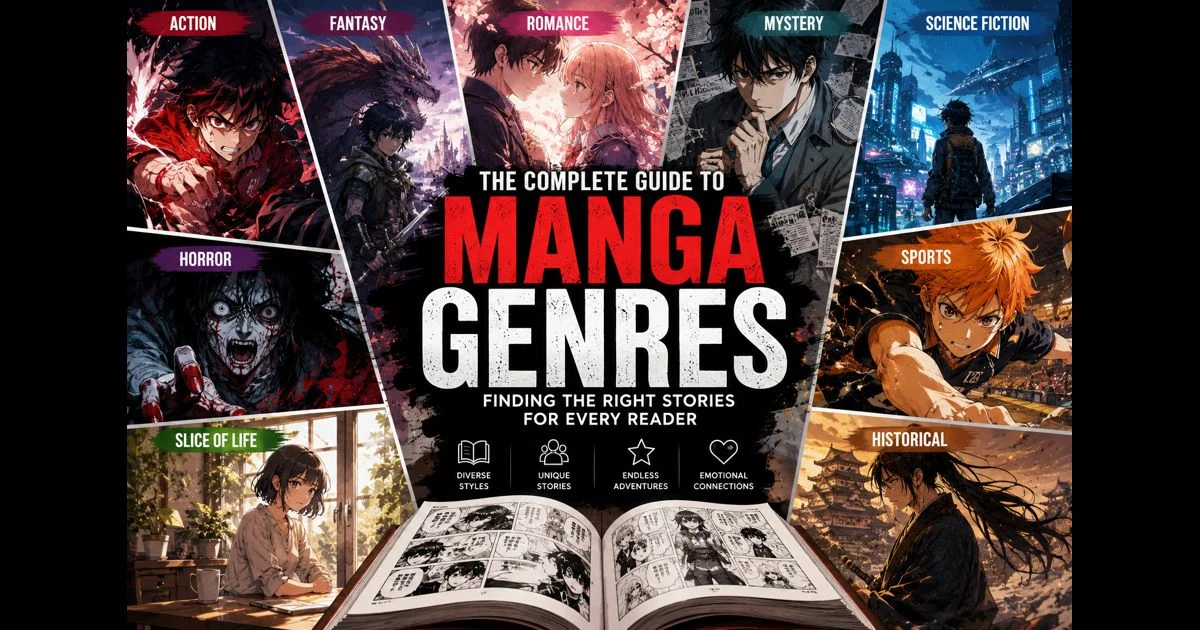
Choosing your next manga can feel overwhelming, especially when thousands of series span dozens of genres, storytelling styles, and target audiences. While many readers begin with well-known titles, understanding how manga genres work makes it much easier to discover stories that genuinely match your interests rather than simply following popular recommendations.
One of manga’s greatest strengths is its diversity. Action, romance, mystery, science fiction, historical drama, comedy, horror, sports, and everyday life all exist within the medium, often blending together in unexpected ways. A single series might combine fantasy with political intrigue, romance with supernatural mystery, or slice-of-life storytelling with science fiction, creating experiences that feel fresh and distinctive.
Unlike many entertainment categories that rely on rigid classifications, manga allows creators considerable freedom to experiment. This flexibility has helped Japanese comics appeal to readers of different ages, cultures, and backgrounds while encouraging creators to explore subjects that range from epic adventures to deeply personal human experiences.
Whether you’re reading manga for the first time or expanding beyond familiar series, understanding its major genres provides a valuable roadmap for exploring one of the world’s richest storytelling traditions.
What Makes Manga Genres Different?
Many new readers assume manga genres function exactly like film or novel genres.
In reality, manga uses two complementary systems to organize stories.
The first focuses on who the original publication is intended to reach, while the second describes the type of story being told.
Understanding this distinction helps readers navigate recommendations more confidently.
For example, two manga may both feature fantasy worlds, yet one might emphasize fast-paced adventure while the other explores mature political themes. Likewise, two romance series may target completely different audiences despite sharing similar settings.
Rather than limiting creativity, this classification system allows publishers to organize content while giving creators the freedom to combine multiple storytelling approaches within a single series.
Demographic Categories vs Story Genres
One of the most common misconceptions is that demographic labels automatically define the story itself.
They do not.
A demographic category identifies the primary audience a magazine or publisher originally expected to reach, whereas genres describe the themes, settings, and narrative style.
This means readers should choose manga based on what interests them instead of assuming a demographic determines who can enjoy a series.
For instance, readers of any age may enjoy action, romance, mystery, comedy, or historical drama regardless of the publication category.
Keeping this difference in mind makes exploring new recommendations much easier.
How Manga Blends Multiple Genres
Unlike many traditional classifications, manga rarely limits itself to a single genre.
A fantasy adventure may include emotional family drama.
A sports series may become a coming-of-age story.
A mystery can evolve into psychological suspense.
A romance may gradually introduce supernatural elements.
These combinations create richer narratives because they allow characters to experience different kinds of challenges throughout the story.
Some of the most memorable manga succeed precisely because they refuse to remain within a single category.
Readers often begin a series expecting one type of experience and gradually discover something much deeper as the story develops.
Why Genre Matters for Every Reader
Understanding genres isn’t about placing stories into strict categories.
Instead, it helps readers discover titles that match their current interests and reading preferences.
Someone looking for lighthearted entertainment may prefer very different stories than someone searching for philosophical themes or emotional character studies.
Knowing the strengths of different genres helps readers:
- Discover new series more efficiently.
- Explore unfamiliar storytelling styles.
- Find recommendations that match personal interests.
- Expand reading habits beyond popular titles.
- Appreciate different artistic approaches.
- Understand why certain stories appeal to different audiences.
Rather than reading only what’s currently trending, readers gain the confidence to explore a much wider range of creative works.
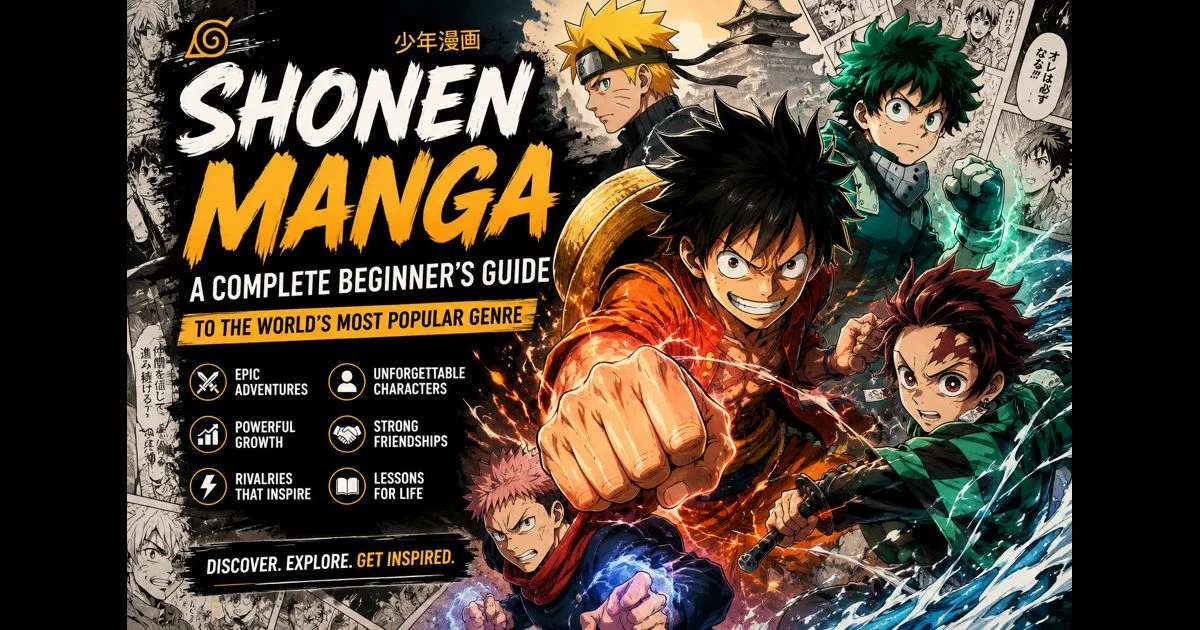
Shonen: Adventure, Growth, and Determination
Among the most widely recognized categories, Shonen has introduced countless readers to manga.
Originally developed for younger male audiences, shonen has grown into one of the most internationally popular forms of storytelling thanks to its universal themes.
Typical characteristics include:
- Ambitious protagonists.
- Personal growth.
- Strong friendships.
- Teamwork.
- Rivalries.
- Adventure.
- Competitive spirit.
- Hope during difficult situations.
Many shonen stories focus less on immediate success and more on gradual improvement.
Characters often begin with limited experience before overcoming challenges through perseverance, learning, and cooperation.
This emphasis on continuous growth allows readers to become emotionally invested as characters mature throughout long-running stories.
Why Shonen Appeals Beyond Its Original Audience
Although publishers originally targeted younger readers, shonen now attracts audiences of every age.
Its popularity comes from timeless storytelling rather than age-specific themes.
Many readers appreciate:
- Memorable character development.
- Large fictional worlds.
- Well-structured adventures.
- Inspiring personal journeys.
- Humorous moments balanced with emotional depth.
- Long-term story arcs that reward continued reading.
Because these themes are widely relatable, shonen remains one of the easiest starting points for readers exploring manga for the first time.
Its influence has also shaped animation, gaming, and international entertainment, making it one of the most recognizable styles of Japanese storytelling worldwide.
Shojo: Stories Built Around Emotion and Personal Growth
While action often drives many adventure-focused series, Shojo places greater emphasis on relationships, emotions, and character development.
Originally created for younger female audiences, shojo explores experiences such as friendship, family, identity, confidence, and personal growth with remarkable sensitivity.
Rather than relying primarily on dramatic battles, many shojo stories build emotional tension through meaningful conversations, changing relationships, and important life decisions.
Common themes include:
- First love.
- Self-discovery.
- Friendship.
- Family relationships.
- School life.
- Personal confidence.
- Dreams and ambitions.
The expressive artwork often complements these emotional stories, using detailed facial expressions, elegant compositions, and symbolic imagery to communicate feelings that dialogue alone cannot fully express.
As a result, shojo has influenced romance storytelling far beyond manga, inspiring creators working in comics, animation, and illustrated fiction around the world.
Seinen: Complex Stories for Mature Readers
As manga audiences expanded, publishers began producing stories aimed at readers seeking greater psychological depth and more nuanced themes.
This led to the growth of Seinen, a category that often explores adulthood through layered storytelling rather than straightforward conflicts.
Instead of focusing primarily on winning battles or becoming stronger, many seinen series examine difficult choices, personal responsibility, ambition, ethics, and the consequences of human decisions.
Readers commonly encounter stories involving:
- Crime and investigation.
- Political conflict.
- Historical events.
- Psychological suspense.
- Workplace challenges.
- Science fiction.
- Philosophy.
- Survival.
Although some titles contain mature content, maturity in seinen is defined more by its themes than by violence or dark subject matter.
Many of its most respected works encourage readers to reflect on characters’ motivations rather than simply asking who succeeds in the end.
Josei: Everyday Life Through an Adult Perspective
Josei focuses on experiences that often become more relevant as readers grow older.
Relationships, careers, family responsibilities, personal independence, and emotional growth frequently form the foundation of these stories.
Rather than relying on dramatic misunderstandings or idealized romance, josei often presents situations with greater realism.
Characters face decisions involving:
- Professional goals.
- Long-term relationships.
- Marriage.
- Personal identity.
- Financial responsibility.
- Friendships that evolve over time.
- Balancing work and personal life.
This grounded approach allows readers to connect with characters whose experiences resemble real-life challenges while still delivering engaging and emotionally rewarding narratives.
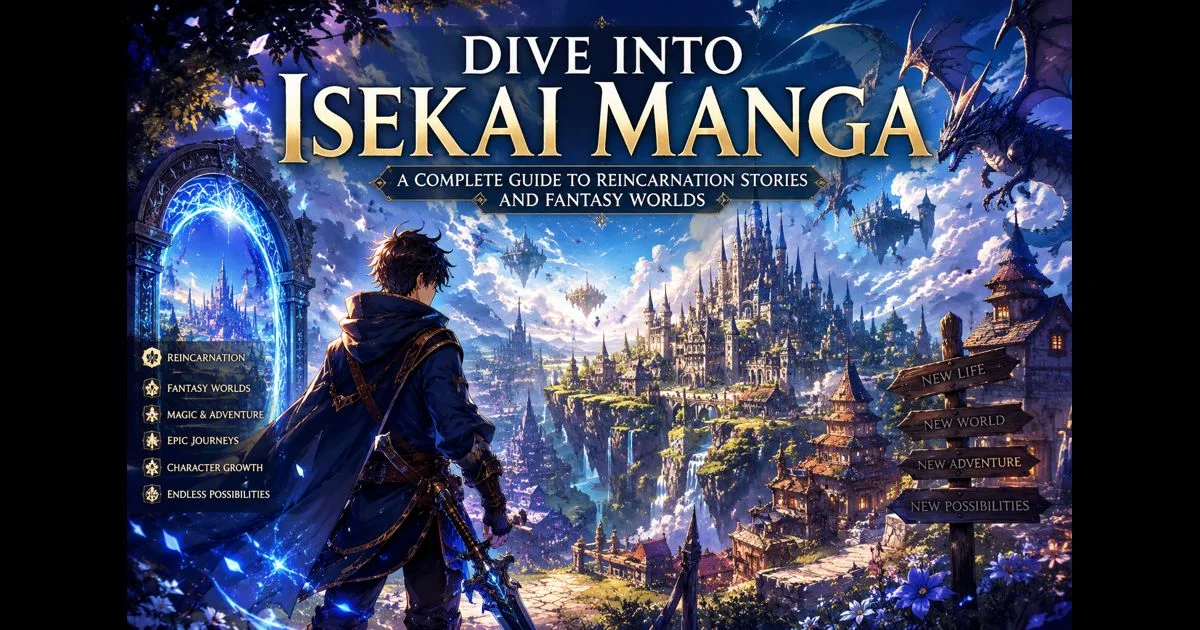
Isekai: Exploring New Worlds Through New Beginnings
Few genres have expanded as rapidly in recent years as Isekai.
The central idea is simple: a character leaves their familiar world and begins life in another one.
However, the stories built around this concept vary enormously.
Some focus on grand adventures filled with magic and mythical creatures, while others explore survival, diplomacy, commerce, or rebuilding societies from the ground up.
Many isekai stories include:
- Fantasy kingdoms.
- Unique magic systems.
- Adventure and exploration.
- Character growth.
- Team-based journeys.
- Strategic problem-solving.
- New identities.
- Unexpected responsibilities.
The appeal of isekai often lies in watching ordinary individuals adapt to extraordinary circumstances while discovering strengths they never realized they possessed.
Because creators continue experimenting with this concept, modern isekai offers far more variety than many readers initially expect.
Fantasy: Limitless Creative Possibilities
Fantasy has always been one of manga’s most imaginative genres.
Freed from the limitations of reality, creators design worlds filled with original civilizations, magical systems, legendary creatures, and ancient histories that enrich every chapter.
Strong fantasy manga typically succeeds because its fictional world feels believable despite its impossible elements.
Many fantasy settings feature:
- Detailed world-building.
- Original mythologies.
- Powerful magical systems.
- Ancient civilizations.
- Kingdoms and empires.
- Legendary creatures.
- Heroic quests.
- Moral conflicts.
Rather than existing only as visual spectacle, these imaginary worlds often reflect real human experiences through themes such as courage, sacrifice, friendship, and hope.
Science Fiction: Imagining Tomorrow
Science fiction allows manga creators to explore possibilities beyond today’s reality.
Whether examining advanced technology, space exploration, artificial intelligence, environmental change, or futuristic societies, science fiction encourages readers to think critically about humanity’s future.
Common themes include:
- Space travel.
- Robotics.
- Artificial intelligence.
- Cybersecurity.
- Biotechnology.
- Time travel.
- Environmental challenges.
- Human identity.
Many science fiction stories ask questions rather than offering simple answers.
How should technology shape society?
What defines human consciousness?
Can scientific progress solve every problem?
These ideas give science fiction lasting relevance while inspiring readers to imagine different futures.
Horror: Fear Beyond Monsters
Horror manga creates tension through atmosphere as much as frightening imagery.
Instead of relying solely on sudden surprises, many stories gradually build unease by exploring uncertainty, isolation, mystery, or psychological conflict.
Different styles of horror include:
- Supernatural legends.
- Psychological suspense.
- Haunted locations.
- Folk traditions.
- Survival situations.
- Mystery-driven investigations.
- Cosmic horror.
- Urban legends.
The strongest horror stories often focus on emotional reactions rather than graphic scenes, allowing suspense to grow naturally through careful pacing and visual storytelling.
Sports Manga: Competition with Heart
Sports manga has become one of the medium’s most inspiring genres.
Although athletic competition drives the action, the real focus is often personal development, teamwork, discipline, and perseverance.
Readers frequently follow athletes as they overcome setbacks, improve their skills, and build meaningful relationships with teammates and rivals.
Popular themes include:
- Determination.
- Leadership.
- Healthy competition.
- Personal discipline.
- Team chemistry.
- Confidence.
- Continuous improvement.
Even readers with little interest in sports often enjoy these stories because the emotional journey extends well beyond the game itself.
Mystery and Psychological Thrillers
Readers who enjoy solving puzzles or exploring complex characters often gravitate toward mystery and psychological manga.
These stories reward careful attention by gradually revealing clues, hidden motivations, and unexpected twists.
Rather than relying entirely on action, they build suspense through investigation, dialogue, and character psychology.
Many psychological stories explore:
- Moral ambiguity.
- Hidden identities.
- Criminal investigations.
- Memory and perception.
- Justice.
- Trust.
- Manipulation.
- Ethical dilemmas.
This combination of intellectual challenge and emotional tension has made mystery one of manga’s most respected storytelling styles.
Romance Across Every Genre
Romance deserves special attention because it rarely exists in isolation.
Instead of functioning as a separate category, romantic relationships frequently strengthen many other genres.
Adventure, fantasy, historical fiction, slice-of-life, science fiction, and even mystery often include meaningful romantic storylines that deepen character development.
Successful romance focuses less on dramatic declarations and more on believable emotional growth.
Readers become invested because relationships develop naturally through shared experiences, mutual respect, and gradual trust.
This flexibility explains why romance remains one of manga’s most enduring storytelling elements, appearing across countless series regardless of their primary genre.
Slice of Life: Finding Meaning in Everyday Moments
Not every memorable manga revolves around world-changing battles or supernatural adventures.
Slice of Life celebrates ordinary experiences by showing how everyday moments can become meaningful through thoughtful storytelling and relatable characters.
These stories often focus on:
- Family life.
- School experiences.
- Friendships.
- Community relationships.
- Personal hobbies.
- Seasonal traditions.
- Small achievements.
- Everyday challenges.
Instead of relying on dramatic plot twists, Slice of Life creates emotional depth through gradual character development and realistic interactions.
Readers often appreciate the calm pacing because it allows them to connect naturally with the characters and their daily routines.
Comedy: Humor That Brings Characters to Life
Comedy plays an important role throughout manga, whether it serves as the main focus or balances more serious themes.
Rather than depending on a single style of humor, comedy manga explores many different approaches, including:
- Situational comedy.
- Character misunderstandings.
- Clever dialogue.
- Visual jokes.
- Satire.
- Parody.
- Everyday awkward moments.
Well-written comedy also strengthens emotional storytelling.
Moments of laughter often make later dramatic scenes more impactful because readers have already developed stronger connections with the characters.
This balance between humor and emotion is one reason comedy appears across so many different manga genres.
Historical Manga: Bringing the Past to Life
Historical manga combines careful research with compelling storytelling to recreate different periods, cultures, and civilizations.
Some stories remain closely connected to documented history, while others blend historical settings with fictional characters and original adventures.
Common historical settings include:
- Ancient civilizations.
- Medieval societies.
- Feudal Japan.
- Industrial eras.
- Early modern history.
- Historical warfare.
- Cultural traditions.
- Political change.
These stories allow readers to explore history through engaging narratives while introducing architecture, clothing, customs, and social structures that enrich the reading experience.
Although entertainment remains the primary goal, many historical manga encourage curiosity about real historical events and cultures.
Adventure: Exploring the Unknown
Adventure has always been one of manga’s defining strengths.
Whether characters travel across continents, explore mysterious ruins, or sail toward distant islands, adventure stories emphasize discovery and personal growth.
Key elements often include:
- Exploration.
- Hidden civilizations.
- Treasure hunts.
- Dangerous journeys.
- Unexpected allies.
- Powerful rivals.
- Survival challenges.
- Expanding fictional worlds.
The destination rarely matters as much as the experiences gained along the journey.
Readers often become attached not only to the main characters but also to the evolving world surrounding them.
Mystery: Stories That Reward Careful Reading
Mystery manga encourages readers to become active participants in the story.
Instead of simply watching events unfold, readers gather clues, question motivations, and develop theories alongside the characters.
Well-crafted mysteries often include:
- Hidden secrets.
- Unexpected revelations.
- Detailed investigations.
- Psychological tension.
- Unreliable perspectives.
- Gradually unfolding evidence.
Because answers emerge slowly, mystery manga rewards careful observation and often inspires readers to revisit earlier chapters after discovering the truth.
Hybrid Genres Expand Creative Possibilities
Modern manga rarely limits itself to one genre.
Many of today’s most respected series combine multiple storytelling styles to create richer, more unpredictable experiences.
Examples include:
- Fantasy combined with mystery.
- Romance mixed with historical drama.
- Science fiction blended with psychological suspense.
- Adventure supported by comedy.
- Slice of Life with supernatural elements.
- Sports combined with coming-of-age storytelling.
These combinations allow creators to explore complex themes while keeping stories fresh throughout long-running series.
Readers who normally enjoy one genre frequently discover new favorites through these unexpected combinations.
How to Choose the Right Manga Genre
Finding the right manga becomes much easier when readers focus on the type of experience they want rather than simply following popularity rankings.
Ask yourself questions such as:
- Do I enjoy fast-paced action?
- Am I looking for emotional storytelling?
- Would I rather solve mysteries?
- Do I enjoy realistic everyday experiences?
- Am I interested in historical settings?
- Do I prefer imaginative fantasy worlds?
- Am I looking for thoughtful psychological stories?
Answering these questions naturally guides readers toward genres that match their personal interests.
Exploring different styles also helps readers discover stories they may never have considered otherwise.
Don’t Limit Yourself to One Genre
Many experienced manga readers begin with a single favorite genre before gradually expanding into completely different styles.
Someone introduced through adventure manga may later discover an appreciation for historical fiction, while readers who enjoy romance often become interested in psychological drama or Slice of Life.
Keeping an open mind allows readers to experience the full creative range that manga offers.
Trying unfamiliar genres can lead to surprising discoveries and a much deeper appreciation for the medium as a whole.
Building a Balanced Reading List
Rather than reading only one type of story, many readers enjoy maintaining a varied collection.
A balanced reading list might include:
- An action series for excitement.
- A Slice of Life story for relaxation.
- A mystery for intellectual challenge.
- A historical title for cultural exploration.
- A fantasy adventure for imaginative world-building.
- A romance focused on character relationships.
This variety keeps reading fresh while showcasing the incredible diversity that has helped manga become one of the world’s most respected storytelling mediums.
By exploring different genres over time, readers develop a broader understanding of artistic styles, narrative techniques, and creative perspectives that continue to shape manga around the globe.
How Manga Genres Continue to Evolve
Manga has never remained static. As readers’ interests change and new creators introduce fresh ideas, genres continue to develop in exciting ways.
Modern series often move beyond traditional formulas by combining familiar themes with original storytelling approaches. Rather than following predictable patterns, many creators experiment with pacing, character development, visual presentation, and world-building to produce stories that appeal to diverse audiences.
This willingness to innovate keeps manga relevant while encouraging readers to explore genres they may not have considered before.
Digital Publishing Is Expanding Genre Diversity
Digital publishing has transformed how manga reaches readers.
Creators are no longer limited by the physical space available in printed magazines, allowing publishers and independent artists to experiment with a wider range of ideas.
This shift has encouraged growth in areas such as:
- Short-form series.
- Independent web manga.
- Cross-genre storytelling.
- International collaborations.
- Experimental visual styles.
- Character-driven niche stories.
Readers now have access to an enormous variety of titles that might never have reached traditional publication in previous decades.
Digital platforms have also made it easier for new voices to introduce original ideas, enriching the overall diversity of manga.
Why Readers Often Enjoy Multiple Genres
One of the most enjoyable aspects of manga is that reading preferences naturally evolve over time.
A reader who begins with action-focused adventures may later become interested in historical fiction, psychological mysteries, or Slice of Life stories.
This progression happens because every genre offers something different.
Some provide excitement.
Others encourage reflection.
Some focus on emotional relationships, while others explore imagination, history, or philosophical questions.
Rather than replacing one another, these genres complement each other by offering different reading experiences.
Exploring multiple genres helps readers appreciate the full creative range that manga has to offer.
Tips for Discovering New Manga
Finding new series becomes easier when readers remain curious and willing to explore beyond familiar recommendations.
Helpful approaches include:
- Reading sample chapters before committing to a full series.
- Exploring works by creators whose storytelling style you already enjoy.
- Trying genres outside your usual preferences.
- Following trusted recommendations from established manga communities.
- Visiting libraries and official digital platforms to discover new releases.
- Revisiting classic titles alongside contemporary works.
Building a varied reading list often leads to a richer appreciation of manga’s artistic diversity.
Finding the Genre That Fits You
There is no single “best” manga genre.
The right choice depends entirely on the type of story you enjoy at a particular moment.
If you prefer exciting adventures and determined heroes, action-oriented series may be the perfect starting point.
Readers looking for emotional character development may enjoy romance or Slice of Life.
Those interested in complex themes might appreciate psychological stories, historical fiction, or mature dramas.
Many readers eventually discover that their favorite manga combines several genres at once, creating experiences that are both entertaining and emotionally rewarding.
The more genres you explore, the easier it becomes to recognize the storytelling styles that resonate most with your interests.
Final Thoughts
Manga genres provide a helpful guide for exploring one of the world’s most diverse forms of storytelling, but they should never be viewed as rigid boundaries.
Adventure, romance, fantasy, mystery, Slice of Life, science fiction, historical fiction, horror, and countless other genres each offer unique perspectives while often blending together in creative and unexpected ways.
Understanding the difference between demographic categories and story genres allows readers to make more informed choices and discover titles that genuinely match their interests rather than relying solely on popularity.
Whether you’re beginning your manga journey or expanding an already extensive collection, exploring different genres opens the door to new artistic styles, memorable characters, and stories that can entertain, challenge, and inspire.
The best way to discover your favorite genre is simple: stay curious, read widely, and allow each new series to introduce you to a different side of manga’s remarkable creative world.
Frequently Asked Questions
What are the main manga genres?
Some of the most popular manga genres include action, adventure, fantasy, romance, science fiction, Slice of Life, mystery, horror, sports, comedy, and historical fiction. Many series combine multiple genres to create unique reading experiences.
What is the difference between shonen and seinen?
Shonen is generally published for younger readers and often emphasizes adventure, teamwork, and personal growth. Seinen is typically aimed at mature audiences and explores more complex themes, deeper character development, and nuanced storytelling.
Can one manga belong to multiple genres?
Yes. Many manga blend several genres, such as fantasy with romance, mystery with psychological drama, or action with comedy. These combinations allow creators to build richer and more engaging stories.
Which manga genre is best for beginners?
There is no universal starting point. Readers interested in action may enjoy adventure-focused series, while those who prefer emotional storytelling might begin with romance or Slice of Life. Exploring different genres is the best way to discover personal preferences.
Are demographic categories the same as genres?
No. Demographic categories identify the intended readership of a publication, while genres describe the style and themes of the story. A manga can belong to one demographic while incorporating several different genres.
Why are manga genres so diverse?
Manga has developed over many decades and covers a wide range of subjects, audiences, and storytelling styles. This creative flexibility allows artists and writers to explore everything from everyday life and historical events to imaginative fantasy worlds and complex psychological narratives, making manga accessible to readers with many different interests.