ReadMyMangaCom is a name that can point readers toward more than one manga-related website. That distinction matters. Similar domain names do not automatically share the same owner, catalogue, safety practices, or licensing arrangements. Before creating an account, downloading an app, or entering personal details, confirm the exact web address in the browser and review what the site actually offers.
Manga is a broad publishing medium, not one genre. It includes action, romance, horror, comedy, historical drama, sports, slice-of-life stories, and work made for readers of many ages. Its global readership has grown alongside digital publishing, simultaneous releases, library collections, and fan communities. A good reading experience should make it easy to discover stories while protecting readers and respecting the people who create them.
Why the exact website address matters
Names built around “read,” “manga,” and “online” are naturally easy to confuse. A result, social post, bookmark, or shared link may lead to a different domain from the one a reader intended to visit. Treat a familiar-looking name as a starting point, not proof of identity.
Check the full address before interacting with a page. Look for clear publisher, developer, or company information; accessible terms and privacy notices; and contact details that match the service. If a website presents itself as official, that claim should be supported by the rights holder or publisher. A title being available somewhere on the internet does not by itself show that the host has permission to distribute it.
Readers should also distinguish manga from adjacent formats. Manga generally refers to Japanese comics, while manhwa is associated with Korea and manhua with China. Digital services may carry one format or several, but availability, translation language, chapter timing, and regional access can differ substantially.
What a dependable manga reading experience looks like
The best services make their limits understandable. They identify the publisher or licence partner, explain whether a chapter is free, subscription-only, coin-based, or permanently available, and state which regions they serve. They do not make readers hunt for basic information behind misleading buttons or vague promises.
Useful reader features include:
- Clear title pages with creator, publisher, rating, and chapter information
- Filters that separate genres, demographics, completed series, and ongoing releases
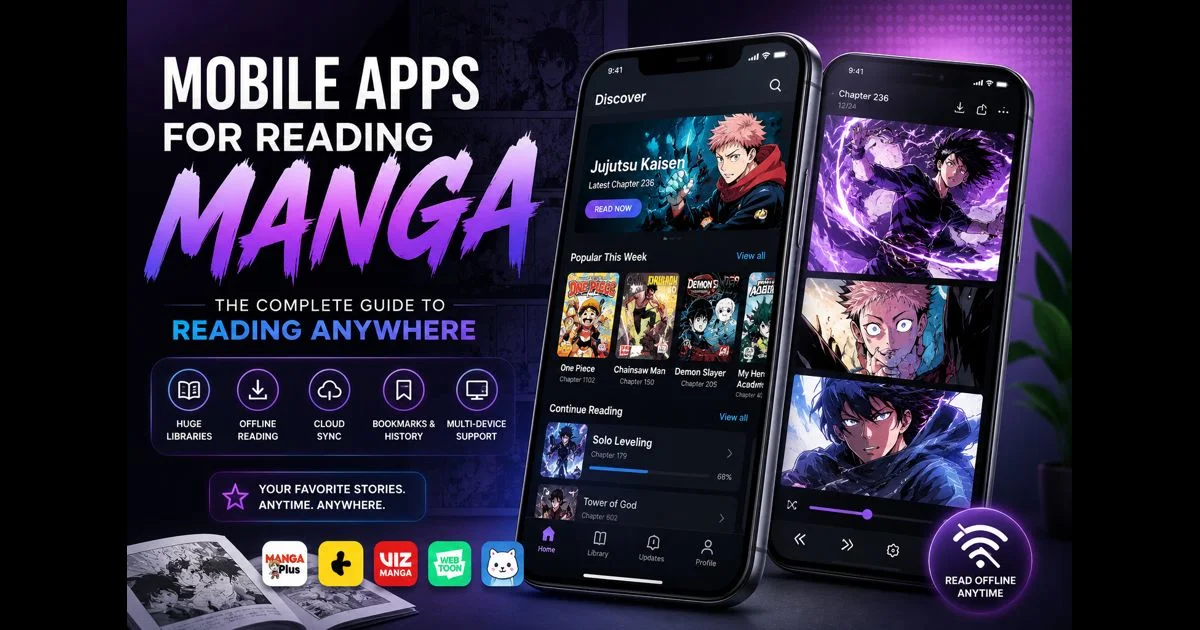
- Reading controls for page direction, zoom, brightness, and continuous scroll
- Bookmarks and reading history that work across devices when an account is used
- Content labels and age gates where mature material may appear
- Accessible help pages that explain billing, cancellation, account deletion, and reporting
These details are more valuable than an inflated catalogue claim. A smaller, well-labelled library with reliable translations and readable release information is often easier to use than a large, poorly organised list of titles.
Safety checks before reading or signing in
Online reading should not require giving away unnecessary information. Keep the browser and operating system updated, use a unique password for any account, and avoid installing files offered through adverts, pop-ups, or unfamiliar download pages. A legitimate reader normally works in a standard web browser or through a clearly identified app-store listing.
Pause when a page repeatedly opens new tabs, claims the device is infected, demands notification permission before showing basic content, or asks for payment information without explaining the service. Close the page rather than interacting with an alarming message. Browser notifications can be managed in browser settings, and suspicious extensions should be removed through the browser’s extension manager.
Young readers benefit from an extra layer of care. Parents and guardians can use device-level content controls, review platform age ratings, and discuss how to recognise advertising, scams, and links that lead away from the intended reader. Privacy settings should be checked before a child creates a profile or joins a community.
Licensing, availability, and reader choice
Licensing is often the deciding factor behind what readers can access. A publisher may make the newest chapters free for a limited period, offer a rotating selection, sell complete volumes, or use a subscription catalogue. Translation rights can also vary by country. When a desired series is unavailable, the reason may be territorial rights or a release schedule rather than a technical fault.
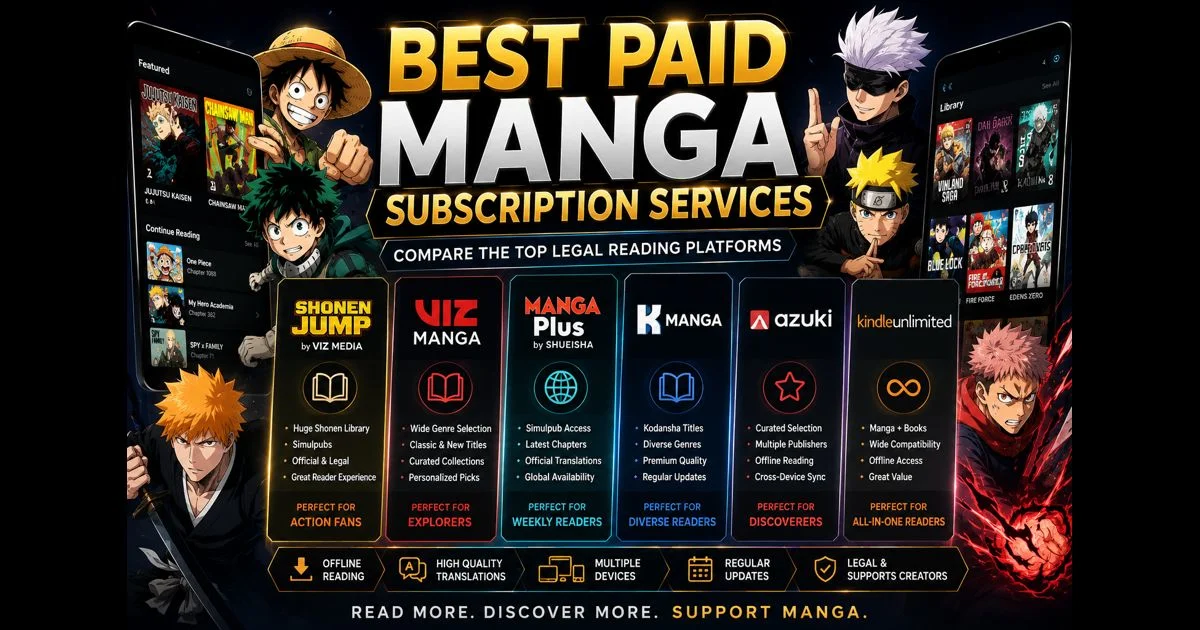
Official services give readers a direct route to the work while helping sustain creators, editors, translators, letterers, and publishers. MANGA Plus by SHUEISHA describes itself as an official service and explains its free reading model; it also notes that proceeds support artists. Other established options may be better suited to particular genres, languages, or regions. The right choice depends on the series, the reader’s location, and whether reading on the web, app, or print is preferred.
Libraries are another strong option. Many public libraries provide physical manga volumes, digital lending services, or interlibrary loans. They are especially useful for readers who want to explore a series before collecting it, and for families looking for curated age-appropriate material.
Finding manga that fits your taste
Start with the kind of feeling or pace you want, rather than only a famous title. Fast, high-stakes stories may suit battle manga, thrillers, or sports series. Readers who prefer relationships and character development may enjoy romance, school life, josei, or slice-of-life work. Historical manga can combine researched settings with drama, while horror and psychological series often focus on atmosphere and tension.
Demographic labels can be helpful but are not rigid rules. Shonen, shojo, seinen, and josei describe traditional magazine audiences, not a limit on who can enjoy a story. A sample chapter, a publisher synopsis, content notices, and a few non-spoiler reviews provide a more reliable sense of fit.
For more context around the medium itself, manga culture and community shows how reading often grows into collecting, discussing, creating art, and attending events. Readers who want to meet other fans can also explore online manga communities, where spoiler etiquette, credit for artists, and basic privacy habits make discussions more enjoyable for everyone.
Build a reading habit without losing track
A modest reading list works better than saving every recommendation at once. Keep a short “next” list, a “currently reading” list, and a “finished” list. Add the volume or chapter number when pausing a series. This prevents accidental spoilers and makes it easier to return after a break.
Try alternating an ongoing series with a completed one. Ongoing series create the excitement of new releases, while completed series provide a full story arc at the reader’s own pace. If a title is emotionally heavy or visually dense, reading in smaller sessions can preserve the impact of each chapter.
Translation quality also affects enjoyment. Official editions usually provide consistent names, lettering, and editorial context, while the presentation of older works may vary across formats. If dialogue feels confusing, compare a preview from a publisher edition or check whether the series has a newer release.
A respectful approach to fan communities
Communities can make a favourite story richer, but they work best when readers protect one another’s experience. Mark spoilers clearly, avoid posting unannounced plot turns in titles or thumbnails, and credit artists before sharing fan art. Criticism is welcome when it discusses the work rather than attacking other readers or creators.
Community spaces are also not a substitute for safety checks. Do not share a home address, school, payment details, government identification, or private account credentials in a group chat, comment section, or direct message. Be cautious with invitations to move a conversation to an unfamiliar app or to download an “exclusive” reader.
Frequently asked questions
Is ReadMyMangaCom one official manga platform?
Not necessarily. Similar names and domains can represent unrelated services. Verify the precise address, ownership information, and licensing statement before treating a site as official.
Can manga be read online legally for free?
Yes. Some publishers offer free chapters, limited-time access, previews, or rotating selections. Availability changes by title and region, so check the publisher’s own service details.
How can a reader tell whether a manga site is safer to use?
Look for transparent ownership, normal browser or app-store access, clear billing information, a privacy policy, and support pages. Avoid sites that push downloads, display false security alerts, or repeatedly redirect to unrelated pages.
Why is a manga series available in one country but not another?
Publishers license translation and distribution rights by territory. A series can be officially available in one market while awaiting a licence or release elsewhere.
What is the best way to support manga creators?
Use licensed services when they are available, buy volumes or subscriptions when practical, request titles through libraries, and share official releases with friends. Those actions help sustain the people behind the work.
Reading with confidence
Manga rewards curiosity: a reader can move from a single chapter to an art style, a new genre, a favourite creator, or a global community. The most worthwhile path is also the clearest one. Confirm the exact service, understand its access model, protect personal information, and choose sources that are transparent about rights and availability. With those habits in place, discovering the next great series becomes safer, simpler, and more satisfying.