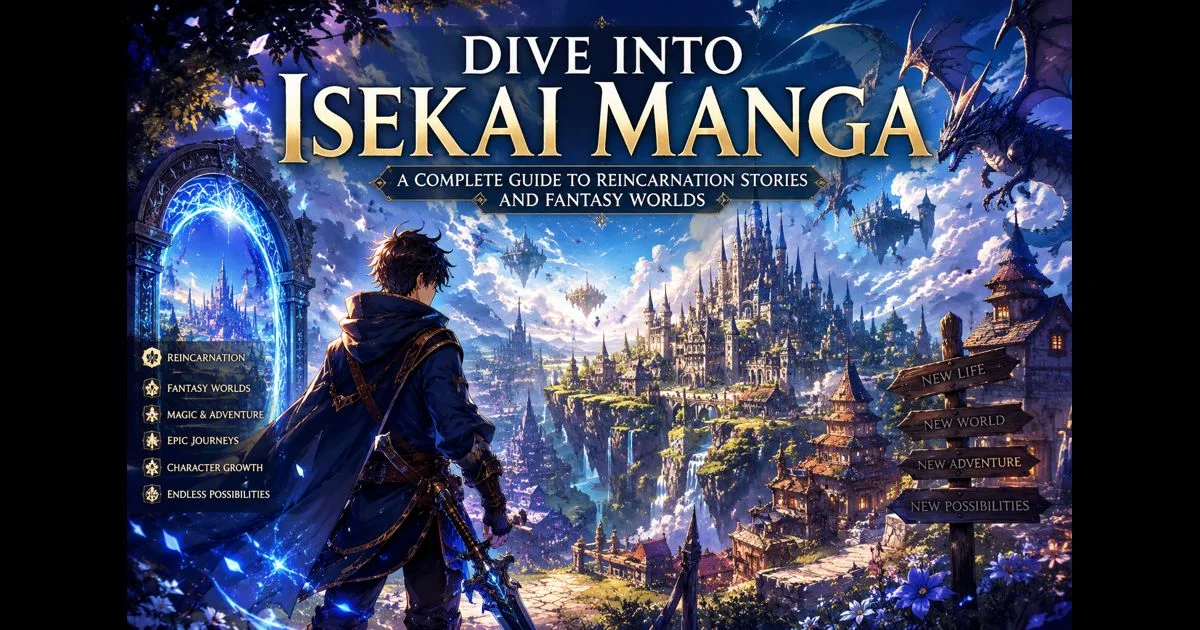
Few manga genres have expanded as rapidly in recent years as isekai. Built around the idea of entering another world, these stories combine fantasy, adventure, and personal transformation in ways that continue attracting readers across the globe.
At first glance, many isekai series appear to follow a familiar formula: an ordinary person suddenly finds themselves in an unfamiliar world filled with magic, monsters, kingdoms, or mysterious powers. Yet beneath this simple premise lies remarkable creative variety. Some stories focus on epic adventures, while others explore politics, business, cooking, farming, education, or everyday life in entirely new settings.
The genre’s popularity comes from more than escapism. Isekai invites readers to imagine how knowledge, experience, and personal values might shape an unfamiliar world. Every new setting becomes an opportunity to explore identity, responsibility, and the choices people make when given a fresh beginning.
This guide explains how isekai developed, why reincarnation stories remain so compelling, what defines the genre, and how modern creators continue expanding its possibilities.
What Is Isekai Manga?
The Japanese word isekai literally translates as “another world.”
In manga, it describes stories where the main character leaves their original world and begins life in an entirely different one.
This transition may happen through:
- Reincarnation.
- Magical summoning.
- Dimensional portals.
- Parallel universes.
- Virtual worlds.
- Supernatural events.
Regardless of the method, the central idea remains the same: the protagonist must adapt to unfamiliar rules while building a new life.
More Than Fantasy Adventure
Although fantasy settings are common, isekai is not defined solely by magic or monsters.
Instead, the genre focuses on how characters respond to completely new circumstances.
These stories often explore:
- Personal growth.
- Identity.
- Responsibility.
- Adaptation.
- Leadership.
- Community building.
- Survival.
- Second chances.
Because the environment constantly challenges familiar assumptions, readers experience both adventure and character development simultaneously.
Two Major Types of Isekai
While individual stories vary greatly, most isekai manga follow one of two basic structures.
Reincarnation Stories
In reincarnation-based narratives, the protagonist dies before beginning life again in another world.
Sometimes they retain memories from their previous life.
Other times, they gradually rediscover them while adapting to their new circumstances.
This approach allows authors to explore:
- Personal redemption.
- Learning from past mistakes.
- New opportunities.
- Long-term character growth.
The idea of starting over gives these stories emotional depth beyond simple fantasy adventure.
Transportation Stories
Other series transport characters directly into another world without ending their original lives.
These protagonists often arrive exactly as they were, bringing existing knowledge, skills, and personalities into unfamiliar environments.
Their challenge becomes learning how to survive while understanding the rules governing their new surroundings.
Both approaches create exciting storytelling possibilities while emphasizing adaptation over immediate success.
The Origins of Isekai Storytelling
Although modern manga popularized isekai internationally, the concept itself is much older.
Stories about entering mysterious worlds have appeared throughout literature and folklore for centuries.
Many traditional narratives feature characters who:
- Travel into hidden kingdoms.
- Encounter supernatural realms.
- Cross magical boundaries.
- Return transformed by their experiences.
These timeless ideas eventually influenced Japanese fantasy storytelling before becoming one of manga’s most recognizable genres.
The Growth of Modern Isekai
Modern isekai developed gradually through manga, novels, and serialized storytelling.
As digital publishing expanded, creators gained greater freedom to experiment with new concepts.
Rather than repeating identical adventures, authors began exploring increasingly diverse ideas.
Readers encountered stories involving:
- Kingdom management.
- Merchant life.
- Agriculture.
- Medicine.
- Craftsmanship.
- Politics.
- Education.
- Scientific innovation.
This diversity demonstrated that another world could serve as the setting for almost any type of story.
Why World-Building Matters
Strong world-building separates memorable isekai from forgettable fantasy.
Readers become invested when fictional worlds feel believable rather than existing only as backgrounds for action scenes.
Effective worlds usually establish:
- Clear political systems.
- Economic structures.
- Cultural traditions.
- Geography.
- History.
- Social customs.
- Magic rules.
- Everyday life.
When these elements remain internally consistent, every new location feels like part of a living world rather than a collection of disconnected settings.
Rules Create Better Stories
Every convincing fantasy world operates according to understandable rules.
Whether dealing with magic, technology, monsters, or supernatural abilities, limitations help create meaningful conflict.
Well-designed systems encourage readers to understand:
- What characters can accomplish.
- What remains impossible.
- What consequences follow important decisions.
- How societies function.
- Why conflicts exist.
Rather than limiting creativity, clear rules actually strengthen storytelling by making victories feel earned and failures believable.
Ordinary Characters in Extraordinary Worlds
Many isekai protagonists begin as completely ordinary people.
Office workers.
Students.
Craftsmen.
Gamers.
Teachers.
Merchants.
Their everyday backgrounds help readers connect with them before extraordinary events transform their lives.
Instead of relying solely on exceptional talent, these characters often succeed because they apply practical knowledge, critical thinking, perseverance, and compassion in unfamiliar situations.
This relatability remains one of the genre’s greatest strengths.
Defining Characteristics of Isekai Manga
Although every series introduces its own world and characters, many successful isekai stories share a collection of recognizable storytelling elements.
These familiar foundations give readers a sense of direction while allowing creators plenty of room for originality.
Common characteristics include:
- Entering another world.
- Learning unfamiliar rules.
- Personal growth.
- Expanding world-building.
- Gradual character progression.
- New relationships.
- Meaningful challenges.
- Long-term exploration.
Rather than following a rigid formula, these elements provide a flexible framework that supports many different styles of storytelling.
Reincarnation Creates New Possibilities
Reincarnation remains one of the genre’s most recognizable storytelling devices.
Instead of simply changing locations, characters begin entirely new lives with opportunities unavailable in their previous world.
This fresh beginning allows authors to explore questions such as:
- Can people truly change?
- What would someone do differently with another chance?
- How does previous experience influence new decisions?
- Can old mistakes become future strengths?
These themes give reincarnation stories emotional depth beyond their fantasy settings.
The Appeal of Second Chances
Many readers connect with isekai because it explores possibilities that real life rarely offers.
The idea of beginning again in a completely different environment encourages reflection on personal choices, ambitions, and values.
Second-chance stories often focus on:
- Self-improvement.
- Personal freedom.
- Building meaningful relationships.
- Correcting past regrets.
- Discovering hidden potential.
- Creating a better future.
Rather than escaping reality entirely, these narratives often encourage readers to think differently about their own lives.
Everyday Skills Become Extraordinary
One unique feature of modern isekai is how ordinary knowledge becomes surprisingly valuable.
Characters frequently succeed not because they possess overwhelming magical abilities but because they apply practical experience in creative ways.
Stories may involve protagonists using knowledge of:
- Cooking.
- Agriculture.
- Business.
- Medicine.
- Engineering.
- Education.
- Craftsmanship.
- Administration.
Watching familiar skills solve unfamiliar problems creates satisfying and believable character progression.
World-Building Shapes Every Adventure
Unlike shorter fantasy stories that prioritize constant action, many isekai series spend considerable time developing their fictional worlds.
Readers gradually discover:
- Governments.
- Trade systems.
- Religions.
- Local customs.
- Monster ecosystems.
- Transportation.
- Education.
- International politics.
These details help transform fictional settings into believable societies where every decision carries meaningful consequences.
Adventure Means More Than Combat
Although battles remain popular, adventure in isekai has expanded far beyond fighting monsters.
Modern stories often emphasize exploration through many different experiences.
Characters may spend time:
- Building villages.
- Negotiating peace.
- Managing businesses.
- Discovering forgotten civilizations.
- Learning new professions.
- Exploring dangerous wilderness.
- Solving political conflicts.
- Strengthening communities.
This variety keeps the genre fresh while allowing readers to enjoy different kinds of challenges.
Popular Isekai Subgenres
As the genre has matured, creators have introduced numerous variations that appeal to different audiences.
Today’s isekai includes far more than traditional heroic quests.
Popular subgenres include:
- Kingdom-building stories.
- Slice-of-life fantasy.
- Romantic reincarnation.
- Political fantasy.
- Survival adventures.
- Monster reincarnation.
- Comedy-focused adventures.
- Slow-life storytelling.
Each approach offers a distinct reading experience while remaining connected to the core concept of entering another world.
Strong Characters Matter More Than Powerful Abilities
Some newcomers assume isekai stories are entirely about becoming incredibly powerful.
In reality, memorable series usually prioritize character development over strength alone.
Readers remain invested because protagonists must still overcome:
- Fear.
- Responsibility.
- Ethical decisions.
- Leadership challenges.
- Personal insecurities.
- Difficult relationships.
- Unexpected failures.
Even extraordinary abilities become meaningful only when they support genuine emotional growth.
Supporting Characters Bring Worlds to Life
An engaging fictional world depends on more than its main character.
Well-developed supporting casts add personality, conflict, humor, and emotional depth to every adventure.
These characters often include:
- Loyal companions.
- Skilled mentors.
- Political leaders.
- Merchants.
- Adventurers.
- Scholars.
- Rivals.
- Ordinary citizens.
Each contributes a unique perspective, making the world feel populated by individuals with their own ambitions rather than existing solely to support the protagonist.
As relationships deepen, readers become emotionally invested not only in the hero’s journey but also in the broader community surrounding them.
Influential Isekai Manga That Shaped the Genre
Over the years, several manga series have helped define what readers now associate with modern isekai.
Each introduced new ideas while demonstrating that another-world stories could explore much more than fantasy battles.
Some influential works became known for:
- Expansive world-building.
- Character-focused storytelling.
- Political strategy.
- Nation building.
- Emotional development.
- Creative magic systems.
- Slice-of-life storytelling.
- Unique protagonist perspectives.
Rather than copying one another, these series expanded the possibilities of the genre and inspired countless creators.
Modern Isekai Continues to Evolve
Today’s isekai is far more diverse than its early reputation suggests.
Many recent creators deliberately challenge familiar conventions by placing greater emphasis on realism, emotional maturity, or unconventional protagonists.
Readers can now find stories centered around:
- Librarians.
- Craftsmen.
- Merchants.
- Doctors.
- Farmers.
- Researchers.
- Villainesses.
- Retired heroes.
This variety allows the genre to appeal to readers with very different interests while avoiding repetitive storytelling.
Anime Has Expanded Isekai’s Audience
Anime adaptations have played an enormous role in introducing isekai to international audiences.
Many readers first discover a series through animation before continuing the story in manga form.
Successful adaptations often lead to:
- Increased manga sales.
- International translations.
- Expanded merchandise.
- New fan communities.
- Additional novels.
- Spin-off series.
- Global discussions.
The relationship between manga and anime has helped transform isekai into one of the most recognizable categories in Japanese entertainment.
Digital Publishing Accelerated Growth
Online publishing platforms have also contributed significantly to the genre’s popularity.
Digital serialization allows creators to experiment with original ideas while reaching readers much more quickly than traditional publishing alone.
This accessibility has encouraged innovation across the genre.
Creators now explore themes involving:
- Economics.
- Politics.
- Food culture.
- Education.
- Science.
- Diplomacy.
- Family life.
- Community development.
As a result, modern isekai offers far greater narrative variety than many newcomers expect.
A Global Community of Readers
Isekai has developed an enthusiastic international readership.
Fans regularly exchange recommendations, discuss world-building, compare fictional societies, and debate how different protagonists would solve similar problems.
Online communities frequently share:
- Reading recommendations.
- Character discussions.
- Fan artwork.
- Cosplay.
- Story analysis.
- World-building theories.
- Collection showcases.
These conversations help readers discover lesser-known titles while encouraging deeper appreciation of the genre.
Common Criticisms of Isekai
Like every successful genre, isekai has received its share of criticism.
Some readers feel that certain stories rely too heavily on familiar formulas without introducing meaningful originality.
Common concerns include:
- Overpowered protagonists.
- Predictable plots.
- Similar fantasy settings.
- Repetitive character archetypes.
- Limited consequences.
- Excessive reliance on game mechanics.
While these criticisms apply to some series, they do not represent the genre as a whole.
Originality Still Matters
The strongest isekai manga distinguish themselves through thoughtful execution rather than simply introducing another fantasy world.
Creative authors often focus on:
- Unique social systems.
- Believable cultures.
- Memorable supporting characters.
- Ethical dilemmas.
- Personal growth.
- Carefully constructed world-building.
These elements create stories that remain engaging even for experienced readers familiar with traditional genre conventions.
Why Readers Continue Returning to Isekai
Despite changing trends, the genre continues attracting millions of readers because it encourages imagination while exploring meaningful personal themes.
Readers enjoy watching characters:
- Adapt to unfamiliar environments.
- Build new relationships.
- Solve unexpected problems.
- Grow through experience.
- Create stronger communities.
- Discover new purpose.
These journeys provide both exciting fantasy and emotionally satisfying character development.
The Genre Continues Expanding
Rather than becoming more limited, isekai continues moving in new creative directions.
Recent stories increasingly experiment with:
- Different historical inspirations.
- Smaller personal narratives.
- Diverse cultural influences.
- Complex political settings.
- Slower character-driven storytelling.
- Creative professions beyond traditional heroes.
This willingness to evolve suggests that isekai will remain an important part of manga publishing for years to come.
The Future of Isekai Manga
As the genre continues to mature, creators are moving beyond familiar fantasy formulas and experimenting with fresh storytelling approaches.
Rather than relying solely on powerful protagonists or large-scale battles, many newer series place greater emphasis on character relationships, believable societies, and long-term personal growth.
Several developments are shaping the future of isekai, including:
- More character-driven narratives.
- Richer world-building.
- Diverse cultural influences.
- Smaller, emotionally focused stories.
- Creative professions beyond traditional heroes.
- Expanded digital publishing.
- Greater international readership.
- Stronger genre experimentation.
These changes continue attracting both longtime fans and readers discovering isekai for the first time.
Fantasy Worlds Are Becoming More Realistic
Modern creators increasingly treat fictional worlds as complete societies rather than simple adventure settings.
Instead of focusing only on magic systems or combat, many stories now explore how civilizations actually function.
Readers encounter topics such as:
- Government.
- Trade.
- Agriculture.
- Education.
- Healthcare.
- Diplomacy.
- Environmental challenges.
- Social traditions.
This attention to detail creates settings that feel immersive and believable while strengthening every aspect of the story.
Reincarnation Stories Continue to Evolve
The idea of beginning life again remains one of the genre’s strongest narrative foundations.
However, contemporary creators are exploring this concept from increasingly diverse perspectives.
Rather than asking only how someone becomes stronger, many stories now explore:
- Emotional healing.
- Family relationships.
- Leadership.
- Responsibility.
- Community building.
- Personal fulfillment.
- Ethical decision-making.
This broader focus gives reincarnation stories greater emotional depth while appealing to a wider audience.
Technology Is Changing How Readers Discover Isekai
Digital publishing has dramatically expanded access to fantasy manga.
Readers can now discover new series through official platforms, mobile applications, and multilingual releases much faster than in previous years.
Technology continues improving through:
- Faster worldwide releases.
- Better reading platforms.
- Personalized recommendations.
- Cross-device synchronization.
- Expanded digital libraries.
- Improved accessibility features.
These developments help readers explore both classic and newly released isekai series with greater convenience.
Why Isekai Continues to Inspire Readers
The lasting popularity of isekai comes from its universal themes rather than its fantasy settings alone.
Many readers connect with stories about:
- Starting over.
- Learning from mistakes.
- Finding purpose.
- Building meaningful relationships.
- Overcoming adversity.
- Creating positive change.
Although dragons, kingdoms, and magic often provide the backdrop, the emotional journeys remain surprisingly relatable.
These human experiences continue making the genre meaningful regardless of setting.
Exploring Beyond Popular Series
Many readers begin with well-known titles before discovering the incredible diversity that exists throughout the genre.
Exploring lesser-known works often reveals stories centered around:
- Peaceful village life.
- Historical inspiration.
- Scientific discovery.
- Merchant adventures.
- Political reform.
- Culinary exploration.
- Education.
- Everyday relationships.
These unique perspectives demonstrate how flexible isekai has become while encouraging readers to move beyond familiar recommendations.
Final Thoughts
Isekai manga has grown from a simple fantasy concept into one of the most creative and versatile categories in modern Japanese storytelling. While entering another world remains the genre’s defining feature, its greatest strength lies in the countless ways creators use that premise to explore identity, personal growth, responsibility, and hope.
Whether focused on epic adventures, quiet slice-of-life narratives, political strategy, or emotional self-discovery, the best isekai stories remind readers that meaningful change comes through the choices people make rather than the worlds they inhabit.
For newcomers, the genre offers an excellent introduction to imaginative world-building and long-form storytelling. For experienced readers, its continuing evolution provides an endless variety of fresh ideas and creative perspectives.
Every new world presents different challenges, but the most memorable journeys are always shaped by believable characters, thoughtful storytelling, and the courage to embrace unfamiliar possibilities.
Frequently Asked Questions
What is isekai manga?
Isekai manga is a category of Japanese comics in which the main character is transported, summoned, or reincarnated into another world, where they must adapt to entirely new environments, rules, and challenges.
What is the difference between reincarnation and transportation isekai?
Reincarnation stories involve characters beginning a completely new life after death, often while retaining memories from their previous life. Transportation stories move characters directly into another world without ending their original lives.
Why is isekai so popular?
The genre combines imaginative fantasy with relatable themes such as personal growth, second chances, friendship, responsibility, and discovering purpose in unfamiliar circumstances.
Are all isekai stories about fighting monsters?
No. While action is common, many isekai series focus on politics, business, education, farming, cooking, medicine, community building, or everyday life within fantasy settings.
Is isekai suitable for beginners?
Yes. Many isekai manga provide accessible introductions to fantasy storytelling through clear world-building, engaging characters, and easy-to-follow narratives that appeal to both new and experienced manga readers.
How has isekai changed over time?
Modern isekai has expanded far beyond traditional fantasy adventures. Today’s stories feature more diverse protagonists, richer world-building, emotionally complex themes, and creative settings that continue to broaden the genre’s appeal worldwide.