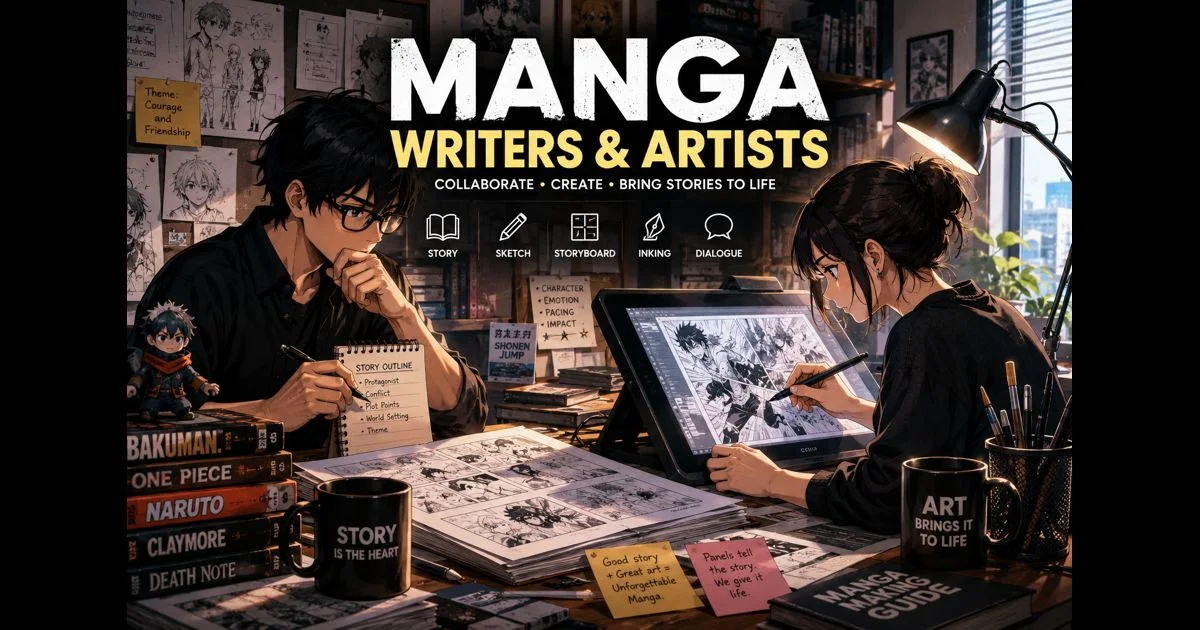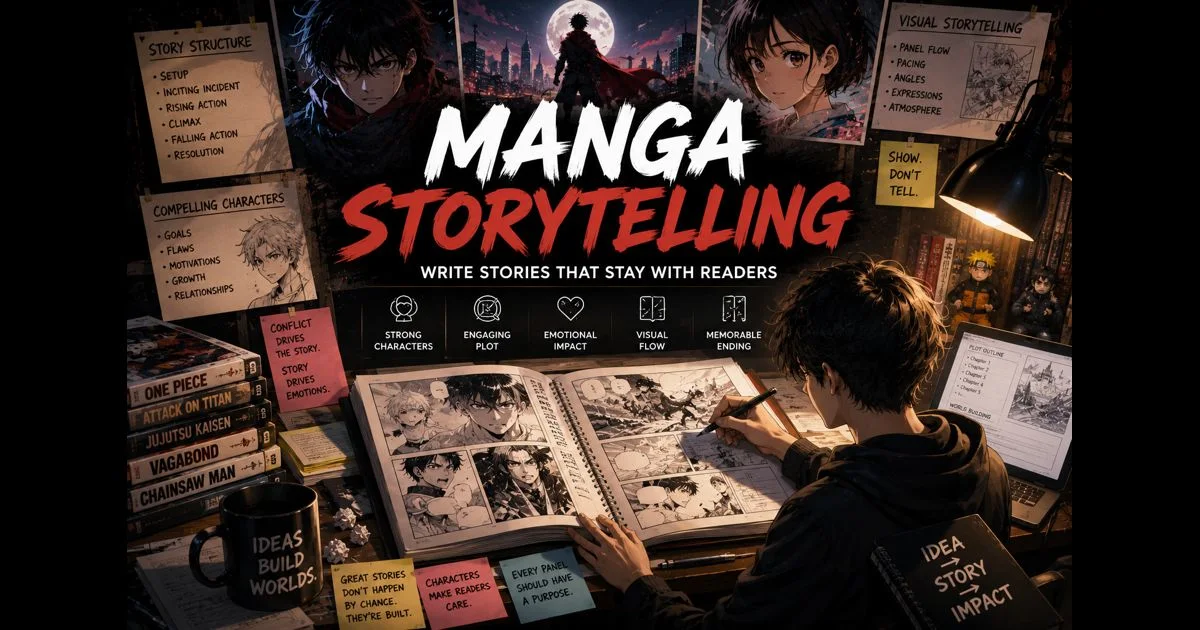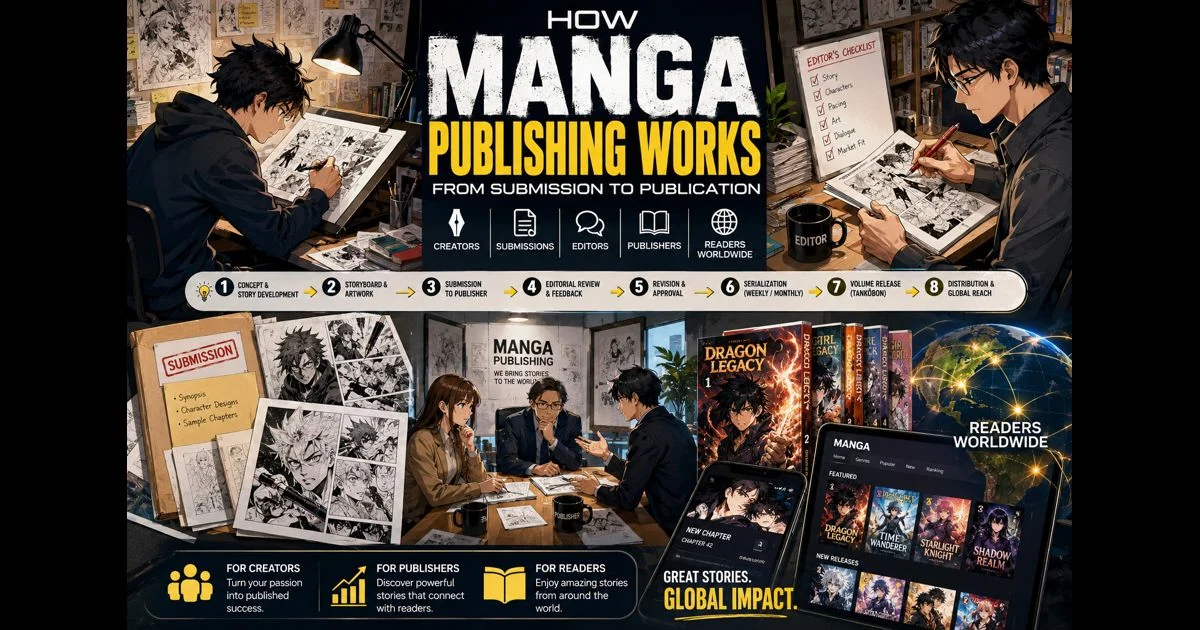
Creating a great manga is only the beginning of the journey. Turning that story into a published series requires much more than strong artwork and engaging characters. Understanding how the manga publishing industry works—from developing a marketable concept to working with editors, preparing professional submissions, and building an audience—can significantly improve a creator’s chances of success.
Today’s publishing landscape offers more opportunities than ever before. Alongside established Japanese publishers, creators can now publish digitally, partner with independent presses, self-publish through print-on-demand services, or build loyal readerships through online serialization platforms. Each path has its own advantages, challenges, and expectations, making it important to choose the publishing route that best fits your creative goals.
Whether you dream of working with a major manga publisher, launching an independent graphic novel, or growing a successful online series, understanding the publishing process helps you make informed decisions from the very beginning. This guide explores how manga publishers operate, the different publishing models available today, how editors evaluate new projects, and the practical steps creators can take to transform an idea into a professionally published manga.
Understanding Manga Publishing
Manga publishing is the process of transforming a creator’s story into a professionally distributed publication that reaches readers through print, digital platforms, bookstores, libraries, subscription services, or online applications. While readers often focus on the finished volumes sitting on bookstore shelves, every successful manga passes through multiple stages involving planning, editing, production, marketing, licensing, and distribution.
For aspiring creators, understanding this ecosystem is just as important as improving drawing or storytelling skills. Knowing how publishers evaluate projects, what readers expect, and how the industry operates allows creators to prepare stronger submissions and build sustainable careers.
The Evolution of Manga Publishing
Modern manga publishing developed rapidly after World War II as serialized storytelling became increasingly popular across Japan. Weekly and monthly manga magazines allowed readers to follow ongoing stories chapter by chapter, creating anticipation that encouraged long-term readership.
Successful series were later collected into standalone volumes known as tankōbon, giving readers a permanent edition while extending the commercial life of each title. This two-stage publishing model remains one of the industry’s defining characteristics and continues to influence manga production today.
As manga gained international popularity, publishers outside Japan adapted this approach for local audiences by translating, localizing, and distributing licensed editions worldwide. At the same time, independent creators began exploring alternative publishing methods that no longer depended entirely on large publishing houses.
How Manga Publishing Works Today
Today’s manga industry combines traditional publishing with modern digital distribution.
A typical publishing workflow includes:
- Developing the story concept.
- Writing scripts and planning chapters.
- Creating storyboards and page layouts.
- Producing finished artwork.
- Editorial review and revisions.
- Serialization or direct publication.
- Volume compilation.
- Printing or digital release.
- Marketing and promotion.
- Domestic and international distribution.
Although every publisher follows slightly different procedures, most projects move through these fundamental stages before reaching readers.
Serialization Remains the Industry Standard
Serialization continues to play a central role in manga publishing, particularly in Japan.
Instead of releasing an entire graphic novel at once, creators typically publish chapters on a weekly or monthly schedule. This allows publishers to evaluate reader engagement while giving creators opportunities to refine future chapters based on editorial feedback and audience response.
Once enough chapters have been completed, they are collected into printed or digital volumes.
This approach benefits both publishers and readers.
Publishers reduce financial risk by testing new series before committing to multiple volumes, while readers enjoy following stories over an extended period.
Even creators who eventually self-publish often adopt serialized releases because regular updates help build loyal audiences.
The Global Expansion of Manga
Manga is no longer limited to Japan.
Publishers throughout North America, Europe, Southeast Asia, and many other regions now produce original manga-inspired works alongside licensed Japanese titles.
Digital platforms have accelerated this growth by allowing creators to reach international readers immediately without relying on physical bookstores.
Translations, simultaneous digital releases, and mobile reading applications have made manga accessible to millions of new readers, creating opportunities for artists from diverse cultural backgrounds to contribute their own stories.
As global demand continues increasing, publishers actively seek creators capable of producing compelling narratives that resonate with both domestic and international audiences.
Why Understanding Publishing Matters
Many talented artists struggle not because of poor drawing ability but because they misunderstand how publishers evaluate new projects.
Publishing decisions involve far more than artistic quality.
Editors also consider:
- Target audience.
- Genre demand.
- Commercial potential.
- Story structure.
- Production consistency.
- Long-term sustainability.
- Market positioning.
- Creator professionalism.
Understanding these factors helps creators develop projects that are not only creatively satisfying but also commercially viable.
Types of Manga Publishers
Not every manga follows the same publishing path. While some creators dream of signing with internationally recognized publishers, others achieve remarkable success through independent publishing, digital platforms, or self-funded releases.
Each publishing model offers unique advantages, creative freedoms, and business considerations. Understanding these options allows creators to choose the route that best supports their long-term goals.
Traditional Manga Publishers
Traditional publishers remain the most recognizable path into the industry.
Large publishing companies provide extensive resources that individual creators often cannot access independently.
These resources typically include:
- Professional editors.
- Art direction.
- Production management.
- Printing services.
- Marketing campaigns.
- Retail distribution.
- International licensing.
- Translation support.
Publishing through an established company also increases credibility and exposes creators to larger audiences through bookstores, libraries, conventions, and digital marketplaces.
However, traditional publishing usually involves greater editorial oversight, stricter production schedules, and contractual obligations regarding deadlines, content, and intellectual property.
For many creators, this structure provides valuable professional guidance while allowing them to focus primarily on storytelling.
Independent Manga Publishers
Independent publishers occupy an important space between major publishing houses and complete self-publishing.
These companies often publish fewer titles each year, allowing editors to work more closely with creators throughout development.
Independent publishers frequently encourage:
- Original storytelling.
- Experimental genres.
- Diverse artistic styles.
- Niche audiences.
- Creator-owned intellectual property.
Because their publishing lists are generally smaller, creators may receive more personalized editorial attention compared to larger organizations.
Independent publishers are also often willing to explore projects that larger companies consider commercially risky.
For creators seeking greater creative freedom without managing every aspect of publication themselves, independent publishers can provide an attractive balance.
Self-Publishing
Advances in digital technology have made self-publishing more accessible than ever.
Instead of waiting for publisher approval, creators can independently manage every stage of production, including editing, printing, marketing, and sales.
Self-publishing offers complete creative control.
Creators decide:
- Story direction.
- Release schedule.
- Pricing.
- Cover design.
- Marketing strategy.
- Distribution channels.
This flexibility appeals to artists who want to maintain ownership of their intellectual property while building audiences on their own terms.
However, complete independence also means accepting responsibility for every business decision, from budgeting and printing costs to customer support and promotion.
Success depends not only on artistic ability but also on entrepreneurship.
Crowdfunded Publishing
Crowdfunding has become an increasingly popular publishing model for manga creators.
Instead of relying solely on publishers or personal savings, artists raise production funds directly from readers before printing begins.
Supporters may receive rewards such as:
- Early digital chapters.
- Signed books.
- Limited editions.
- Art prints.
- Exclusive illustrations.
- Behind-the-scenes content.
Beyond financial support, crowdfunding helps creators measure audience interest before investing heavily in production.
A successful campaign demonstrates market demand while building a loyal community that often continues supporting future projects.
Digital Publishing Platforms
Digital publishing has transformed how manga reaches readers.
Creators can now publish directly through specialized comic platforms without requiring immediate print distribution.
These services provide opportunities to:
- Build readership.
- Receive audience feedback.
- Publish regularly.
- Generate advertising revenue.
- Sell premium chapters.
- Attract publishing offers.
Some platforms emphasize traditional page layouts, while others encourage vertical scrolling formats designed specifically for smartphones.
Digital publishing also allows creators to analyze reader engagement through performance data, helping them understand which chapters resonate most strongly with audiences.
For many professional manga artists, digital serialization now serves as the first step toward larger publishing opportunities.
Choosing the Right Publishing Path
No single publishing model is universally better than another.
The right choice depends on factors such as:
- Creative goals.
- Production schedule.
- Financial resources.
- Desired audience.
- Business experience.
- Long-term career plans.
Some creators begin by self-publishing before signing with established publishers. Others build successful careers entirely through independent digital platforms. Many combine multiple approaches, using online serialization to grow audiences before releasing printed editions.
Rather than focusing only on prestige, successful creators choose publishing strategies that allow their stories to reach the readers most likely to appreciate them.
Developing a Manga That Publishers Can Evaluate
A strong concept is important, but publishers need more than an interesting idea. They look for evidence that the creator can turn that idea into a clear, sustainable, and visually engaging story.
Before preparing a submission, creators should test whether their project works at three levels:
- Can the premise be explained clearly?
- Can the first chapter hold a reader’s attention?
- Can the story continue beyond its opening idea?
A project becomes easier to pitch when the creator understands its audience, central conflict, emotional appeal, and long-term direction.
Start With a Focused Premise
A manga premise should be specific enough to feel memorable but flexible enough to support multiple chapters.
A useful starting point is to define:
- Who the main character is.
- What they want.
- What prevents them from getting it.
- What makes the situation distinctive.
- Why readers should care about the outcome.
For example, “a teenager enters a fantasy world” is too broad on its own. A stronger premise explains the character’s role, the unusual rule governing the world, and the personal cost of failure.
Publishers often receive many concepts built around familiar genres. Originality does not always require inventing an entirely new category. It can come from a surprising character perspective, an unusual setting, a strong emotional theme, or a fresh combination of familiar elements.
Identify the Intended Readership
A creator should understand who the manga is for before deciding how to present it.
Audience positioning affects:
- Character age.
- Visual complexity.
- Dialogue style.
- Chapter length.
- Pacing.
- Themes.
- Content boundaries.
- Marketing language.
Demographic labels such as shonen, shojo, seinen, and josei can be useful, but they should not be treated as rigid creative rules. They help publishers understand likely readership, tone, and market placement.
Creators should also consider genre more specifically. A romance mystery, sports drama, supernatural comedy, and historical adventure may appeal to overlapping audiences, but each creates different expectations.
Clear positioning helps editors understand where a title might fit within a publishing list.
Test the Story With a One-Shot or Pilot Chapter
A short, complete story is often more useful than a large collection of unfinished ideas.
A one-shot demonstrates whether the creator can:
- Introduce a character efficiently.
- Establish a conflict.
- Build emotional momentum.
- Control page pacing.
- Deliver a satisfying ending.
- Maintain consistent artwork.
Even when planning a long series, completing a self-contained pilot chapter can reveal weaknesses in the concept before the creator commits to hundreds of pages.
The pilot should feel complete enough to satisfy readers while leaving room for future development.
Planning the Manga Before Final Artwork
Professional manga production begins long before detailed drawing.
Writers and artists usually move through several planning stages to solve storytelling problems before investing time in finished pages.
Create a Basic Story Framework
A series outline does not need to predict every chapter, but it should establish a clear direction.
Useful planning elements include:
- The opening situation.
- The event that disrupts the protagonist’s life.
- The first major goal.
- The main source of opposition.
- Important relationship developments.
- The first complete story arc.
- Possible future conflicts.
- A broad ending direction.
This framework helps creators avoid introducing ideas that cannot be sustained.
Publishers may also ask how the story can grow after the first volume. A creator does not need to reveal every future twist, but they should show that the concept has enough depth to continue.
Build Strong Character Foundations
Editors often evaluate characters before plot details because readers usually remain attached to a series through its cast.
A useful character profile should explain:
- The character’s goal.
- Their greatest fear.
- Their emotional weakness.
- Their contradiction.
- Their role in the story.
- How they may change.
Avoid filling character sheets with details that never affect the narrative. Favorite foods, birthdays, and hobbies can add personality, but they matter less than motivation, conflict, and growth.
A compelling protagonist does not need to be admirable in every situation. They need to be understandable, active, and capable of making meaningful choices.
Use Thumbnails to Solve Page Problems
Thumbnails are small, rough page sketches used to test panel order, composition, and pacing.
At this stage, the creator should focus on:
- Where the reader’s eye moves.
- How much dialogue fits comfortably.
- Whether important actions are clear.
- Where page turns occur.
- Which moments deserve larger panels.
- Whether emotional beats have enough space.
Thumbnailing saves time because major structural problems can be corrected before detailed drawing begins.
A polished page cannot fully rescue confusing visual storytelling. Clear planning remains more valuable than decorative detail.
Create the Name or Storyboard
In Japanese manga production, the rough storyboard is often called a name. It combines loose drawings, dialogue, panel placement, and page rhythm.
The name allows the creator and editor to evaluate the chapter before final artwork.
A strong storyboard should make the story understandable even when the drawings remain rough. It should show:
- Character placement.
- Important expressions.
- Camera angles.
- Speech balloon order.
- Scene transitions.
- Page-turn reveals.
- Action direction.
Editorial changes are easier and less expensive at this stage than after inking and toning.
The Manga Production Process
Once the concept and storyboard are approved, the project moves into full production.
The exact workflow varies by creator, but most manga pages pass through a similar sequence.
Rough Layouts
The creator first enlarges the approved storyboard and refines the composition.
This stage establishes:
- Panel dimensions.
- Character positions.
- Background placement.
- Perspective.
- Speech balloon space.
- Action flow.
The goal is not visual perfection. It is to create a reliable foundation for the final page.
Pencil Drawing
Pencils define anatomy, expressions, clothing, environments, and important visual details.
Some artists create highly finished pencil drawings, while others work loosely and resolve details during inking.
Whichever method is used, consistency matters. Characters should remain recognizable across different angles and expressions, and environments should follow a stable sense of scale and perspective.
Inking
Inking transforms the pencil draft into final line art.
The artist uses line weight to separate characters from backgrounds, show depth, and control attention.
Strong inking is not simply tracing. It involves making decisions about:
- Which lines to simplify.
- Where shadows belong.
- How textures should be represented.
- Which details deserve emphasis.
- How movement should feel.
Digital artists may complete this stage with pressure-sensitive brushes, while traditional artists may use dip pens, technical pens, or brush tools.
Backgrounds and Environmental Detail
Backgrounds establish location, atmosphere, and continuity.
A room, street, school, or fantasy landscape should do more than fill empty space. It should support the mood and help readers understand where characters are positioned.
Creators can use:
- Perspective grids.
- Reference photography.
- 3D models.
- Architectural sketches.
- Location studies.
However, references should be adapted to the manga’s visual style. Overly realistic backgrounds can feel disconnected when placed behind highly simplified characters.
Tones, Shadows, and Effects
Because many manga pages are published in black and white, tones and shadows play an important role in creating depth.
Creators may use:
- Halftone patterns.
- Solid black areas.
- Hatching.
- Gradient tones.
- Texture brushes.
- Atmospheric effects.
- Speed lines.
- Impact bursts.
These elements should improve storytelling rather than decorate every panel.
Too many effects can reduce clarity, while thoughtful contrast can make important moments more powerful.
Lettering and Sound Effects
Lettering is part of the artwork, not an afterthought.
Poorly placed balloons can interrupt page flow, hide important details, or confuse reading order.
Dialogue should be edited for:
- Clarity.
- Natural rhythm.
- Balloon size.
- Readability.
- Character voice.
Sound effects should visually match the scene. A quiet footstep, metallic crash, and supernatural explosion should not receive identical lettering treatment.
For translated editions, creators should leave enough room for languages that may require more space than the original text.
Final Quality Check
Before submission or publication, every page should be reviewed carefully.
Check for:
- Missing dialogue.
- Incorrect reading order.
- Uneven margins.
- Low-resolution artwork.
- Inconsistent character details.
- Spelling mistakes.
- Cropped balloons.
- Accidental marks.
- Incorrect page numbering.
- Missing bleed.
It is helpful to review pages both individually and as a complete chapter. A page may look strong on its own while disrupting the rhythm of the sequence around it.
Traditional, Digital, and Hybrid Production
Manga can be created using traditional materials, digital software, or a combination of both.
The best method is the one that allows the creator to work consistently and meet professional production requirements.
Traditional Manga Production
Traditional manga artists may use manuscript paper, pencils, dip pens, black ink, rulers, brushes, correction fluid, and physical screentone sheets.
Advantages include:
- Natural line variation.
- Tactile control.
- Original physical artwork.
- Organic textures.
- Fewer digital distractions.
However, traditional corrections can be time-consuming, and finished pages must be scanned correctly before digital delivery.
Digital Manga Production
Digital production allows creators to manage nearly every stage within one application.
Common benefits include:
- Faster corrections.
- Layer organization.
- Reusable assets.
- Perspective tools.
- Digital tones.
- Easier lettering.
- Remote collaboration.
- Flexible export options.
Popular software includes Clip Studio Paint, Procreate, Krita, MediBang Paint, and Adobe Photoshop.
Digital convenience does not automatically produce professional results. Creators still need strong drawing, composition, and storytelling skills.
Hybrid Manga Production
Many creators combine both methods.
For example, an artist may sketch and ink traditionally, then scan the pages for digital tones, lettering, and corrections.
Another creator may produce rough layouts digitally before printing them lightly and completing the final ink work by hand.
Hybrid production offers flexibility and allows artists to preserve the qualities they enjoy from each medium.
Preparing Files for Professional Submission
Publishers and platforms usually provide technical requirements for submitted pages. These instructions should be followed exactly.
Common specifications may include:
- Required page dimensions.
- Resolution.
- File format.
- Color mode.
- Grayscale or monochrome settings.
- Trim and bleed.
- Safe margins.
- File naming.
- Maximum upload size.
A beautifully drawn project can still appear unprofessional when files are prepared incorrectly.
Resolution and Image Quality
Print artwork is often prepared at a higher resolution than digital-only content.
Low-resolution pages may appear blurred or pixelated when printed, while incorrectly scaled screentones can create distracting patterns.
Creators should avoid repeatedly resizing or compressing finished pages. Maintaining high-quality master files makes future corrections, translations, and collected editions easier.
Trim, Bleed, and Safe Areas
Artwork extending to the edge of a printed page usually requires bleed. This means the image continues beyond the final trim line so small cutting variations do not leave unwanted white edges.
Important faces, dialogue, and details should remain inside the safe area.
Creators should never assume that every part of a digital canvas will appear in the printed book.
Keep Editable Source Files
Always preserve layered and editable source files.
Publishers may later request:
- Dialogue changes.
- Translation adjustments.
- Revised sound effects.
- Cover updates.
- New page dimensions.
- Promotional crops.
- Hardcover or omnibus editions.
Flattened files make these revisions much more difficult.
Organized source files also help collaborators understand how each page was constructed.
Building a Professional Manga Portfolio
A portfolio should show that a creator can tell stories, not only draw attractive illustrations.
Character portraits may demonstrate rendering ability, but publishers also need evidence of sequential storytelling.
A strong manga portfolio may include:
- A complete short comic.
- Several consecutive finished pages.
- Character sheets.
- Expression studies.
- Background examples.
- Action sequences.
- Quiet dialogue scenes.
- Cover artwork.
Quality matters more than quantity. A focused portfolio with strong work is usually more effective than a large collection containing inconsistent pieces.
Show Sequential Pages
Editors should be able to see how the creator handles:
- Panel flow.
- Character interaction.
- Scene transitions.
- Dialogue.
- Pacing.
- Emotional reactions.
- Background continuity.
Consecutive pages reveal these skills more clearly than disconnected illustrations.
Include Variety Without Losing Focus
A portfolio can show range, but it should still feel relevant to the project being pitched.
For example, a horror pitch should include examples of tension, atmosphere, and shadow. A comedy submission should demonstrate timing and expressive character acting.
Unrelated work may distract from the creator’s strongest selling point.
Present Work Professionally
Portfolio presentation should be simple and easy to navigate.
Use:
- Clear file names.
- Consistent page sizes.
- Readable text.
- High-quality exports.
- A short creator biography.
- Updated contact information.
- Direct links to relevant work.
Avoid complicated websites, expired download links, or folders containing dozens of unexplained files.
The goal is to make evaluation as easy as possible for the editor.
Submission Guidelines for Manga Creators
Completing a manga is a major achievement, but getting it in front of the right publisher requires preparation and professionalism. Editors review countless submissions every year, so presenting your work clearly and following submission requirements can make a meaningful difference.
Before submitting, carefully research the publisher or platform you want to approach. Every company has its own editorial focus, preferred genres, technical specifications, and submission process. Sending the same package to every publisher without customization rarely produces strong results.
Approaching submissions as a professional presentation rather than simply sending artwork demonstrates that you understand how the publishing industry operates.
Research Publishers Before Submitting
Not every publisher is the right fit for every manga.
Before preparing your submission, review the publisher’s recent releases and ask yourself:
- Do they publish your genre?
- Do they focus on ongoing series or standalone graphic novels?
- Are they looking for original manga or licensed adaptations?
- Do they accept direct submissions?
- Are submissions limited to certain countries or languages?
Understanding a publisher’s catalog helps you tailor your proposal instead of sending material that clearly falls outside their interests.
Follow Submission Requirements Carefully
Most publishers provide detailed submission guidelines explaining exactly what they expect.
Typical requirements may include:
- Page count
- File format
- Image resolution
- Synopsis length
- Character descriptions
- Submission method
- Contact information
- Language requirements
Ignoring these instructions creates unnecessary work for editors and may result in immediate rejection regardless of the quality of the artwork.
Professionalism begins with following directions.
Preparing a Strong Submission Package
An effective submission package introduces both the project and the creator in a concise, organized way.
Most professional submissions include:
- A compelling logline
- A short series overview
- A longer synopsis
- Character profiles
- Sample manga pages
- Creator biography
- Portfolio links
- Contact information
Everything should be clearly labeled and easy to review.
Editors often spend only a short amount of time evaluating each submission initially, so clarity matters.
Writing a Strong Logline
A logline summarizes the core idea of your manga in one or two sentences.
Rather than explaining every plot detail, focus on the main conflict.
A strong logline identifies:
- The protagonist
- Their goal
- The primary obstacle
- The unique hook
A concise, memorable premise is often more effective than a lengthy explanation.
Creating an Engaging Synopsis
The synopsis should explain the story clearly without attempting to create artificial suspense.
Editors want to understand:
- How the story begins
- Major plot developments
- Character growth
- The direction of future chapters
- The overall ending if available
Unlike promotional marketing copy, a submission synopsis should reveal important story developments rather than hide them.
Showing that your narrative has a satisfying structure builds confidence in the project.
Selecting Sample Pages
Your sample pages should represent your strongest work.
Many creators assume action scenes make the best samples, but editors evaluate much more than dynamic artwork.
Strong samples demonstrate:
- Character acting
- Dialogue
- Story pacing
- Panel composition
- Background consistency
- Emotional storytelling
- Readability
Including consecutive pages instead of isolated illustrations allows editors to evaluate sequential storytelling, which remains one of manga’s most important skills.
Working With Editors
Editors play one of the most important roles in professional manga publishing.
Rather than simply approving or rejecting projects, experienced editors help creators strengthen stories before readers ever see them.
Successful collaborations are built on communication, trust, and shared creative goals.
What Editors Actually Do
Editorial responsibilities extend far beyond proofreading.
Editors often help with:
- Story structure
- Character development
- Chapter pacing
- Dialogue refinement
- Reader engagement
- Production scheduling
- Market positioning
- Cover concepts
- Publication planning
They evaluate whether each chapter communicates clearly while balancing creative ambition with commercial viability.
The strongest editor relationships often become long-term creative partnerships.
Receiving Editorial Feedback
Every professional creator receives revisions.
Editorial feedback is not intended to discourage artists but to improve the final product.
Common feedback may involve:
- Strengthening the opening chapter
- Clarifying character motivations
- Simplifying confusing scenes
- Improving pacing
- Reducing unnecessary dialogue
- Increasing emotional impact
- Making visual storytelling clearer
Creators who remain open to constructive criticism often develop more quickly than those who resist every suggestion.
Communication Matters
Professional communication helps projects move efficiently.
Responding respectfully, meeting deadlines, asking thoughtful questions, and remaining organized creates positive working relationships.
Even when creators disagree with suggestions, discussing ideas professionally usually leads to stronger creative solutions.
Publishing is highly collaborative, making communication skills almost as valuable as artistic ability.
Collaborating With Other Creators
Although many readers imagine manga as the work of a single artist, numerous professional series involve collaborative production.
Large projects often require multiple specialists working together under tight deadlines.
The Role of Assistants
Manga assistants help creators complete pages efficiently.
Their responsibilities may include:
- Drawing backgrounds
- Applying screentones
- Inking architecture
- Cleaning artwork
- Adding visual effects
- Researching references
- Preparing files
This allows the primary creator to focus on storytelling, character artwork, and major creative decisions.
Many successful manga artists began their careers as assistants before launching their own series.
Working With Writers
Some manga projects divide responsibilities between writer and artist.
This collaboration allows each person to specialize while producing stronger overall work.
Successful partnerships require:
- Clear communication
- Shared creative vision
- Consistent planning
- Mutual respect
- Defined responsibilities
Written agreements help prevent misunderstandings regarding ownership, compensation, and creative control.
Designers, Letterers, and Translators
Modern manga production often involves additional specialists.
Professional teams may include:
- Graphic designers
- Cover artists
- Letterers
- Proofreaders
- Translators
- Localization editors
- Marketing specialists
Each contributor helps improve the final reading experience while expanding the manga’s reach across different markets.
Marketing Your Manga
Publishing a manga does not automatically guarantee readers.
Marketing helps potential audiences discover your work long before release day.
Successful promotion focuses on building genuine interest rather than simply announcing publication.
Build an Audience Early
Many professional creators begin sharing their work months before publication.
Useful content includes:
- Character sketches
- Concept art
- Time-lapse videos
- World-building details
- Behind-the-scenes updates
- Progress milestones
- Cover reveals
Consistent updates encourage readers to become invested in the project throughout development.
Develop a Professional Online Presence
A creator’s online presence often serves as a portfolio, communication platform, and marketing tool.
Useful channels may include:
- Personal website
- Portfolio platform
- Social media accounts
- Newsletter
- Creator blog
Rather than posting constantly, focus on sharing meaningful updates that demonstrate progress and professionalism.
Consistency builds stronger audiences than unpredictable bursts of activity.
Launch Planning
Preparing for launch improves visibility.
A simple launch plan might include:
- Cover reveal
- Preview pages
- Release countdown
- Creator interview
- Livestream drawing session
- Convention appearance
- Reader Q&A
- Newsletter announcement
Planning promotional activities in advance allows creators to focus on interacting with readers instead of scrambling for ideas after publication.
Distribution and Reaching Readers
Distribution determines how readers actually obtain your manga.
Even an outstanding book cannot succeed if audiences cannot easily find it.
Modern creators have access to both physical and digital distribution channels.
Print Distribution
Printed manga may reach readers through:
- Bookstores
- Comic shops
- Online retailers
- Independent bookstores
- Libraries
- Conventions
- Direct website sales
Each channel serves different audiences, making diversified distribution increasingly valuable.
Digital Distribution
Digital publishing continues expanding rapidly.
Common options include:
- eBook stores
- Subscription services
- Digital manga platforms
- Publisher apps
- Creator websites
Digital distribution reduces printing costs while allowing readers around the world to access new releases immediately.
For many independent creators, digital publication becomes the first step before investing in physical editions.
International Publishing Opportunities
Manga now reaches readers across countless countries.
International growth creates opportunities for:
- Translation licensing
- Foreign publishing rights
- Regional editions
- International conventions
- Cross-market collaborations
Creators should understand which rights they retain when signing publishing agreements so future opportunities remain available where appropriate.
Copyright and Intellectual Property
Every original manga represents valuable intellectual property.
Understanding ownership protects both creators and collaborators.
Protecting Original Work
Creators should maintain organized records of:
- Drafts
- Original artwork
- Scripts
- Character designs
- Publication dates
- Contracts
Keeping thorough documentation helps establish authorship if ownership questions arise later.
Reading Publishing Contracts Carefully
Publishing agreements vary considerably.
Before signing, creators should understand:
- Rights being licensed
- Payment structure
- Royalty terms
- Territory
- Language rights
- Contract duration
- Reversion clauses
- Adaptation rights
If any provision is unclear, seeking professional legal advice is often worthwhile before making long-term commitments.
Respecting Other Creators’ Rights
Professional creators should also avoid infringing upon existing intellectual property.
Using copyrighted characters, logos, music, or branded material without permission may create legal complications that affect publication opportunities.
Developing original stories and respecting the work of other creators builds a stronger foundation for a long-term professional career.
Challenges in Manga Publishing
Publishing a manga is both a creative achievement and a long-term professional commitment. Completing the artwork is only one part of the journey. Maintaining consistent quality, meeting deadlines, adapting to market changes, and building a loyal readership require patience, discipline, and continuous improvement.
Every creator faces obstacles, whether they work with a major publisher, an independent press, a digital platform, or release chapters on their own. Understanding these challenges early makes it easier to create realistic strategies instead of becoming discouraged when problems arise.
Standing Out in a Competitive Industry
The global popularity of manga means publishers and digital platforms receive a large number of submissions. Strong artwork alone may not be enough to make a project memorable.
Publishers also look for:
- A clear and engaging premise
- Distinctive characters
- Consistent visual storytelling
- Strong chapter pacing
- A defined target audience
- Long-term story potential
- Professional presentation
Successful creators do not usually stand out by copying popular series. They attract attention by presenting familiar genres through a distinctive perspective, believable characters, memorable conflicts, or an original setting.
Developing a recognizable creative voice takes time. Rather than following every passing trend, creators should focus on improving the qualities that make their work meaningful and different.
Managing Production Schedules
One of the most demanding parts of manga publishing is maintaining a consistent production schedule.
Creating a manga chapter may involve:
- Planning the plot
- Revising the script
- Drawing thumbnails
- Producing rough layouts
- Completing pencils and inks
- Drawing backgrounds
- Applying tones and effects
- Adding dialogue and sound effects
- Reviewing and exporting files
- Communicating with editors or collaborators
Without careful planning, even a short chapter can become overwhelming.
Professional creators often divide production into smaller stages and set achievable weekly targets. A sustainable schedule is more effective than attempting to complete too many pages in a short period and then becoming exhausted.
Avoiding Creative Burnout
Manga creation requires significant mental and physical effort. Long drawing sessions, tight deadlines, repeated revisions, and audience pressure can gradually reduce motivation and affect the quality of the work.
Burnout may appear as:
- Difficulty concentrating
- Reduced enthusiasm for the project
- Missed deadlines
- Physical discomfort
- Declining artwork quality
- Avoidance of creative tasks
A healthier production routine can include regular breaks, realistic page targets, ergonomic equipment, proper sleep, backup systems, and time away from the main project.
Rest is not separate from productivity. It helps creators maintain quality across long-running projects.
Building and Retaining a Readership
Publishing a manga does not automatically guarantee that readers will discover it.
Audience growth depends on consistent releases, effective presentation, and meaningful communication. Readers are more likely to continue following a series when they trust the creator to deliver clear updates and maintain the story’s quality.
Creators can strengthen audience relationships through:
- Regular chapter updates
- Progress announcements
- Behind-the-scenes artwork
- Character introductions
- Newsletter updates
- Convention appearances
- Reader questions and discussions
- Preview pages and cover reveals
The goal should not be to chase follower numbers alone. A smaller community of genuinely interested readers can provide more lasting support than a large but disengaged audience.
Managing the Financial Side of Publishing
Manga income can be unpredictable, especially during the early stages of a creator’s career.
Depending on the publishing model, revenue may come from:
- Advances
- Royalties
- Digital chapter sales
- Printed volume sales
- Crowdfunding
- Subscription platforms
- Merchandise
- Licensing
- Commissions
- Convention sales
Independent creators must also account for expenses such as editing, printing, software, advertising, shipping, website maintenance, and platform fees.
A realistic budget helps creators understand how many copies they need to sell and whether a print run, digital launch, or crowdfunding campaign is financially practical.
Handling Rejection and Editorial Changes
Rejection is common in publishing and does not always mean a project lacks quality.
A publisher may decline a submission because:
- The genre does not fit its current catalog
- A similar title is already in development
- The project requires more revision
- The target audience is unclear
- The publisher has limited space
- The submission does not follow its guidelines
Creators should evaluate useful feedback without treating every rejection as a final judgment on their ability.
Editorial changes can also be difficult, particularly when a creator feels strongly attached to a scene or character. Professional collaboration requires understanding the purpose behind the feedback and discussing alternative solutions where necessary.
Future Trends in Manga Publishing
Manga publishing continues to change as technology, reader behavior, and global distribution expand. Traditional publishers remain highly influential, but creators now have more ways to develop, publish, and monetize their work.
The future of manga publishing will likely involve a closer relationship between print, digital platforms, direct audience support, and international collaboration.
Continued Growth of Digital-First Publishing
Digital-first publishing allows creators to release work without immediately investing in printing or physical distribution.
This model can help creators:
- Test new concepts
- Build an audience
- Gather reader feedback
- Publish internationally
- Adjust release schedules
- Measure chapter performance
- Develop proof of demand
Some successful digital series later receive printed editions, translations, merchandise, or adaptation opportunities.
Digital publishing is therefore not simply an alternative to print. It can also act as an entry point into wider publishing opportunities.
Mobile-Optimized Manga Formats
Smartphones have changed how many readers consume comics.
Creators publishing for mobile may use:
- Larger dialogue text
- Taller panels
- Vertical scrolling
- Wider spacing between scenes
- Full-color artwork
- Screen-friendly pacing
- Strong cliffhangers
Traditional page-based manga and vertical comics are not identical formats. Each requires different decisions about composition, timing, and visual flow.
Creators should choose the format that best supports their story rather than adapting it carelessly after production.
The Ongoing Importance of Print
Digital access continues to expand, but printed manga remains valuable to readers, collectors, bookstores, and libraries.
Physical editions offer:
- Permanent ownership
- Collectible value
- Premium cover design
- Higher-resolution artwork
- Special editions
- Signed copies
- Convention sales
Many creators now use digital releases to attract readers and printed editions to provide a more collectible experience.
A combined print-and-digital strategy can reach different sections of the audience without forcing creators to depend on one format.
Global Publishing and Translation Opportunities
Manga publishing is becoming increasingly international.
A title may now involve creators, editors, translators, letterers, distributors, and readers located across several countries. This creates opportunities for:
- Translation licensing
- Regional editions
- International digital releases
- Cross-cultural collaborations
- Foreign publishing partnerships
- Global crowdfunding campaigns
Creators should understand which language and territorial rights they grant in publishing contracts. Retaining appropriate rights may create valuable opportunities in other markets later.
Collaborative Remote Production
Cloud storage, digital drawing software, and communication platforms make remote production more practical.
A distributed manga team may include:
- A writer
- A primary artist
- Background assistants
- A colorist
- A letterer
- An editor
- A translator
- A designer
Clear file organization, naming conventions, deadlines, and communication procedures become essential when several people work on the same project.
Remote collaboration can expand access to skilled contributors, but it requires stronger production management.
Technology and Production Tools
Modern software continues to reduce the time required for repetitive production tasks.
Useful tools may include:
- Digital perspective rulers
- 3D pose references
- Background models
- Screentone libraries
- Cloud backups
- Shared project files
- Automated export settings
- Professional lettering tools
These features can improve efficiency, but they do not replace storytelling skills.
A technically polished page can still fail if the characters feel flat, the pacing is unclear, or the emotional purpose of the scene is weak.
Responsible Use of AI-Assisted Tools
AI-assisted tools may support certain parts of production, such as organizing references, testing rough layouts, preparing color flats, or generating basic technical guides.
However, creators should consider:
- Copyright and training-data concerns
- Publisher disclosure requirements
- Platform rules
- Ownership of generated material
- Visual consistency
- Reader expectations
Technology should support the creator’s decisions rather than weaken the originality of the work.
Professional manga still depends on human judgment, character development, meaningful composition, and emotional storytelling.
Changing Reader Interests
Reader preferences continue to broaden.
Alongside established action, romance, fantasy, and comedy titles, audiences increasingly explore:
- Workplace stories
- Craft and hobby manga
- Culinary narratives
- Historical fiction
- Memoirs
- Educational manga
- Found-family stories
- Queer romance
- Wellness and lifestyle topics
- Short-form anthologies
Creators should understand market trends, but following a trend without a strong personal connection rarely leads to memorable work.
A clear creative voice usually has greater long-term value than imitation.
Final Thoughts
Manga publishing now offers more possible routes than ever before. Creators can work with traditional publishers, approach independent presses, serialize online, crowdfund printed editions, or combine several methods over time.
No publishing path guarantees success. Each one requires strong storytelling, consistent production, professional communication, and a realistic understanding of business responsibilities.
For new creators, the most useful first goal is not building an enormous series. It is completing a polished and manageable project that demonstrates storytelling ability from beginning to end.
A practical next step may include:
- Completing a short one-shot
- Preparing a professional portfolio
- Researching suitable publishers
- Reviewing submission requirements
- Creating a focused pitch package
- Selecting a realistic submission date
Publication is rarely the result of one perfect opportunity. It usually develops through repeated creation, revision, submission, feedback, and improvement.
The creators who move forward are not always those with the most ambitious first idea. They are often the ones who finish their work, learn from each project, and continue developing both their artistic and professional skills.
Frequently Asked Questions
What do manga publishers look for in new creators?
Manga publishers usually evaluate storytelling, character appeal, artwork consistency, page readability, audience fit, long-term potential, and creator professionalism. Strong drawing is important, but publishers also need evidence that the creator can complete a project reliably.
Should I submit a complete manga or a pilot chapter?
This depends on the publisher’s guidelines. Some request a complete one-shot, while others accept a pilot chapter, synopsis, character sheets, and sample pages. Always follow the exact submission requirements provided by the publisher.
Is self-publishing a good way to begin a manga career?
Self-publishing can be a strong starting point because it allows creators to complete projects, build audiences, test demand, and learn how publishing works. It also requires the creator to manage editing, marketing, distribution, and financial decisions.
Can creators outside Japan publish manga professionally?
Yes. Creators from many countries publish manga-inspired comics, graphic novels, and digital series professionally. Strong visual storytelling, original characters, polished artwork, and professional submissions matter more than the creator’s location.
Do independent manga creators need an editor?
An editor is not mandatory, but professional editorial feedback can improve pacing, dialogue, story structure, character development, and clarity. Independent creators may benefit from hiring an editor before publishing or crowdfunding a major project.
How important is a manga portfolio?
A manga portfolio is extremely important because it allows editors to evaluate sequential storytelling, not only illustration ability. It should include consecutive pages, character acting, backgrounds, dialogue scenes, and examples of visual pacing.
What is the most common mistake in manga submissions?
One of the most common mistakes is failing to follow publisher guidelines. Other problems include sending unfinished work, weak sample pages, unclear story positioning, poor file organization, and overly long pitches.
Can I publish manga online before submitting it to a publisher?
Yes, but creators should check the publisher’s eligibility rules. Some publishers accept previously posted work, while others prefer unpublished projects or require exclusive rights. Platform agreements should also be reviewed before submitting the same series elsewhere.
How long does it take to publish a manga?
The timeline varies depending on the project, publisher, revision process, and production schedule. A short digital release may be published relatively quickly, while a traditionally published volume can require extensive editing, production, printing, and distribution preparation.
Do manga creators keep the rights to their work?
Rights depend on the publishing agreement. Some contracts license specific rights for a defined period, while others may include print, digital, translation, merchandise, or adaptation rights. Creators should understand every clause before signing and seek qualified legal advice when necessary.