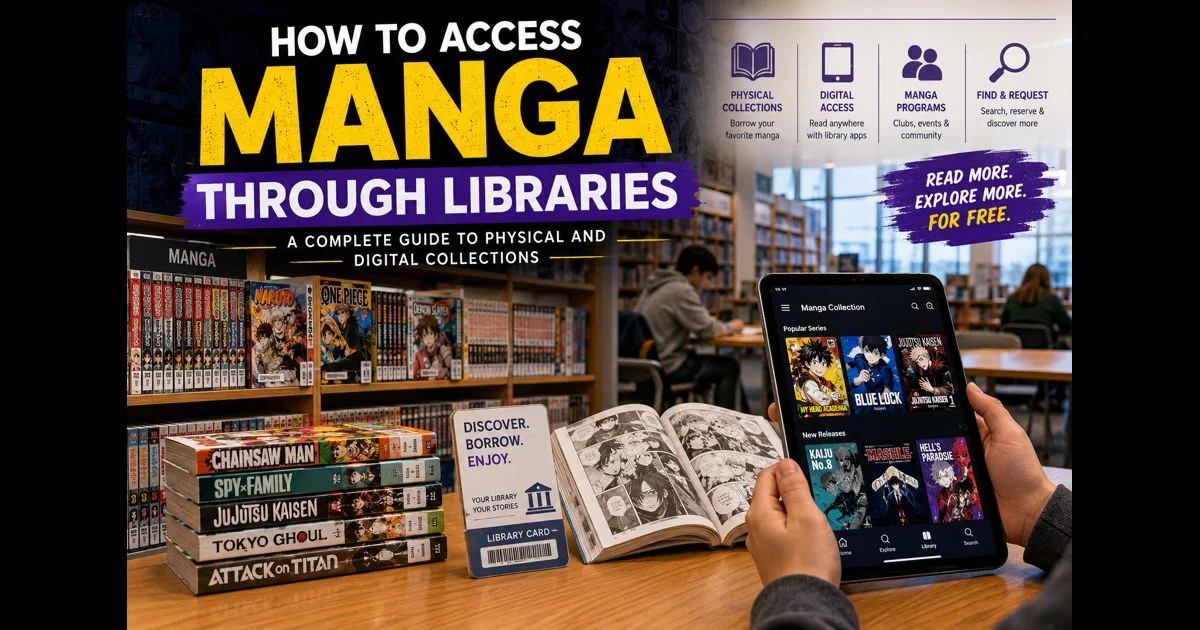
Looking to enjoy manga without spending a fortune? Libraries are one of the best places to discover, borrow, and explore manga legally. From bestselling shonen adventures and heartfelt shojo romances to indie graphic novels and classic series, modern libraries provide access to an ever-growing collection of physical and digital manga. Whether you’re a first-time reader or a long-time fan, your local library can become a valuable gateway to thousands of stories.
Today’s libraries offer far more than bookshelves. Many provide digital borrowing through popular reading apps, curated recommendation lists, manga clubs, artist workshops, and interlibrary loan services that help you access titles beyond your local branch. With the right approach, you can keep up with new releases, discover hidden gems, and enjoy complete series while spending little or nothing.
This guide explains how to find manga in public and academic libraries, borrow both print and digital editions, participate in manga-related programs, request unavailable volumes, and support your library’s growing collection. You’ll also learn practical tips for managing holds, understanding borrowing policies, and making the most of every library service available.
Understanding the Importance of Manga Libraries
Libraries have played an increasingly important role in making manga accessible to readers of every age. As manga continues to gain worldwide popularity, libraries are expanding their collections to include classics, modern bestsellers, educational titles, and award-winning graphic novels. These collections allow readers to explore new genres, follow long-running series, and experience Japanese storytelling without purchasing every volume individually.
Why Manga Matters Beyond Entertainment
Manga represents one of the world’s most influential storytelling formats. While many readers discover it through action-packed adventures or romantic dramas, the medium covers virtually every subject imaginable, including history, science, business, sports, psychology, cooking, politics, and everyday life.
Its visual storytelling makes complex topics easier to understand while encouraging reading habits among younger audiences and reluctant readers. Many educators and librarians also recognize manga as an effective literacy tool because it combines visual context with engaging narratives that motivate readers to continue learning.
For international readers, manga also provides insight into Japanese culture, traditions, language, and social values while introducing universal themes such as friendship, perseverance, responsibility, family, identity, and personal growth.
Benefits of Accessing Manga Through Libraries
Borrowing manga from libraries offers advantages that extend well beyond saving money.
Some of the biggest benefits include:
- Read entire series before deciding whether to purchase them.
- Explore unfamiliar genres without financial risk.
- Access both physical and digital manga collections.
- Discover librarian-curated recommendations.
- Borrow newly released volumes through reservation systems.
- Read legally while supporting publishers and creators.
- Find translated editions alongside original Japanese releases in larger libraries.
- Enjoy quiet reading spaces and community events dedicated to manga and anime.
Many library systems also organize manga together, making it easy to browse by genre, publisher, author, or series. Staff recommendations frequently introduce readers to lesser-known titles they may never have discovered through online searches alone.
For students and researchers, university libraries often include academic books about manga history, visual storytelling, Japanese culture, and comic studies alongside recreational reading collections.
Finding Local Libraries with Manga Collections
Finding quality manga is easier than many people realize. Public libraries, school libraries, university collections, and regional library networks continue expanding their manga offerings every year. Even if your nearest branch has a limited selection, connected library systems often provide access to much larger collections.
Searching Library Catalogs Efficiently
Your library’s online catalog should always be the first place to search.
Instead of searching only by title, try combining different search methods:
- Search by series title.
- Search by author’s name.
- Search by publisher.
- Filter results under Comics, Graphic Novels, or Manga.
- Search using Volume 1 or Vol. 1 to begin a new series.
- Sort results by Newest to discover recent additions.
- Use ISBN numbers when searching for specific editions.
Many modern library catalogs also include helpful features such as:
- Reading order for multi-volume series
- User-created reading lists
- Similar title recommendations
- Availability across nearby branches
- Hold and reservation options
- Estimated wait times
These tools make it much easier to follow long-running manga without accidentally skipping important volumes.
Related reading: best manga subscription services.
Visiting Public and University Libraries
Although online catalogs are convenient, visiting libraries in person often reveals collections that casual searches miss. New arrivals, featured displays, seasonal recommendations, and staff-curated shelves regularly showcase popular and overlooked manga alike.
Public libraries typically organize collections by age group, including children’s manga, teen collections, and adult graphic novels. Larger branches may dedicate entire sections to manga and Japanese comics.
University libraries offer a different experience. Alongside recreational reading, many maintain research collections covering manga history, Japanese literature, animation studies, cultural criticism, and visual communication. Some institutions also preserve Japanese-language editions that cannot easily be found elsewhere.
Even if you’re not enrolled as a student, many universities offer guest access, community memberships, or on-site reading privileges. Contact the library before visiting to confirm identification requirements, borrowing eligibility, and visitor policies.
Exploring multiple library systems significantly increases your chances of finding complete manga series, collector’s editions, and specialized publications that smaller branches may not carry.
Utilizing Digital Library Services
Digital borrowing has transformed how readers access manga. Instead of waiting until the library opens, you can borrow volumes from your phone, tablet, e-reader, or computer at any time. Many library systems now license extensive digital collections, making it possible to enjoy manga from virtually anywhere.
The exact selection depends on your library’s subscriptions, but using multiple platforms often gives you access to a much larger catalog than relying on a single app.
Popular Digital Platforms for Library Manga
Several trusted services partner with libraries to provide legal digital manga.
Libby (OverDrive)
Libby is one of the most widely used library reading apps. After connecting your library card, you can borrow manga, graphic novels, and eBooks with just a few taps.
Key features include:
- Borrow digital manga legally
- Place holds on popular volumes
- Download titles for offline reading
- Sync reading progress across devices
- Create reading lists and tags
Because libraries purchase a limited number of digital licenses, highly popular manga may have waiting lists.
Hoopla
Hoopla operates differently from Libby. Many participating libraries allow instant borrowing without holds, although monthly borrowing limits usually apply.
Benefits include:
- Immediate access to available manga
- No waiting queues
- Offline reading support
- High-quality page viewing
- Access to comics, movies, music, and audiobooks alongside manga
Availability varies by library because each institution chooses its own Hoopla subscription package.
Comics Plus
Some libraries subscribe to Comics Plus (LibraryPass), which offers simultaneous access to thousands of comics and manga.
Unlike traditional lending models, Comics Plus generally allows unlimited users to read the same title simultaneously, making it especially useful for popular series and classroom reading.
Other Library Platforms
Depending on your library system, you may also encounter services such as:
- cloudLibrary
- Boundless
- Palace Project
- BorrowBox
- Axis 360
Each platform offers different publishers, licensing agreements, and borrowing rules, so checking multiple apps often uncovers titles unavailable elsewhere.
Related reading: Top 10 Websites to Read Manga for Free.
How to Borrow Manga Digitally
Getting started usually takes only a few minutes.
- Register for a library card if you don’t already have one.
- Download your library’s supported reading app.
- Add your library using its name or ZIP/postal code.
- Sign in with your library card number and PIN.
- Search for your preferred manga series.
- Filter results by Manga, Graphic Novels, or Comics.
- Confirm the correct volume number before borrowing.
- Borrow or place a hold if all copies are currently checked out.
- Download the volume for offline reading or stream it online.
- Return finished titles early to free copies for other readers.
If multiple digital services are available through your library, compare each platform before joining a long waiting list. One app may have immediate availability while another shows weeks of delays.
Tips for a Better Digital Reading Experience
A few simple habits can improve your overall experience when reading manga digitally.
- Enable offline downloads before traveling.
- Use landscape mode on larger devices for two-page spreads.
- Increase brightness only when necessary to reduce eye strain.
- Check whether your app supports right-to-left page navigation.
- Organize completed series using favorites or custom reading lists.
- Enable notifications for holds becoming available.
- Return finished volumes early whenever possible.
These small adjustments help create a smoother reading experience while making library resources available to more readers.
Library Programs and Events Focused on Manga
Libraries have evolved into community spaces where manga fans can connect, learn new skills, and participate in creative activities. Beyond borrowing books, many branches organize events that celebrate Japanese comics, anime, illustration, and storytelling throughout the year.
Whether you’re interested in meeting fellow readers, improving your artwork, or discovering new series, these programs provide valuable opportunities to become part of your local manga community.
Joining Manga Clubs and Reading Groups
Manga discussion groups continue growing in popularity across public libraries.
Most clubs meet monthly and focus on one or more selected volumes. Meetings often include discussions about:
- Character development
- Storytelling techniques
- Artwork and panel composition
- Translation choices
- Cultural references
- Genre comparisons
- Upcoming releases
These conversations help readers appreciate manga from new perspectives while introducing series they may never have considered reading.
Many libraries welcome beginners, so there’s rarely any pressure to be an expert before attending.
If your library doesn’t currently host a manga club, consider suggesting one. Libraries frequently launch new community programs based on patron interest.
Related reading: Online Communities for Manga Lovers.
Attending Manga Workshops and Special Events
Libraries regularly organize educational and creative events centered around manga and Japanese pop culture.
Popular programs may include:
- Manga drawing workshops
- Character design classes
- Comic storytelling sessions
- Anime screening nights
- Cosplay meetups
- Japanese cultural festivals
- Artist talks
- Beginner illustration lessons
- Digital art demonstrations
- One-shot manga creation workshops
These events are suitable for readers, aspiring artists, students, and hobbyists alike.
Some workshops provide materials, while others encourage participants to bring sketchbooks, pencils, tablets, or drawing supplies. Checking event details beforehand helps you prepare appropriately.
Making the Most of Library Events
To get the greatest value from library programs:
- Register early if attendance is limited.
- Arrive with questions for presenters.
- Bring a notebook or sketchbook.
- Network with fellow manga fans.
- Ask librarians about future events.
- Follow your library’s event calendar regularly.
Building relationships with librarians and other readers often leads to personalized recommendations, early event notifications, and opportunities to participate in future community activities.
Interlibrary Loan Services for Manga
Sometimes your local library may not own the manga volume you’re searching for. Instead of purchasing it immediately, consider using Interlibrary Loan (ILL) services. This network allows libraries to borrow books from partner institutions, giving readers access to far larger collections than any single branch could maintain.
For long-running manga series or out-of-print editions, interlibrary loans can be one of the most valuable resources available.
How Interlibrary Loans Work
The process is straightforward and handled almost entirely by library staff.
After submitting a request, librarians search regional or national library networks to locate an available copy. Once found, the book is shipped to your preferred pickup location, where you’ll receive a notification when it arrives.
Although loan periods vary, most interlibrary loans work similarly to standard checkouts.
Keep in mind that some items may not qualify for borrowing, including:
- Newly released manga
- Rare collector’s editions
- Reference-only materials
- Fragile or archival copies
- High-demand special collections
Even when a request cannot be fulfilled, library staff can often recommend alternative editions or nearby libraries that own the title.
Tips for Successful Manga Requests
Providing complete information increases the chances of finding the exact volume you need.
Include details such as:
- Full series title
- Volume number
- Author’s name
- Publisher
- ISBN (if available)
- Preferred language or edition
You can also improve success by:
- Requesting volumes well before you need them.
- Accepting omnibus editions if single volumes are unavailable.
- Remaining flexible about hardcover or paperback formats.
- Checking multiple editions before submitting a request.
- Monitoring pickup notifications carefully, as some ILL loans have shorter borrowing periods.
If you’re researching manga for academic purposes, ask whether digital excerpts or reference scans are available when physical lending isn’t possible.
Staying Updated on New Manga Releases in Libraries
Libraries regularly expand their manga collections with newly published volumes, award-winning titles, and reader-requested series. Staying informed helps you place holds early and avoid long waiting lists for popular releases.
Fortunately, most libraries now provide several easy ways to keep readers informed.
Following Library Newsletters and Catalog Updates
Many library systems publish newsletters highlighting upcoming acquisitions and newly processed materials.
Useful ways to stay informed include:
- Subscribe to email newsletters.
- Enable catalog notifications.
- Save searches for favorite series.
- Follow “New Arrivals” collections.
- Browse “Coming Soon” lists.
- Check recently ordered manga.
- Visit new release displays during library visits.
Some library catalogs even allow readers to receive automatic alerts whenever new volumes matching saved searches become available.
Creating alerts for favorite authors or publishers can also help you discover related series before they become widely popular.
Using Social Media to Discover New Manga
Many libraries actively share manga recommendations through social media.
Their accounts often feature:
- Weekly new arrivals
- Shelf tours
- Staff recommendations
- Manga reading challenges
- Event announcements
- Collection updates
- Community polls
- Reader favorites
Platforms worth following include:
- TikTok
- X (formerly Twitter)
- Discord (where available)
- YouTube
Large library systems frequently showcase upcoming manga before they reach library shelves, giving readers extra time to place holds.
You can also interact directly with librarians by asking for personalized recommendations based on series you’ve already enjoyed.
Related reading: Fan Art and Fan Fiction: Celebrating Manga Creativity.
Building Your Own Release Tracking System
Instead of relying on memory, create a simple routine for monitoring upcoming manga.
Helpful habits include:
- Check your library catalog once each week.
- Save searches for ongoing series.
- Enable notifications for holds.
- Maintain a personal reading list.
- Reserve popular volumes as soon as they’re listed.
- Follow publishers alongside your library.
Combining these methods makes it much easier to stay current without constantly searching manually.
Navigating Challenges in Accessing Manga
Although libraries continue expanding their manga collections, readers occasionally encounter obstacles. Popular series often have lengthy waiting lists, older volumes may become difficult to locate, and borrowing policies differ between library systems.
Understanding these challenges helps you develop strategies for accessing manga more efficiently.
Managing Waitlists and Popular Titles
Highly popular manga often experiences significant demand shortly after release.
Rather than waiting passively, consider several alternatives:
- Place holds immediately after new titles appear.
- Borrow digital editions while waiting for physical copies.
- Check nearby library branches.
- Request interlibrary loans when available.
- Read related spin-offs or companion series.
- Explore recommendations within the same genre.
Searching by ISBN can also reveal alternate editions that may have shorter waiting times.
If a particular volume remains unavailable for an extended period, ask library staff whether replacement copies or additional licenses are planned.
Understanding Borrowing Policies
Every library establishes its own borrowing rules.
Policies may differ regarding:
- Loan periods
- Renewal limits
- Maximum checkouts
- Digital borrowing quotas
- Hold limits
- Fine policies
- Lost item replacement fees
Some libraries automatically renew eligible items, while others require manual renewal requests. Digital platforms may also return borrowed manga automatically once the lending period expires.
Reviewing these policies helps prevent unexpected interruptions during longer manga series.
Making Library Borrowing More Efficient
Experienced library users often develop routines that maximize their borrowing opportunities.
Consider these practical strategies:
- Return finished volumes early.
- Borrow multiple consecutive volumes when available.
- Keep notifications enabled.
- Track your reading progress digitally.
- Visit libraries during new release days.
- Ask librarians for similar recommendations while waiting.
A little planning can significantly reduce downtime between volumes and keep your reading experience uninterrupted.
Supporting Your Local Library’s Manga Collection
Libraries continue expanding their manga collections because readers actively use, recommend, and support them. Every borrowed volume, purchase suggestion, and community event demonstrates that manga deserves a permanent place alongside other literary formats.
If you want future readers to enjoy an even wider selection, there are several meaningful ways to help.
Donating Manga or Supporting Collection Growth
Many libraries accept donations of gently used books, although policies vary by location. Before donating, contact your library to learn about its collection guidelines.
When donating manga, aim to provide books that are:
- Clean and free from damage
- Complete, with no missing pages
- Clearly labeled by volume number
- Popular or frequently requested
- Suitable for the library’s audience
Complete series or consecutive volume sets are often more valuable than isolated books because they allow readers to enjoy uninterrupted stories.
If physical donations aren’t accepted, many libraries welcome financial contributions through library foundations or Friends of the Library organizations. These donations often support new book purchases, including manga and graphic novels.
Recommending New Manga Titles
One of the simplest ways to strengthen a library’s collection is by submitting purchase suggestions.
Most library systems offer online recommendation forms where patrons can request books they would like to see added.
A strong request usually includes:
- Series title
- Author
- Publisher
- Volume numbers
- ISBN (if available)
- Reason for the recommendation
Mentioning factors such as reader demand, award recognition, or a recent anime adaptation can help librarians evaluate purchasing priorities.
If multiple readers request the same series, libraries are often more likely to consider adding it to their collections.
Becoming an Active Library Community Member
Supporting your library goes beyond borrowing books.
You can also:
- Attend manga clubs and community events.
- Volunteer during library programs when opportunities are available.
- Share library recommendations with friends.
- Encourage younger readers to explore manga.
- Participate in reader surveys.
- Provide constructive feedback after borrowing new titles.
Active community participation helps libraries understand what readers value most and encourages continued investment in manga collections.
Conclusion
Libraries remain one of the best ways to explore manga legally, affordably, and without the pressure of purchasing every volume. Whether you prefer browsing physical shelves, borrowing digital editions, joining manga clubs, or requesting hard-to-find titles through interlibrary loans, today’s libraries offer far more opportunities than many readers realize.
By learning how to navigate catalogs, use digital borrowing platforms, monitor new releases, and engage with library programs, you can build an enjoyable reading routine while discovering authors, genres, and series that might otherwise go unnoticed.
Supporting your local library through borrowing, recommendations, donations, and community participation also helps ensure that future readers continue to benefit from diverse and expanding manga collections.
If you haven’t explored your library’s manga section recently, now is the perfect time. Visit your local branch or browse its digital catalog, reserve the first volume of a new series, and discover how accessible manga can be through today’s modern library services.
Frequently Asked Questions
What is a manga library?
A manga library is a public, school, university, or digital library collection that provides access to manga volumes for borrowing or on-site reading. These collections often include multiple genres, age categories, and both physical and digital formats.
How can I borrow manga from my local library?
You usually need a valid library card. Once registered, you can search the library catalog, borrow available physical copies, place holds on checked-out titles, or access digital manga through supported library apps.
Can I read manga digitally through libraries?
Yes. Many libraries provide digital manga through platforms such as Libby, Hoopla, Comics Plus, cloudLibrary, Boundless, or other licensed services. Availability depends on your library’s subscriptions.
Are library manga collections free to use?
Most public libraries allow members to borrow manga free of charge with a library card. Some academic or private libraries may have membership fees or guest borrowing restrictions.
What should I do if my library doesn’t have the manga I want?
Ask whether the title can be obtained through an interlibrary loan or submit a purchase recommendation. Many libraries regularly expand their collections based on patron requests.
Can I suggest a new manga series to my library?
Yes. Most libraries encourage readers to recommend new titles through online purchase request forms or by speaking with library staff. Reader feedback often influences future collection development.
How long can I keep borrowed manga?
Loan periods vary by library, but physical manga is commonly borrowed for two to four weeks. Digital borrowing periods depend on the platform and your library’s lending policies.
Are manga clubs at libraries open to beginners?
Absolutely. Most library manga clubs welcome readers of all experience levels. They’re designed to encourage discussion, introduce new series, and help members connect with other manga enthusiasts in a friendly environment.