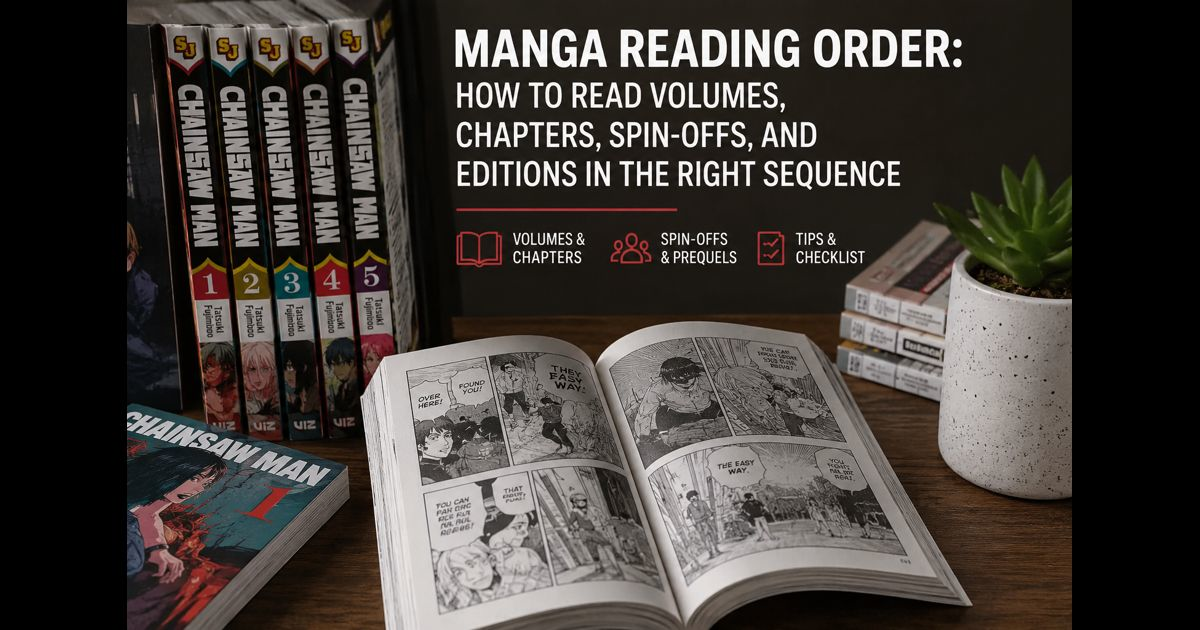
Manga reading order is usually simple: begin with volume 1 and continue through the chapters in publication order. The confusion begins when a series has prequels, sequels, spin-offs, side stories, omnibus editions, special chapters, or an anime adaptation that covers only part of the story.
A reliable reading order protects the intended pacing of reveals, character development, and major plot turns. It also stops readers from buying the wrong edition or starting a sequel before they understand the original story.
This guide explains how to find the correct order without relying on spoilers, unofficial uploads, or guesswork.
Start With the Original Manga Series
For most manga, the original serialized story is the main reading path. Start at chapter 1 or volume 1, then continue in numerical order.
A standard sequence looks like this:
- Volume 1
- Volume 2
- Volume 3
- Continue until the final published volume
Do not assume an anime, film, light novel, or video game must be completed first. Many adaptations change scenes, omit material, add original content, or stop before the manga ends.
The safest choice for a first-time reader is the manga’s original publication order unless the publisher specifically states that a companion work should be read earlier.
Understand Chapters, Volumes, and Omnibus Editions
A manga chapter is one installment of the story. Chapters are commonly collected into printed or digital books called volumes, also known as tankōbon.
A volume may contain several consecutive chapters. The cover might say “Volume 4,” while the first page inside begins with a much higher chapter number. That is normal.
An omnibus edition combines multiple original volumes into one larger book. For example, an omnibus labelled “1” may include original volumes 1, 2, and 3. Always check the product description or contents page before buying the next book.
This matters especially when collecting a long series. Buying an omnibus and then purchasing the next numbered single volume can accidentally repeat chapters you already own.
Read Manga From Right to Left
Most Japanese manga is read from right to left. This applies to the cover, individual pages, panel flow, speech balloons, and book order.
When opening a physical volume:
- Start from what may look like the back cover to readers used to English-language books.
- Read the right-hand page before the left-hand page.
- Follow panels from upper right to upper left, then move downward.
- Read speech balloons in the same general direction.
Many English-language releases include a note near the beginning explaining the reading direction. Do not reverse pages just because the book feels unfamiliar at first. After a few chapters, the layout becomes natural.
If you are new to demographic labels such as shonen, shojo, seinen, and josei, our complete guide to manga genres can help you choose stories that match your interests.
Check Whether the Story Is Complete or Ongoing
Before beginning a manga, confirm whether it is complete, currently serialized, on hiatus, or continuing through a sequel.
A completed series has a fixed ending and a known final volume. An ongoing series may release new chapters irregularly, then collect them into volumes later. A hiatus means future chapters are uncertain rather than cancelled.
Publisher pages, the copyright page inside official volumes, and reputable library catalogues are useful places to verify status. Avoid trusting social-media posts or unverified fan lists for release information, particularly when new chapters are expected.
For an ongoing series, read all officially available volumes in order, then wait for the next release. There is no need to search for supposed unreleased chapters or unofficial translations.
When to Read a Prequel
A prequel tells a story set before the main series. Its place in the timeline does not always mean it should be read first.
Many prequels are written for readers who already know the main story. They may reveal a character’s fate, explain a mystery too early, or assume knowledge that a new reader does not yet have.
Use this rule:
- Read the prequel first only when the publisher presents it as the opening point for new readers.
- Otherwise, read the main series first and return to the prequel where the publisher or author recommends.
Publication order is usually safer than chronological order because it preserves the way the story was originally revealed.
How to Handle Sequels and Spin-Offs
A sequel continues after the original series. Finish the main story before beginning it unless the publisher clearly labels the sequel as a standalone entry point.
A spin-off uses part of the same world, cast, or premise but may follow a different character. It can be essential, optional, comedic, historical, or completely separate in tone.
Before reading a spin-off, check three things:
Does It Spoil the Main Story?
Read a short official description without looking at reviews or detailed summaries. If the description mentions events that happen late in the main series, save it until later.
Is It Written by the Original Creator?
A spin-off can still be enjoyable if another writer or artist creates it, but that may affect its relationship to the main canon. Publisher information normally identifies the credited creators.
Is It a Side Story or a Required Chapter?
Some companion volumes contain events that explain later developments. Others are simply extra adventures. If a publisher calls it an “official side story,” “novel,” or “spin-off,” do not automatically assume it is mandatory.
When in doubt, finish the numbered main volumes first.
Special Chapters, Bonus Pages, and Guidebooks
Manga volumes sometimes include bonus comics, author notes, character sketches, Q&A pages, or short extras after the main chapter list.
Read these pages after finishing the volume in which they appear. They are often harmless additions, but some include jokes or details that make more sense after the main chapters.
Guidebooks, fanbooks, and databooks should usually be saved until you are caught up with the related series. These books can contain character histories, timelines, relationship details, and artwork that reveal information from much later in the story.
A good rule is simple: if a companion book has a spoiler warning, respect it even if you only plan to browse the illustrations.
Manga Reading Order After Watching an Anime
If you watched an anime first, identify exactly which manga chapters or volumes its final episode adapts. Do not guess from episode numbers alone.
Adaptations can combine chapters, change the order of scenes, skip material, include anime-original episodes, or finish at a different point from the source. Check an official publisher description, a legally licensed release page, or a trustworthy library catalogue before choosing your next manga volume.
If the adaptation has filler or significant changes, beginning from volume 1 can still be the best experience. It gives you the full pacing, artwork, and scenes as the manga creator intended.
For readers deciding where to access official digital editions, our guide to reading manga online safely explains the value of using licensed sites, publisher apps, and library services.
A Simple Manga Reading Order Checklist
Use this checklist before buying or opening the next book:
- Confirm the title and creator.
- Start with the numbered main series.
- Check whether you are reading single volumes or omnibus editions.
- Read chapters in their published order.
- Save prequels and spin-offs until you know whether they contain spoilers.
- Finish the original series before beginning a sequel.
- Read bonus pages after the main chapters in that volume.
- Verify an anime’s stopping point before continuing in manga form.
- Use official publisher information when release order is unclear.
Frequently Asked Questions
Should I read manga in chronological order?
Usually, no. Publication order is the better default because prequels and side stories may reveal information that the original series intentionally kept hidden.
Do I need to read every manga spin-off?
No. Many spin-offs are optional. Read the numbered main series first, then decide whether a companion story interests you.
Can I start manga where the anime ends?
You can, but first verify the final episode’s manga coverage through a reliable source. Starting a little earlier is often useful because adaptations may omit or change scenes.
What is the difference between a volume and a chapter?
A chapter is one installment of the story. A volume is a book that collects several chapters together.
How do I avoid buying duplicate manga volumes?
Check whether your current books are single volumes, omnibus editions, box sets, or collector’s editions. Look at the contents page to see which original volumes and chapters are included.
Are digital and print manga reading orders the same?
Yes. Official digital and print editions normally use the same chapter order. The main difference is format, availability, and whether the digital edition includes extra pages.