Shonen vs Seinen: Key Differences
Shonen and seinen are two of the most talked-about words in manga, and two of the most misunderstood. New readers often treat them as genres, like fantasy or romance, but they are audience labels, not genres. Shonen manga is made mainly for teenage boys, and seinen manga mainly for adult men. That single fact shapes almost everything else.
A shonen series is built to excite a young reader, while a seinen series holds the attention of an older reader who has less time and a taste for stories that do not always end in victory. Neither is better than the other. This guide explains the shonen vs seinen difference in plain terms, and if you are still finding your way around, our manga genres finder is a good place to start.
What Is Shonen Manga?
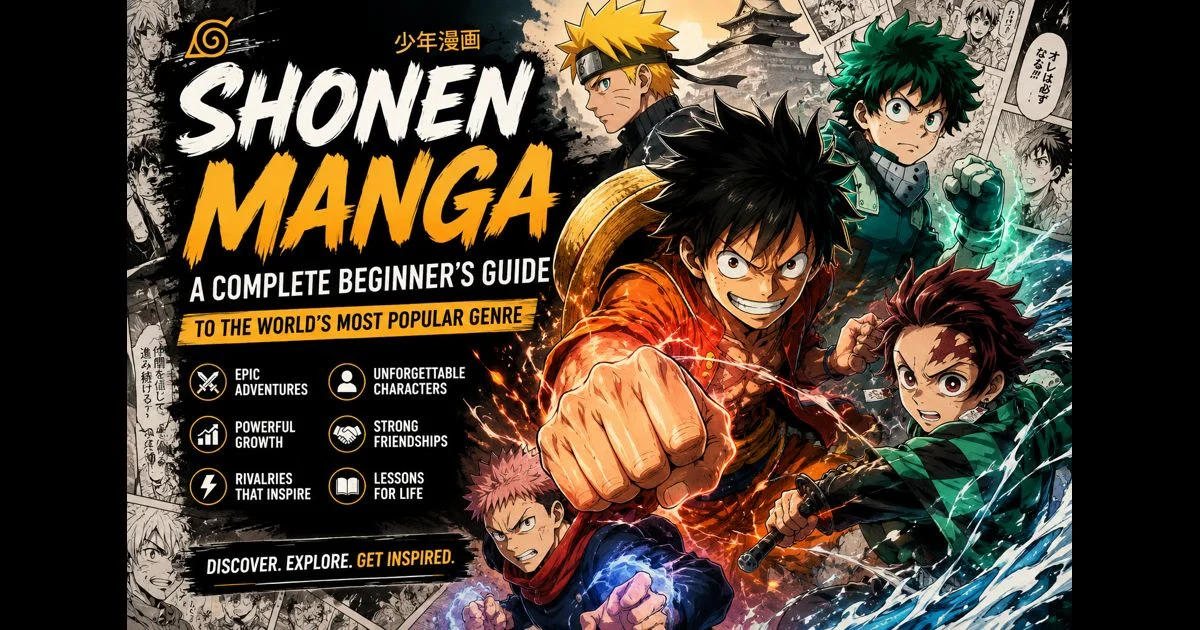
Shonen means “boy” in Japanese, and shonen manga is aimed at boys roughly between ten and eighteen. The best-known shonen magazine, Weekly Shonen Jump, has published Dragon Ball, Naruto and One Piece. Those three titles tell you most of what you need to know: young heroes, big dreams, loyal friends, powerful rivals and battles that grow larger with every arc.
The classic shonen story follows a young hero who wants something badly and is willing to train, struggle and fail to get it. He usually starts weak or ordinary, gathers friends, faces stronger enemies and grows through effort. Friendship, hard work and never giving up come up again and again, and the mood stays hopeful even when the stakes are high. For a fuller introduction, see our beginner’s guide to shonen manga.
What Is Seinen Manga?
Seinen means “young man” in Japanese, and seinen manga is aimed at adult men, roughly from their late teens onwards. Our complete guide to seinen manga goes into detail, but in short, seinen is where manga grows up. The heroes are often adults, the problems are often adult ones, and the stories accept endings that are sad, ambiguous or simply quiet.
A seinen series might follow a mercenary questioning a life of violence, or an office worker trying to hold a marriage together. The action can be brutal and realistic, the humour drier, and romance more complicated than first love. Because its audience is older, seinen can tell stories about work, politics, war, crime and ageing without softening the edges, which is why many readers move towards it as they get older.
Shonen vs Seinen at a Glance
The table below sums up the usual differences, as a guide to the typical case, not a strict rule.
| Aspect | Shonen | Seinen |
|---|---|---|
| Target reader | Teenage boys, roughly 10 to 18 | Adult men, roughly 18 and older |
| Typical hero | Young, energetic, still growing up | Often an adult, sometimes weary or flawed |
| Core themes | Friendship, effort, dreams, rivalry | Work, morality, society, survival, loss |
| Tone | Hopeful, loud, adventurous | Varied: quiet, dark, comic or reflective |
| Pacing | Fast, with long action arcs | Often slower, with room to breathe |
| Art style | Bold, clean, expressive action | Often detailed, realistic, atmospheric |
| Violence and content | Action violence, usually restrained | Can be graphic, mature or disturbing |
| Series length | Often very long, hundreds of chapters | More varied, often shorter and complete |
| Famous examples | One Piece, Naruto, Dragon Ball | Berserk, Vinland Saga, Monster |
The Difference That Matters Most: Audience
Everything else about shonen vs seinen follows from the audience. A magazine for teenage boys needs stories a teenager can follow week after week, exciting enough to compete with games and videos. That is why shonen heroes are usually young: readers see themselves in the hero. The hero’s goals are clear, the enemies are visible, and progress can be measured in new powers, new friends and new victories.
A magazine for adult men faces a different reader, one with a job, a commute and limited free time, who has already read the simple hero stories and wants something new. So seinen creators take more risks, writing heroes who lose, villains who have a point, and stories where the right choice is not obvious. Shonen is the younger half of the same tradition that seinen continues for adults, just as shojo is the younger counterpart of josei, explained in our josei manga guide.
Themes and Stories: Dreams vs Real Life
Shonen themes are built around becoming. The hero wants to become the strongest, the best or the freest. Even with dark subjects, the frame stays hopeful: effort matters, friends matter, and the future is worth fighting for. That optimism is why shonen is often the first manga a reader ever loves.
Seinen themes are built around living with what has already happened. The hero often starts with a past he cannot change: a war he fought, a crime he committed, or a dream that did not work out. The story asks what he does next, which gives seinen its range: it can be thrilling, funny, tender or bleak, sometimes in the same chapter, or simply about ordinary life done with care, such as a man learning to cook.
Tone, Art and Pacing
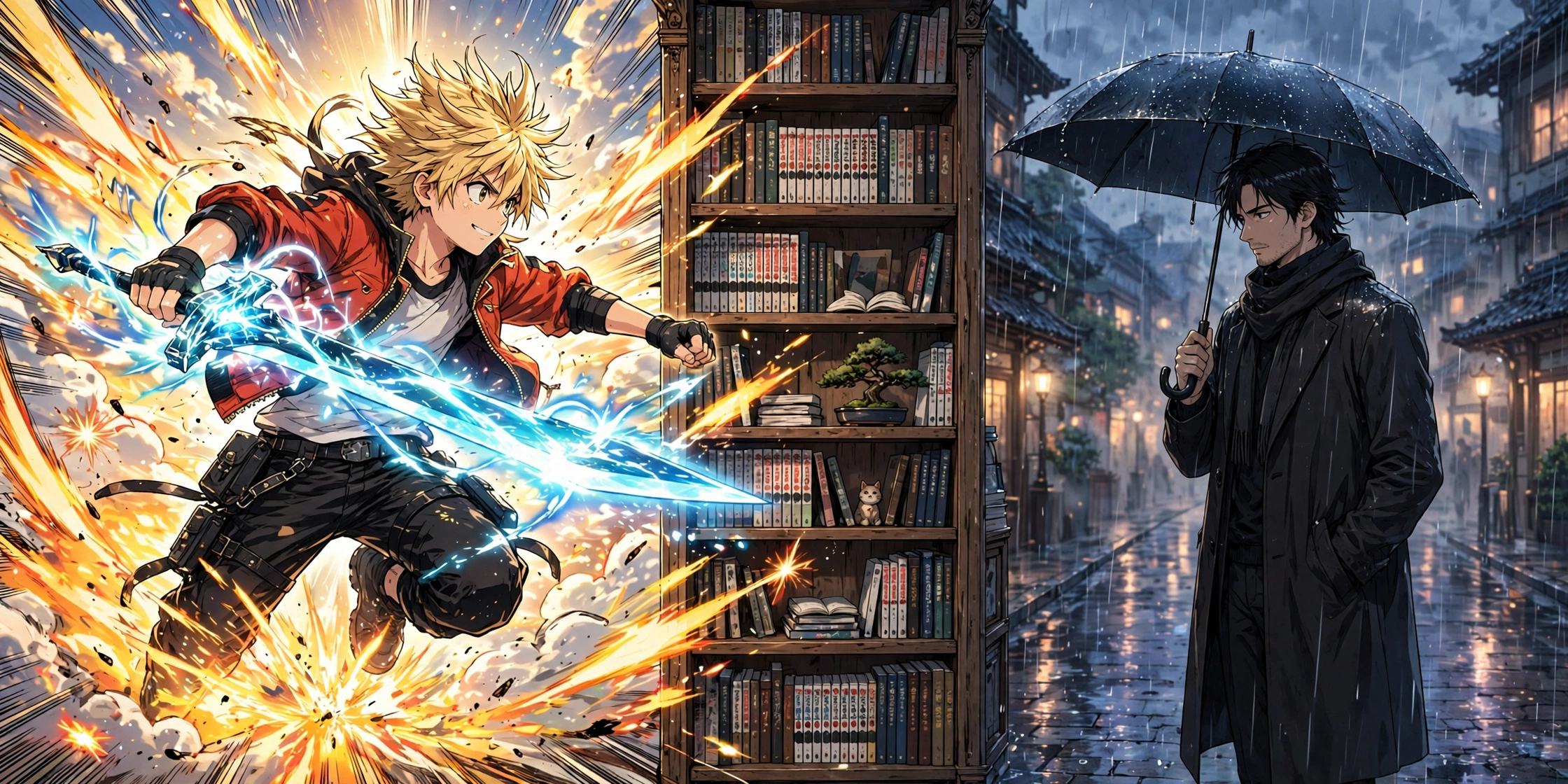
Tone is often the fastest way to tell the two apart. Shonen is loud by design: characters shout their attacks and declare their dreams in front of crowds. Seinen is quieter, even in its action scenes. A fight in a seinen series might last a few pages and leave everyone shaken, where a shonen fight might last twenty chapters and end with a speech about friendship. Both can be gripping, in different ways.
The art follows the same split. Shonen art is usually bold and clean, built for speed and clarity, with expressive faces and exaggerated motion. Seinen art is often more detailed, with careful backgrounds and faces that show age and doubt. Pacing completes the picture: shonen series can run a decade or more, while seinen series are more varied and often complete in ten or twenty volumes. Our manga reading order guide explains how to start a long series.
How to Tell Them Apart in Practice
The simplest test is the hero’s age and situation. If the main character is a school student or a young trainee and the story is about getting stronger, the series is probably shonen. If the main character is an adult with a job, a rent payment or a past mistake, it is probably seinen. The test is not perfect, but it usually works.
The second test is the magazine, because the magazine decides the label. Weekly Shonen Jump is a shonen magazine, so everything in it is shonen. A series in Weekly Young Jump or Big Comic Spirits is seinen, for the same reason. The third test is content: seinen is allowed to be more explicit, and our manga age ratings guide explains how those boundaries work.
Which Should You Read First?
Start with shonen if you want energy, adventure and a hero to root for. It is the friendlier entry point. Try one long-running hit, such as One Piece or Naruto, or something shorter and modern if a thousand chapters feels too much. It is also the better choice if you are reading with a younger reader, or want a series that cheers you up after a long day.
Start with seinen if you want stories closer to adult life. Try Berserk for dark fantasy, Vinland Saga for historical drama, or Monster for a slow-burning thriller. If those sound too heavy, start gentler, with a cooking manga, a workplace comedy or a quiet slice-of-life story. Give a series three or four chapters before deciding. Most readers do not have to choose at all: shonen for excitement, seinen for depth. Our complete guide to manga genres maps the whole system.
Frequently Asked Questions
Is shonen only for boys?
No. The label describes the intended audience, not a rule about who may read it. Many girls and women love shonen, just as many boys and men love shojo.
Is seinen only for men?
No, for the same reason. Seinen is aimed at adult men, but its readers include women of all ages, and the best seinen series have large, mixed audiences.
Can a series be both shonen and seinen?
A series runs in one magazine, so it carries one label at a time, though it can move magazines, and a shonen series can grow darker as its readers grow up.
Conclusion
Shonen vs seinen comes down to one idea: who the story is for. Shonen speaks to young readers with energy, hope and heroes who refuse to give up. Seinen speaks to adult readers with experience and ambiguity, unafraid of quiet or sad endings. Read one of each and you will feel the difference before you can put it into words. That feeling is the best guide to your next manga.