If you have ever searched for a chapter that has not reached your country yet, you have probably come across manga scans. The term covers a whole world of fan translations, image files, reading apps and grey-area websites, and new readers often have no idea which parts of that world are safe, legal or even worth their time. This guide explains what manga scans actually are, how they are made, where people read them, and how you can enjoy manga online without harming the creators who make it.
What Are Manga Scans, Exactly?
Manga scans are digital copies of manga pages, usually made by scanning a printed volume or photographing its pages, then shared online as image files. A chapter might arrive as a folder of images, a ZIP or CBZ archive, or a page-by-page viewer inside a website or app. The pages are normally the original Japanese artwork, sometimes with a fan-made English translation pasted over the speech bubbles. When a scan has been translated by fans, it is usually called a scanlation, a word that blends scan and translation.
For many readers outside Japan, manga scans were the first way to read series that had never been licensed in English. Long before official apps offered same-day chapters, fan groups were translating new chapters within hours of their Japanese release, and that speed built huge communities.
It helps to know the words people use. A raw is an untranslated scan, usually in Japanese. A scanlation is a scan that fans have translated into another language. A rip is a copy taken from an official digital source, and an official digital chapter is the licensed release sold by the publisher or its partners.
How Manga Scans Are Made
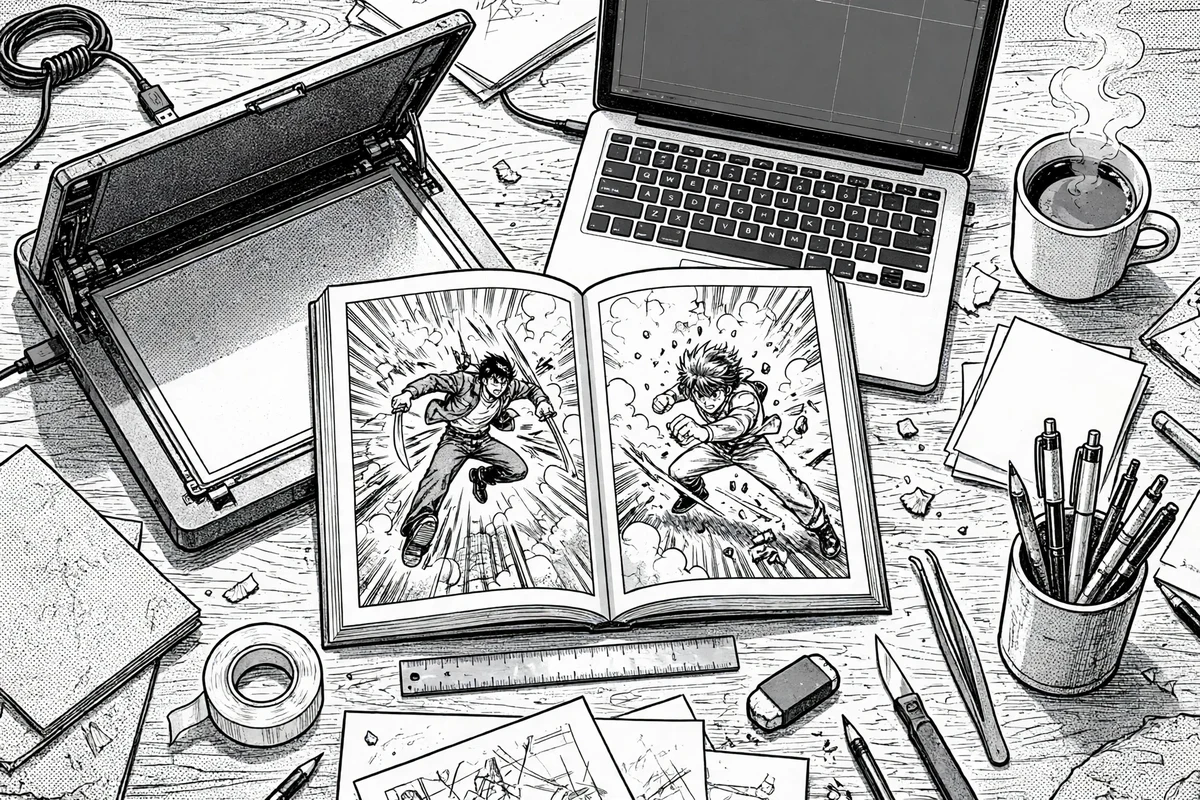
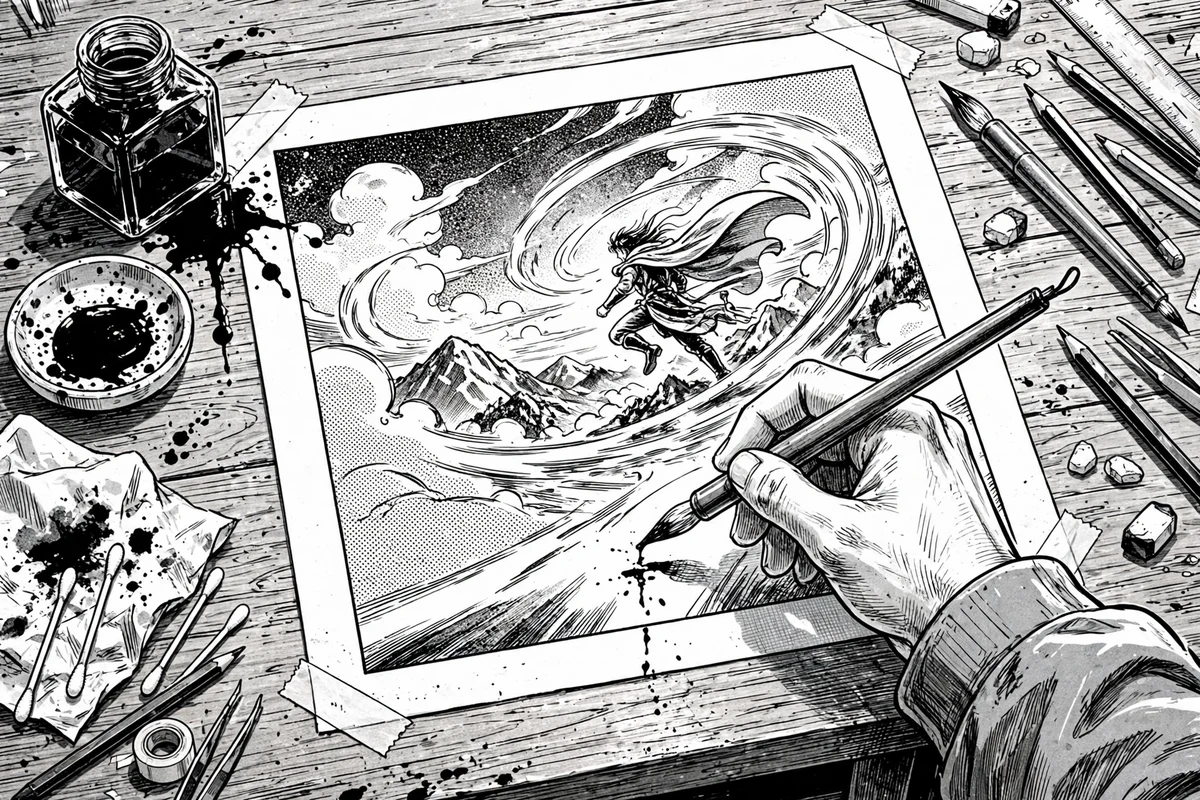
Making a good scanlation is slow, fiddly work done by teams rather than by one person. First, a group buys a copy of the magazine or volume and scans each page at high resolution. Then a cleaner removes dust, straightens tilted pages and repairs the gutter shadow where two pages meet. A single chapter can take an hour or more of cleaning alone, and a sloppy clean is obvious the moment you open the file.
Once the pages are clean, a translator works through the Japanese dialogue, sound effects and margin notes. Good translators do more than swap words; they keep the tone of each character and handle jokes that do not travel well. Then a typesetter places the English text into the speech bubbles, matching the original font style as closely as possible, and a proofreader checks the chapter against the raw before release.
The best-known groups publish a credits page naming each role, and readers learn to trust certain groups the way they trust certain publishers. When a group disbands or loses its translator, its series often stall.
Where Readers Find Manga Scans
Manga scans live in several different places, and each one comes with its own trade-offs. Official apps and publishers are the safest starting point. Services run by publishers or licensed partners offer huge catalogues, proper translations and new chapters on the same day as Japan, often free with ads or as part of a small subscription. They are also the only option that sends money back to the people who drew the manga you love.
Fan scanlation sites sit in the middle. These are usually run by the translation groups themselves, and they host only the series they work on. The quality is often excellent, and the groups usually stop translating a series the moment it gets an official English licence.
Aggregator sites are the far end of the scale. They scrape scans from everywhere, re-upload them under their own branding, and surround them with aggressive adverts. They rarely credit the groups who did the work, and they are the sites most likely to be full of pop-ups, fake download buttons and malware.
Public libraries are the option most readers forget. Many library systems now lend manga digitally through apps, and a library card can give you free access to hundreds of licensed volumes with no adverts at all.
| Source | What you get | Cost | Quality |
|---|---|---|---|
| Official manga apps | Licensed chapters, same-day releases, huge catalogues | Free with ads or a small subscription | Excellent, professional translation |
| Publisher websites | Licensed series from one publisher, free samples | Mostly free, some paid volumes | Excellent, official artwork |
| Fan scanlation groups | Unlicensed series translated by volunteers | Free, donations optional | Very good, varies by group |
| Aggregator sites | Thousands of series scraped from other sources | Free, heavy advertising | Mixed, often low resolution |
| Library apps | Licensed volumes borrowed with a library card | Free with a library card | Excellent, official editions |
| Buying digital volumes | Your own permanent copy of licensed volumes | Paid per volume | Excellent, highest resolution |
Are Manga Scans Legal?
The honest answer is that most manga scans are not legal. Manga is copyrighted work, and scanning a volume and uploading it without the publisher’s permission is copyright infringement in almost every country, even when no money changes hands. The translation groups know this, which is why they usually work anonymously and take their projects down when a series is licensed.
Reading a scan is a greyer area than uploading one. In many countries, simply viewing a page in a browser is not treated the same way as distributing copyrighted files, and enforcement against individual readers is rare. But rare is not the same as risk-free, and it is certainly not the same as legal.
There is also a practical argument that matters more than the legal fine print. Manga artists earn a living from sales, and a series that nobody buys can be cancelled, no matter how many people read it for free. The common-sense middle ground most fans settle on is simple: use scans to discover, then support the series officially whenever you can.
How to Read Manga Scans Safely
If you do read scans, a few habits will keep your device and your data much safer. Aggregator sites are the main risk, because their business model depends on adverts, and the worst of those adverts are designed to trick you into clicking. Never download an app, a reader, a codec or a media player from a scan site: a real manga reader never asks you to install extra software to view a page. Treat every download button with suspicion, because on many aggregator pages the biggest, brightest button is an advert.
Keep your browser and your ad blocker up to date, and do not enter personal details, payment information or social logins on a scan site. Reading on an official app removes almost all of this risk at a stroke: no fake download buttons, no pop-ups and no mystery files. If you want the scanlation experience without the risk, the groups’ own sites are the next safest option.
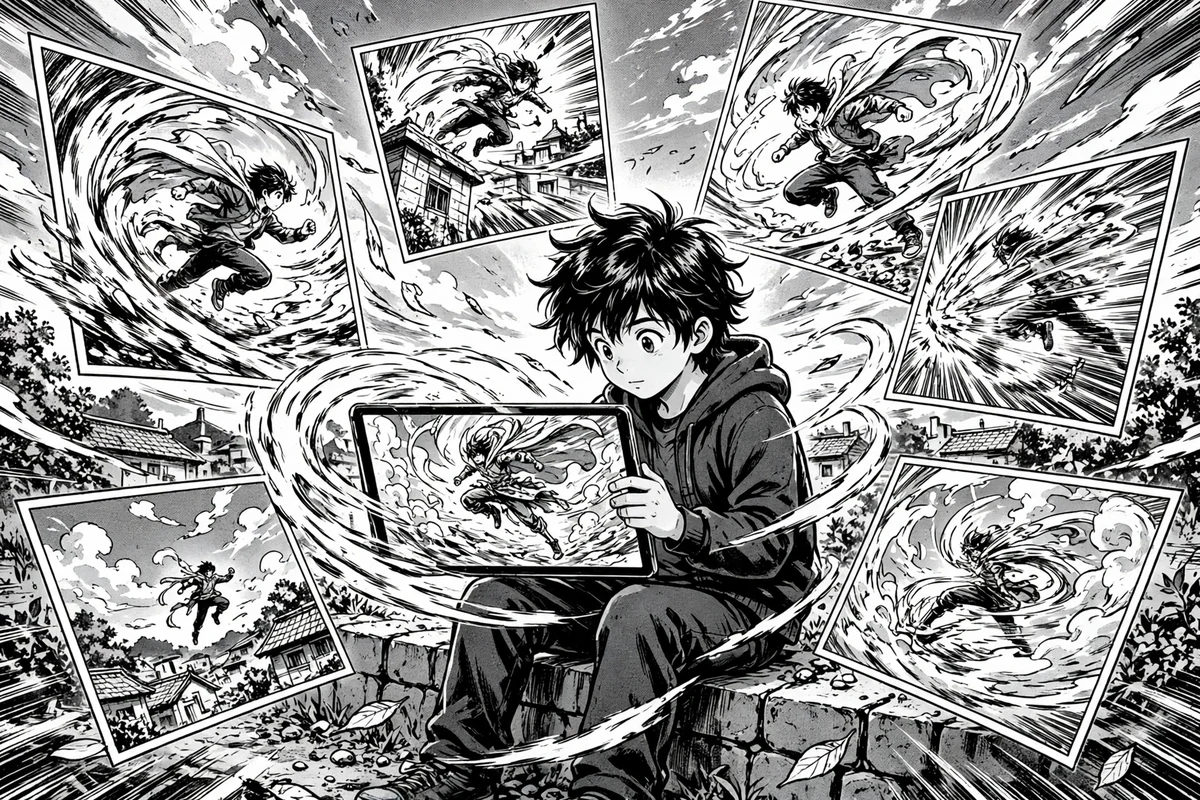
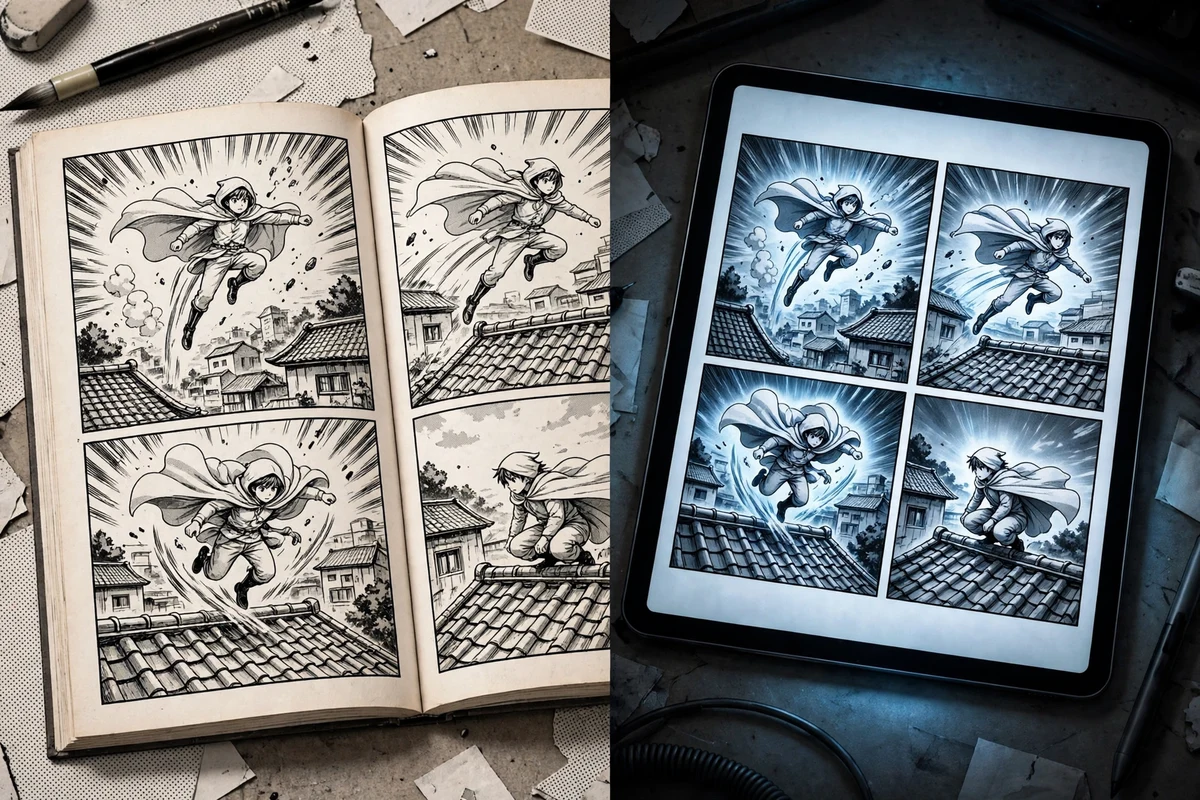
Your reading setup matters too. Manga is drawn to be read right to left, and a good reader respects that, whether it is an official app or a fan site. Learning to follow the flow of manga panels makes every page easier to follow, and it stops the classic beginner mistake of reading a conversation backwards. A phone works fine for most chapters, but a tablet shows the detail in the art far better.

How to Judge the Quality of Manga Scans
Not all scans are equal. Good scans have crisp black lines, clean white backgrounds and text you can read without zooming. If the pages look grey, blurry or washed out, the group scanned at low resolution or never cleaned the images properly.
Supporting the Creators Behind the Scans
It is easy to forget that every scan started as work by a real person. A manga artist may spend a week on a single chapter, and a writer may spend months planning the story behind it. When a series is read widely but bought rarely, the artist feels it in their sales figures.
Supporting creators does not have to be expensive. Buying one volume of a series you love, subscribing to an official app for a month, or even borrowing the licensed edition from a library all count, because libraries pay for the copies they lend. Many publishers now release new chapters in English on the same day as Japan, which has removed the main reason readers once turned to scans: the wait.
Finding Good Series Through Manga Scans
One thing scans are genuinely good for is discovery. Because they are free and fast, readers use them to try series they would never risk buying blind. That is how many fans found their favourite long-running manga: a single scanned chapter, read on a whim.
The smart way to use scans for discovery is to treat them as a tasting menu. Read the first few chapters, and if the story grabs you, check whether a licensed edition exists. Our guide to manga reading sites lists the places where you can continue the series legally, and our guide to how to read manga online walks through the reading apps and settings that make the experience comfortable. If the series is unlicensed, following the fan group directly is better than relying on an aggregator to re-upload their work.
It also helps to keep a list. Scans disappear: groups disband, sites get taken down, and a series you meant to finish can vanish from the internet overnight. Note the title, the group translating it and the chapter you reached, so you can pick it up again or find the official edition later.
Frequently Asked Questions About Manga Scans
What is the difference between manga scans and scanlations?
A manga scan is the raw digital copy of the pages, usually still in Japanese. A scanlation is that scan after fans have translated it into another language and typeset the text into the panels. Every scanlation starts as a scan, but not every scan becomes a scanlation.
Can I get in trouble for reading manga scans?
Uploading and distributing scans is copyright infringement in most countries. Simply reading them is treated less strictly in many places, but the rules vary, and downloading from pirate sites can still bring warnings from your internet provider. Official apps are the only option with no legal risk at all.
Are manga scans safe to download?
Image files themselves are usually harmless, but the sites that host them are not always safe. Aggregator sites are the main danger, with misleading download buttons, pop-ups and fake software installers. Never install anything a scan site asks you to install, and prefer official apps or the groups’ own websites.
The Bottom Line on Manga Scans
Manga scans opened the door to manga for millions of readers who had no other way to find it, and the fan groups who translate them deserve real respect for the hours of unpaid work behind every chapter. But scans are a starting point, not a destination. The best reading experience and the best future for the series come from the official edition.
So use manga scans to explore, to sample new genres and to find the stories that speak to you. Then, when a series earns your love, support it properly. Buy the volume, subscribe to the app, or borrow it from the library. That is how a scan becomes a shelf full of manga.