Open any manga volume and the first thing you notice is the page itself: a patchwork of framed pictures, some large, some tiny, some tilted, some with no border at all. These framed pictures are called manga panels, and they are the basic building blocks of every manga story. Each panel holds a single moment — a character’s expression, a punch landing, a quiet landscape — and the way the panels are arranged tells you how fast to read, what to feel, and where to look next.
What Are Manga Panels?
A manga panel is a single framed image on a manga page — one shot in a film, capturing one moment from one angle: a whole street scene, a close-up of a character’s eyes, or a hand reaching for a door handle. On its own, a panel is just a picture; in sequence with others, it becomes storytelling.
The white space between panels is called the gutter. Your eye jumps across the gutter from one panel to the next, and your brain fills in whatever happened in between. That jump is where much of the magic of manga lives: a fight can last one panel or ten pages, depending entirely on how the artist broke the action into panels.
Panels also carry the dialogue, with speech bubbles following the same right-to-left rule. If you are new to the medium, our guide to how to read manga right to left walks through the reading direction step by step. Every artist makes deliberate choices about panel size, shape, and placement: a small, neat row of panels feels calm and steady, while a huge panel that bleeds off the edge of the page feels dramatic and loud.
The Main Types of Manga Panels
Not all panels do the same job. Artists use different panel types for different effects, and recognising them helps you understand why a page feels the way it does.
| Panel Type | What It Looks Like | Best For |
|---|---|---|
| Standard panel | A neat rectangle with a clear black border | Everyday scenes, dialogue and steady storytelling |
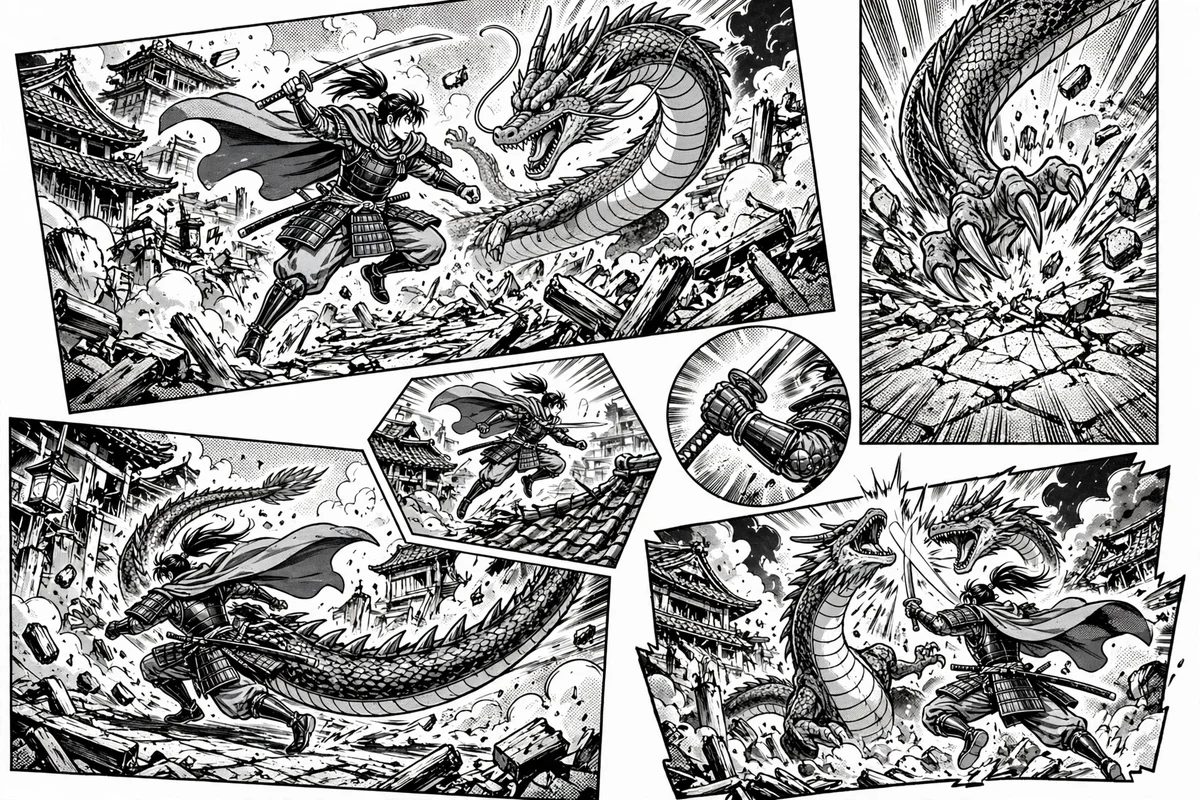
| Splash panel | One huge panel filling most or all of the page | Big reveals, battles and breathtaking scenery |
| Inset panel | A small panel placed inside a larger one | A reaction shot or a detail within a wider scene |
| Borderless panel | An image with no frame, fading into the page | Dreams, memories and quiet emotional moments |
| Overlapping panel | Panels layered on top of one another | Fast action, chaos and events happening at once |
| Vertical panel | A tall, narrow panel running down the page | Falling, height, suspense and slow reveals |
Most pages mix several of these types at once. A quiet conversation might use standard panels throughout, then suddenly break into a splash panel when something shocking happens. That contrast is the point: the change in panel type tells your eye that something important has changed.
How Manga Panels Control Pacing
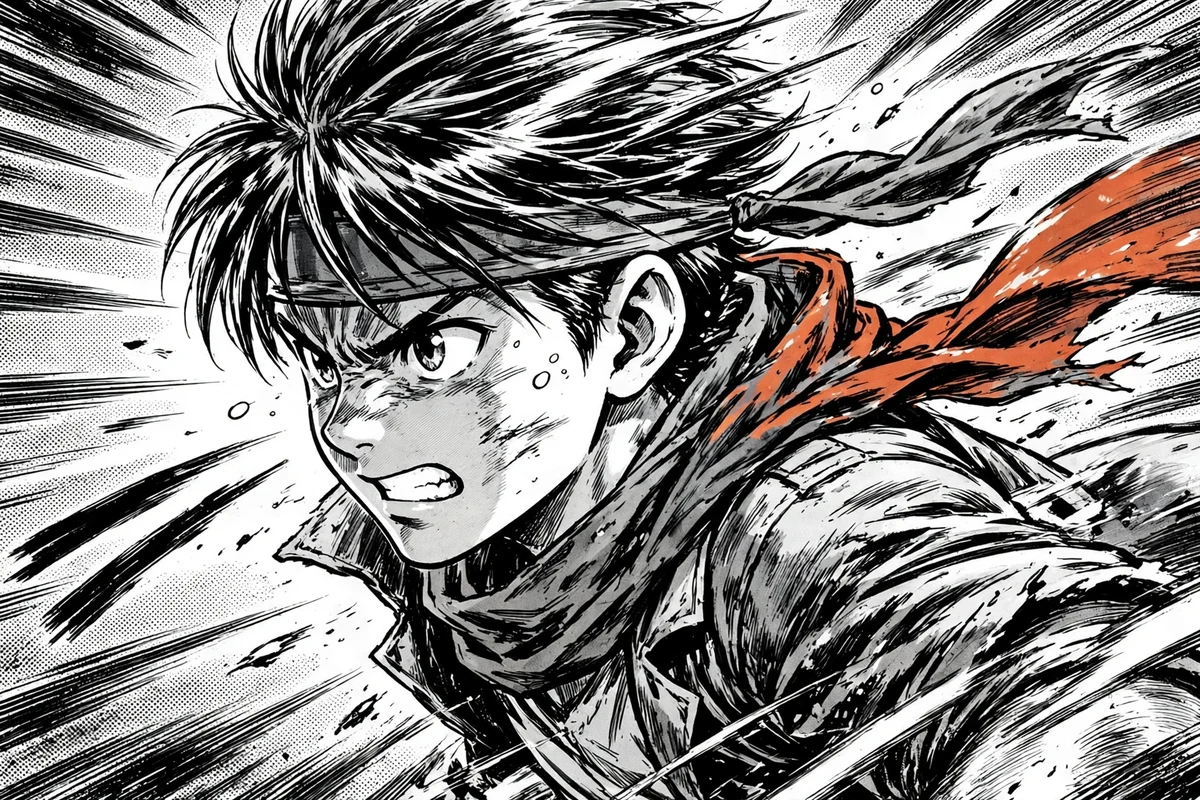
Pacing is the speed at which a story feels like it is moving, and panels are the artist’s main tool for controlling it. The rule is simple: more panels mean slower time, and fewer panels mean faster time.
Imagine a character opening a door. An artist could show it in one panel and move on, or stretch it across five: the hand on the handle, the handle turning, the door creaking open, the character’s wide eyes, and what waits on the other side. The same event takes five times as long to read, so it feels five times as tense. Horror and romance manga use this trick constantly, lingering on small moments to build feeling.
Action scenes work the other way round. A fight might use a dozen small, jagged panels on a single page, each showing a fragment of movement — a fist, a dodge, a kick, a gasp. Your eye races across them, and the scene feels fast and chaotic. Then a single wide panel of the aftermath brings everything to a sudden stop. Wide panels slow you down, tall vertical panels stretch a moment out, and tilted panels feel unstable and suit shock or confusion.
How to Read Manga Panels Right to Left
The single biggest stumbling block for new readers is the reading direction. Manga is read right to left, top to bottom — the opposite of English books. Start at the top-right panel and work leftwards, then drop to the next row and repeat.
Inside a panel, the same rule applies to speech bubbles: read the bubble on the right first, then move left. The tail of each bubble points to the character who is speaking, so follow the tail if you lose track. Sound effects are often drawn as large stylised lettering across panels; you do not need to read these as words, just take them as part of the artwork — a crash, a whisper, or a heartbeat.
Some pages break the neat grid on purpose. Overlapping panels, diagonal borders, and splash pages can make the order less obvious. When that happens, look for the artist’s clues: a character’s gaze often leads your eye to the next panel, and a panel that overlaps another usually comes first. For a fuller walkthrough, see our guide to how to read manga right to left and our manga terms glossary.
Famous Examples of Panel Craft
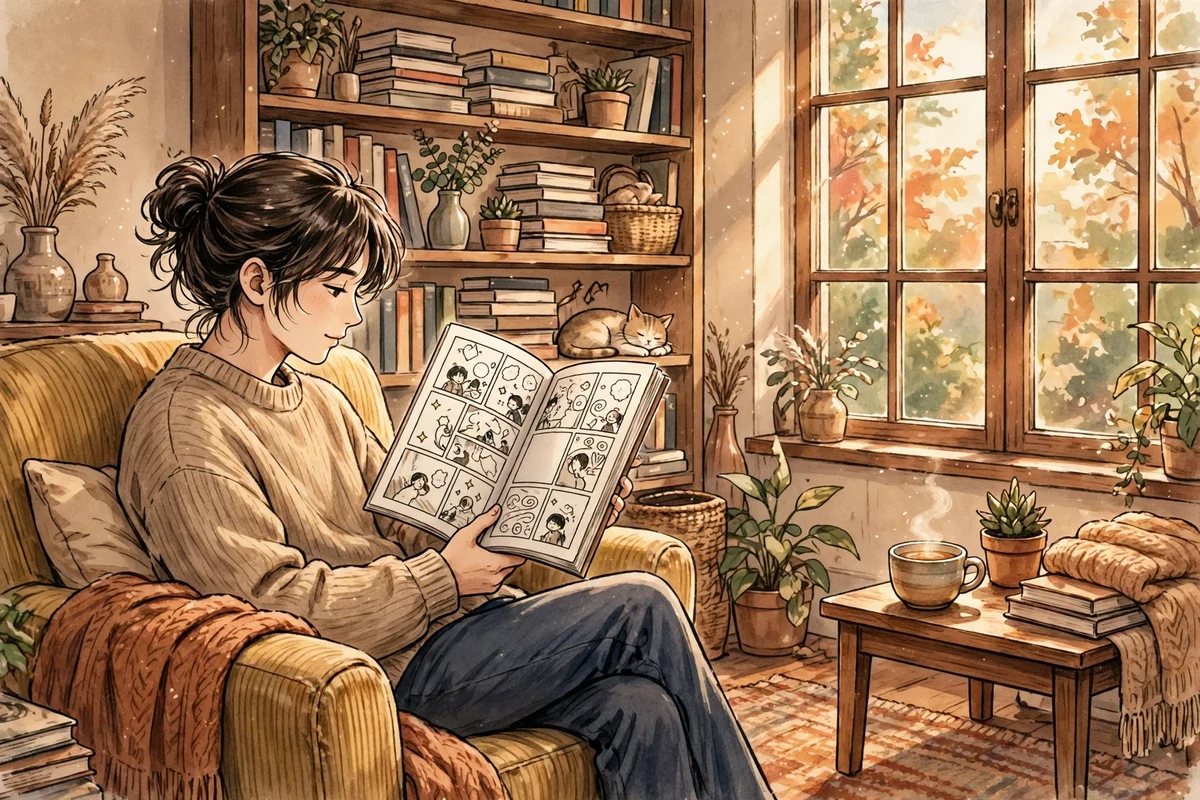
Studying great panel work is the fastest way to train your eye.
One Piece is famous for its crowded, energetic pages. Eiichiro Oda packs panels tightly together during battles, then suddenly opens up with a vast double-page spread when a new island or a huge attack appears. The contrast makes the big moments feel enormous.
Berserk, by Kentaro Miura, uses detailed, densely shaded panels to create a heavy, oppressive atmosphere. Fight scenes stretch across many small panels, while moments of horror get huge splash panels that force you to stop and stare.
Death Note shows how panels can build tension without any action at all. Many of its most famous pages are just two characters talking, yet the artist, Takeshi Obata, uses tight close-ups, extreme angles, and carefully timed pauses between panels to make a conversation feel like a duel. Notice how different these three series look, even though they all use the same basic tool. Panels are not a fixed template — they are a language, and every great artist speaks it differently. Our guide to understanding manga art styles and techniques explores how line work, shading, and screentone combine with panel layout to create each artist’s signature look.
Tips for New Readers
First, slow down. Manga rewards a slower pace: look at each panel for a second before moving on, and let the artwork sink in. You will catch jokes, foreshadowing, and background details that fast readers miss entirely.
Second, pick a beginner-friendly series to learn on. A straightforward story with clear panel layouts is far easier than a dense battle series. Our list of the best manga for beginners is a good place to start, and the manga genres guide will help you find a style you enjoy.
Third, do not worry if a page confuses you — even experienced readers occasionally reread a page. If a scene feels out of order, check whether you started at the top right, and check whether a panel is an inset or a flashback. Finally, pay attention to the gutters: a wide gutter means a longer pause, while panels that touch or overlap mean events are happening almost simultaneously. Always read a volume in order — the manga reading order guide explains how volumes, chapters, and arcs fit together.
Tips for Aspiring Artists
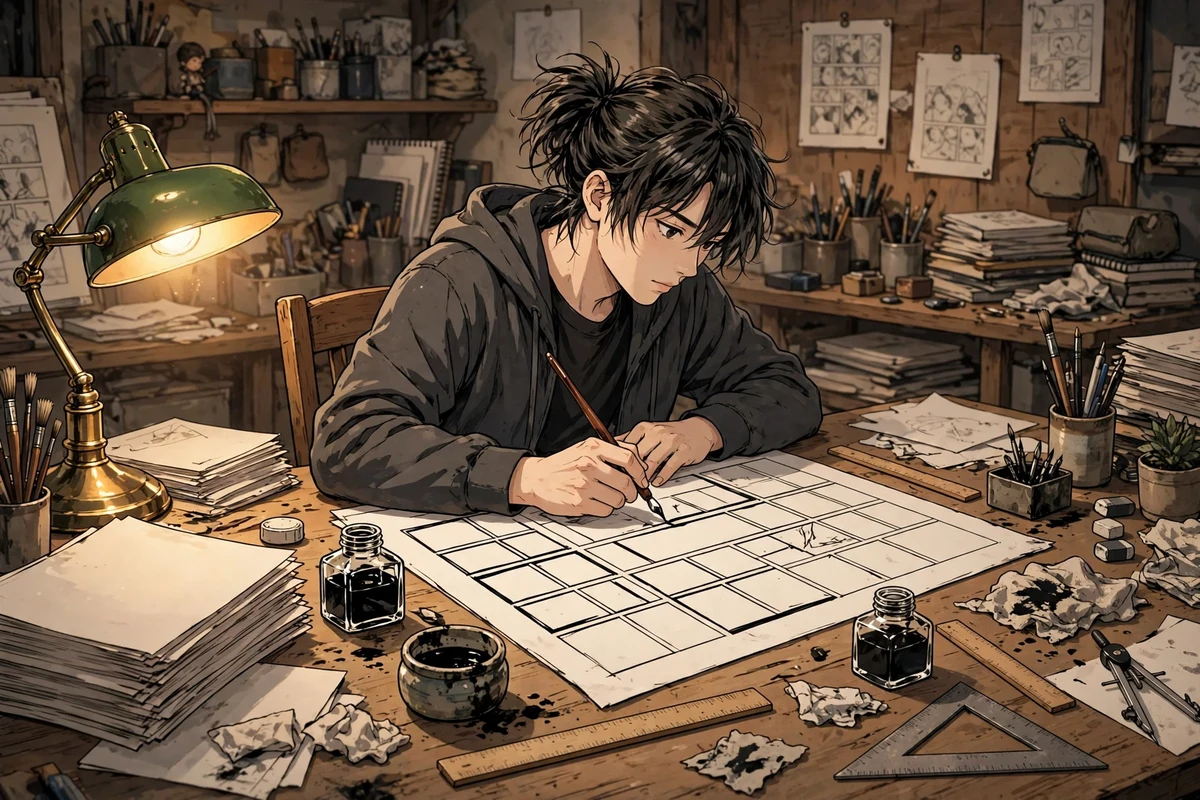
If you want to draw manga yourself, panels are where your storytelling begins. Many beginners focus on characters and forget the layout — but a beautiful character in a badly planned panel will still read badly. Start with the layout first, and the art second.
Begin by thumbnailing: before you draw anything in detail, sketch each page as a set of tiny rectangles on scrap paper. Decide how many panels the page needs, which moment deserves the biggest panel, and where the reader’s eye should travel. If the thumbnail reads clearly at a glance, the finished page will too.
Vary your panel sizes with intent. Give the most important moment the largest panel, use small panels for quick beats, and save your splash panel for the moment that deserves a gasp. Respect the reading flow too: keep panels in a clear right-to-left order, and test your layout by covering the artwork and looking only at the panel shapes — if you can still follow the order, the layout works. Overlapping panels and diagonal borders are powerful, but use them sparingly, as a page full of them exhausts the reader.
Finally, study the artists you admire by copying their layouts, not just their characters. Redraw a page from One Piece or Berserk as empty boxes, and ask why each panel is the size it is. That exercise teaches more about manga panels than any amount of theory.
Common Mistakes Beginners Make
The first mistake is reading left to right out of habit. Many new readers slip back into English reading order without noticing, and if a conversation seems to make no sense, that is usually the cause. A sticky note inside the cover saying “start top right” helps until the habit sticks.
The second is skipping the art. Half the story is told through expressions, backgrounds, and body language rather than dialogue, so readers who skim the pictures and read only the words miss jokes, mood, and foreshadowing. The third is ignoring small panels: a tiny inset panel might look unimportant, but artists often hide the most telling detail there — a clenched fist, a bead of sweat, a character glancing away. Manga pages are not comic strips with fixed rows: panels change size, tilt, overlap, and vanish entirely, so expect variety and let the layout guide you.
Start Reading Panels Like a Pro
Manga panels are far more than boxes on a page. They are the grammar of manga: they set the pace, direct your attention, build tension, and deliver the emotional punch of a scene. Once you know the panel types and the right-to-left flow, every manga you pick up becomes richer and more rewarding.
The best way to learn is to read with fresh eyes. Pick a volume from our best manga for beginners list, slow down, and watch how the artist uses panels to guide you. Before long, you will not need to think about the rules at all.