Japanese manga is one of the most welcoming hobbies a new reader can pick up. It is cheap to start, easy to carry, and full of stories that cover almost every mood you can imagine, from quiet school romances to huge fantasy adventures. If you have never picked up a volume before, this guide will walk you through what Japanese manga is, how it works, which genres suit you, and how to read your very first book without feeling lost.
Most people meet manga through a famous title first. A friend recommends a series, a streaming show catches your eye, or a striking cover pulls you in at a bookshop. What keeps people reading is rarely one single story. It is the range. There is a manga about cooking, about football, about running a bakery, about travelling through space, and about nearly everything in between.
What Is Japanese Manga?
Japanese manga is a style of comic book storytelling that comes from Japan. The word itself simply means comics in Japanese, but outside Japan it has come to describe a particular way of telling stories with pictures: black-and-white artwork, expressive characters, cinematic panel layouts, and long-running series that can stretch across dozens of volumes. A single story often runs for years in a magazine before it is collected into the small paperback volumes you see on shop shelves.
The art is the first thing most new readers notice. Characters have large, expressive eyes, and artists use speed lines, shading, and dramatic close-ups to show emotion instead of spelling it out in words. A silent page can carry as much feeling as a page full of dialogue, and that visual language is part of why manga travels so well across countries and languages.
Manga is also read differently from most Western comics. Traditional Japanese manga reads from right to left, so you start at what looks like the back of the book and work your way forward. It feels strange for about ten pages, and then it becomes second nature. Most English editions keep this original right-to-left order and print a small note at the start to remind you. Our guide to how manga panels work explains the reading order in more detail if you want a visual walkthrough before your first volume.
How Japanese Manga Is Different from Western Comics
The biggest difference is scope. Western comics are often built around superheroes and shared universes, while Japanese manga covers almost every genre and every audience. There are manga aimed at young boys, teenage girls, working adults, and older readers, and each group gets stories written for its own age and interests. That is why two manga can feel like they come from completely different worlds even though they sit on the same shelf.
Length is another difference. A Western comic story arc might run for six issues, while a manga series can run for fifty volumes or more. That length lets characters grow slowly. You watch a shy student become confident over years of story, or a young cook train from a beginner into a master. Readers who enjoy long stories with slow, rewarding character growth often fall in love with manga for exactly this reason.
Art style also plays a bigger role. Manga is mostly printed in black and white, which surprises new readers who expect full colour. The lack of colour is not a shortcut. Artists use ink, shading, and texture to create mood, and many readers say the black-and-white pages feel more focused and more emotional than colour pages. A few special editions include colour pages, but the classic manga experience is monochrome, and it works beautifully once you settle into it.
Popular Japanese Manga Genres to Start With
Genres are the fastest way to find something you will enjoy. If you already know what kind of films or books you like, there is almost certainly a manga genre that matches. The table below covers the most popular starting points, with a well-known first title for each one and the kind of reader it suits best. For a fuller breakdown, see our complete guide to manga genres.
| Genre | What It Is About | A Good First Title | Best For |
|---|---|---|---|
| Shonen | Action, friendship, and heroes who never give up | One Piece | Readers who love adventure and big battles |
| Shojo | Romance, feelings, and relationships | Fruits Basket | Readers who enjoy heartfelt love stories |
| Seinen | Mature themes and realistic adult life | Vinland Saga | Older readers who want depth and realism |
| Josei | Adult romance and everyday life | Nana | Readers who want honest, grown-up romance |
| Fantasy | Magic, strange worlds, and epic quests | Fullmetal Alchemist | Readers who love world-building and magic |
| Horror | Fear, mystery, and the uncanny | Uzumaki | Brave readers who enjoy a good scare |
Shonen and shojo are the two most famous categories, but do not treat them as rules about who can read what. The labels describe the magazine a series first ran in, not the reader it is meant for. If a story sounds good, read it, whatever shelf it sits on.
Two of the more mature categories deserve a closer look. Seinen manga is written for adult men and often deals with work, war, politics, or moral choices that need more room to breathe. Our seinen manga guide covers the best starting points and explains how seinen differs from shonen. Josei manga is written for adult women and tends to focus on realistic relationships, careers, and the ups and downs of everyday life. Our josei manga guide is a good next stop if you like character-driven stories. If you are torn between the two action styles, our shonen versus seinen comparison lays out the differences side by side.
How to Read Japanese Manga for the First Time
Reading Japanese manga for the first time is easier than it looks. Start by picking a short, finished series rather than a story that is still running after twenty years. A complete series lets you read from start to finish without waiting months for the next volume, and it gives you a proper ending to enjoy. Our list of the best manga for beginners is built around exactly that idea, with friendly first series that will not overwhelm you.
When you open your first volume, remember the right-to-left rule. Hold the book so the spine is on your right, open the cover, and start at the top-right panel of each page. Read each panel from right to left, then move down to the next row. Speech bubbles follow the same order. Give yourself a few pages to adjust, and do not worry if you read one page backwards by accident. Every new reader does it, and it stops happening fast.
Pay attention to the art as well as the words. Manga artists tell a large part of the story through faces, body language, and panel size. A huge close-up means a big emotional moment. A page with many small panels means the action is moving fast. A full-page drawing is the artist saying: stop and look at this. Slowing down to enjoy the artwork is part of the pleasure, not a waste of time.
Where to Find Japanese Manga
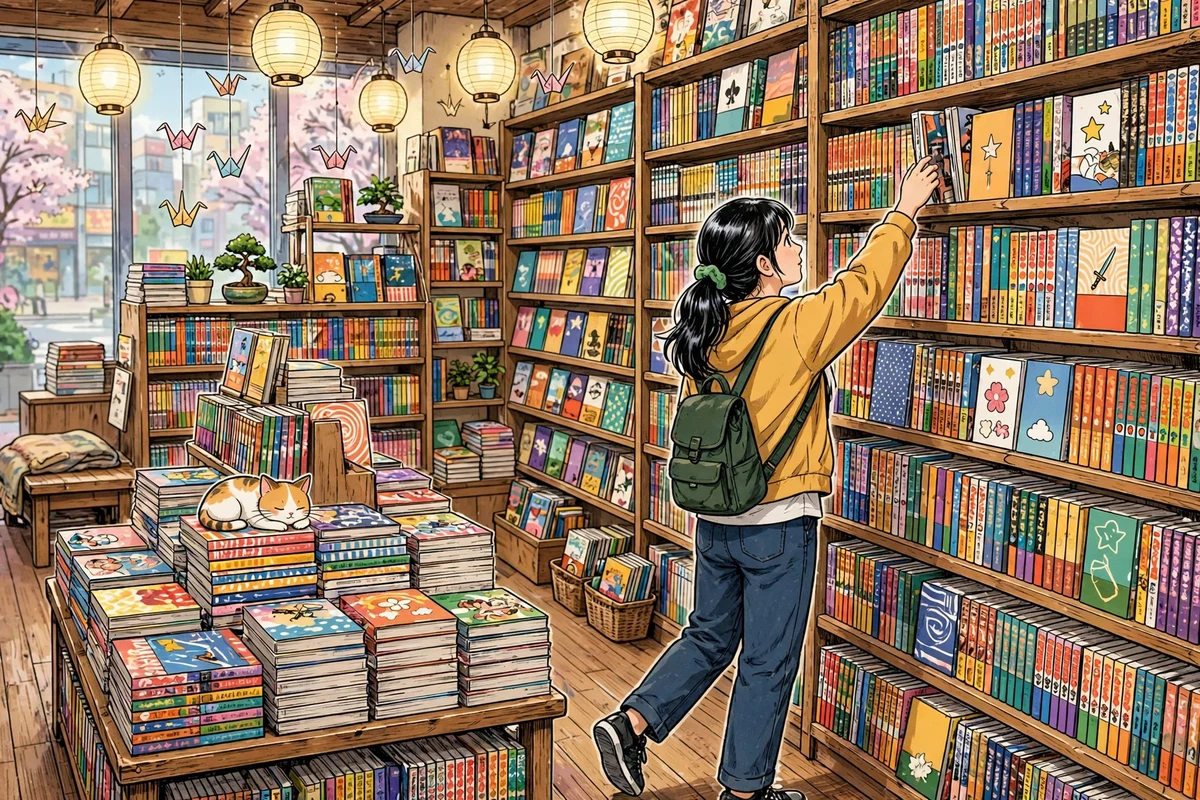
Your local bookshop is the best place to start. Most large bookshops now carry a manga section, and the staff can usually point you towards popular beginner series. Browsing the shelves in person has a real advantage: you can flip through a volume, check the art style, and see whether the story grabs you before you spend anything.
Online shops offer a wider choice and often sell box sets at a discount. If you know which series you want, buying the first three volumes together is a good test. Three volumes is enough to know whether a story is for you, and it costs far less than buying a whole series at once. Libraries are another excellent option. Many public libraries now stock manga, and borrowing lets you sample several series for free before you buy.
Digital reading is worth considering too. Manga apps and e-book stores let you carry hundreds of volumes on a phone or tablet, and many offer the first chapter free. There is no wrong choice, only the one that fits your habits and your budget.
Common Mistakes New Readers Make
The most common mistake is starting with a very long series. Picking up a story with a hundred volumes can feel like homework, and many new readers give up before the story gets going. Start short. A series with five to fifteen volumes is a much kinder introduction, and you can always move on to the long epics once you know what you like.
Another mistake is reading only what is popular. The most talked-about series are famous for a reason, but they are not always the best match for you. A quiet romance or a gentle slice-of-life story might suit you far better than the action series everyone is discussing online. Trust your own taste. The best manga for you is the one you actually enjoy reading, not the one with the biggest fanbase.
Frequently Asked Questions About Japanese Manga
Is Japanese manga suitable for children?
Some manga is made for children and some is very much for adults, so always check the age rating on the back of the book. Publishers print clear age guidance, usually from ages eight and up, through teen and adult ratings. The rating system is reliable, so a quick look at the back cover tells you whether a title suits the reader you have in mind.
Do I need to learn Japanese to enjoy manga?
No. Almost every popular series is published in English, and the translations are generally excellent. Learning a little Japanese can add to the fun later, but it is never required. Start with English editions and enjoy the stories as they are.
Japanese manga rewards anyone willing to give it a chance. Pick a short series in a genre you already like, read it right to left, take your time with the art, and let the story win you over. Your first volume might feel unfamiliar for a few pages, but by the end of it you will probably be reaching for the next one. That is how most manga readers begin, and it is a very good place to start.