Sports manga can make your heart race without you ever leaving your chair. A single page can hold the last ten seconds of a tied game or a serve that decides a championship. You do not need to know the rules to feel it. That is the secret of the genre: it is never really about the score. It is about the people chasing it.
This guide covers what sports manga is, why it works, the main subgenres, the landmark titles, and where to start. New to manga? Our manga genres finder is a good place to begin.
What Is Sports Manga?
Sports manga is any manga built around a sport: basketball, volleyball, football, boxing, cycling, baseball, tennis, and dozens more. The sport gives the story its shape — training, matches, tournaments, rivals — but the real subject is the same: an ordinary person trying to become extraordinary at one thing.
Most sports manga is aimed at young readers, because it runs on school life’s engine: a team, a goal, and a deadline. A weak team has one season to prove itself, and that countdown creates tension on every page. Our shonen vs seinen guide explains how the same idea feels different for younger or older readers, and our complete guide to seinen manga covers the older, grittier end of the shelf.
The genre is also one of the biggest in manga. Sports series regularly top the charts in Japan, and one great series can make a whole sport more popular: volleyball clubs reported a surge of new members after Haikyuu!!, and basketball saw the same after Slam Dunk.
Why Sports Manga Works So Well
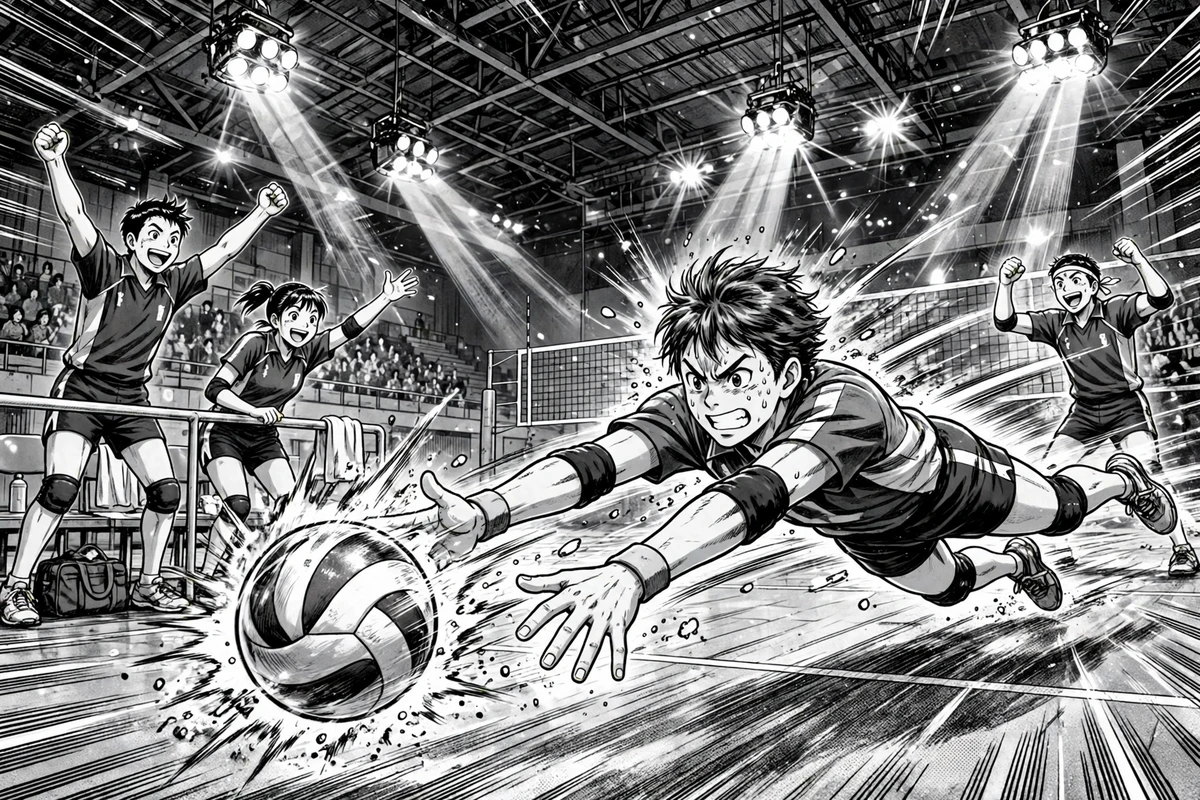
Manga is a perfect match for sport because it controls time. A real match lasts ninety minutes; a manga match can stretch a single second across a full page, freezing the moment the ball leaves the hand.
The second reason is the art. Sports artists draw bodies in motion better than almost anyone in comics: the arc of a jump, the twist of a serve, the strain in a sprinter’s face. Speed lines and impact frames turn a drawing into something that feels fast.
The third reason is structure. A tournament is a ready-made story: every match is a chapter, every round raises the stakes, and every rival is a new problem to solve. The reader always knows what is at stake, which keeps even a long-running series easy to follow.
The Main Subgenres of Sports Manga
Sports manga splits into several subgenres — knowing them helps you pick a series you will enjoy.
Team sports are the heart of the genre: basketball, volleyball, football, baseball. The drama comes from the team itself — rivals learning to trust one another, a weak side slowly becoming a real squad. The best team-sports manga makes you care about all six players on the court.
Individual sports put one person alone against the clock, the course, or the field: running, cycling, tennis, golf. With no team to hide behind, the story turns inward — self-doubt, discipline, the lonely work of getting one second faster.
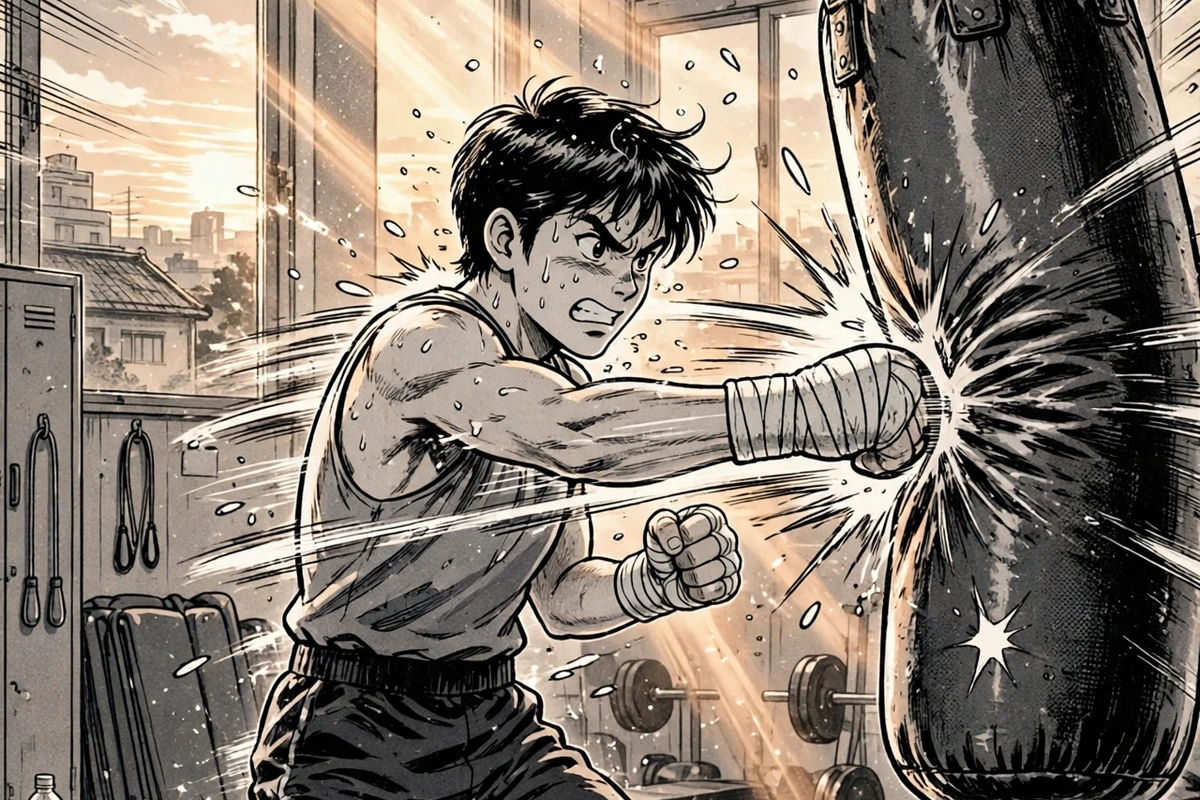
Martial arts and combat is sport at its most physical: boxing, karate, wrestling, mixed martial arts. The ring is small and the stakes are simple, so the drama comes from the fighters themselves: why they fight, what they are afraid of, and what a single punch costs them. The training scenes matter as much as the fights, because that is where the character changes.
Racing covers anything with speed and a finish line: cycling, motor racing, horse racing, rowing. The thrill is momentum — a breakaway, a photo finish, a rival pulling ahead in the last stretch — and part of the fun is learning how the sport really works.
Sports drama vs sports comedy is a split in tone rather than in sport. Drama plays it straight: injuries, defeats, and seasons that end in tears. Comedy keeps the same matches but adds absurd characters and teams that are terrible in funny ways. Many of the best series mix both, so a chapter that makes you laugh can turn serious on the next page.
Landmark Sports Manga Worth Reading
Slam Dunk by Takehiko Inoue is the series that made sports manga huge. A delinquent joins his school team to impress a girl, and slowly discovers he is a natural. It is funny, then serious, then genuinely moving, and its final match is one of the most famous sequences in manga.
Haikyuu!! by Haruichi Furudate follows a short player who refuses to accept that height decides everything in volleyball. It is the friendliest entry point: a warm team, likeable rivals, and matches that teach you the sport without feeling like a lesson.
Kuroko’s Basketball by Tadatoshi Fujimaki takes the opposite route: a nearly invisible player with a strange passing style joins a new team to defeat the five geniuses he once played beside. It is faster and flashier than Slam Dunk, with superhuman moves impossible in real life — and that is exactly the point.
Blue Lock by Muneyuki Kaneshiro and Yusuke Nomura asks an uncomfortable question: what if Japanese football stopped teaching teamwork and started building one selfish, ruthless striker? Three hundred young forwards are locked in a facility, and only one will survive. It is tense, strange, and completely addictive.
Hajime no Ippo by George Morikawa is the definitive boxing manga, running since 1989. A shy, bullied teenager discovers he can punch, and the series follows him from his first gym day through a professional career. The fights are brutal and technical, but the heart of the series is Ippo himself: polite, hardworking, and braver than he knows.
Yowamushi Pedal by Wataru Watanabe is cycling with the same team-spirit engine: an otaku who rides his bike to school for fun discovers he is a natural climber, and joins a racing team. It makes road racing feel as dramatic as any final.
Why It Works Even If You Don’t Follow the Sport
You do not need to know basketball to love Slam Dunk, or volleyball to love Haikyuu!!. Good sports manga teaches you the sport as you read, explaining the rules through a beginner’s eyes. The real hook is the people: someone who is not good enough, working to become good enough, in front of people who are watching. That is a feeling everyone recognises, and the sport is just the clearest way to show it.
Who Is Sports Manga For?
Sports manga suits readers who enjoy momentum, teamwork, and stories about visible effort — a natural next step after action or adventure manga, with the same pace grounded in something real: a game, a season, a team to root for. It is mostly for teenagers, but older readers have plenty to enjoy too: seinen sports series go deeper into injuries, ageing, and the cost of a career built on the body. Our manga age ratings guide explains what the ratings mean, and our complete guide to horror manga covers a very different corner of the shelf.
Where Beginners Should Start
Start with the sport you already like, or the one you are most curious about. Played basketball at school? Start with Slam Dunk. Like volleyball? Start with Haikyuu!!. The familiarity makes the first chapters easier.
If you have no favourite sport, start with Haikyuu!! — the friendliest entry point, an easy team to love, and matches that are exciting from the first volume. If you prefer something grittier, start with Hajime no Ippo, and if you want something stranger, start with Blue Lock. If you are new to manga itself, our beginner’s guide to shonen manga explains the basics, and our manga reading order guide shows how to start without getting lost.
| Subgenre | What it does best | Good starter title |
|---|---|---|
| Team sports | A weak team slowly becoming a real squad | Haikyuu!! |
| Individual sports | One person against the clock or the course | Yowamushi Pedal |
| Martial arts and combat | The ring, the training, and the cost of a fight | Hajime no Ippo |
| Racing | Momentum, breakaways, and photo finishes | Yowamushi Pedal |
| Sports drama and comedy | The same matches, played for laughs or tears | Slam Dunk |
Frequently Asked Questions
What is the best sports manga to start with?
Haikyuu!! is the friendliest first pick: a warm team, rules explained as you go, and exciting matches from the first volume. Slam Dunk is the classic choice if you prefer basketball.
Do I need to know the sport to enjoy sports manga?
No. Good sports manga teaches you the sport through a beginner character, so you learn the rules at the same time as they do.
Is sports manga only for teenagers?
Most of it is written for teenagers, but older readers have plenty to enjoy too — seinen sports series deal with injuries, ageing, and the cost of a career.
Are the matches in sports manga realistic?
It depends. Slam Dunk and Haikyuu!! stay close to the real sports, while Kuroko’s Basketball and Blue Lock deliberately go over the top. Both approaches work.
Conclusion
Sports manga works because it makes effort visible. A training montage, a comeback, a last-second score: the page shows what hard work looks like, and what it costs. The sport gives the story its shape, but the feeling is universal — the desire to be better than you were yesterday.
Start with one title that matches your taste and give it a few chapters. If you find yourself caring about a fictional volleyball team at two in the morning, you have found your genre.