
Mystery manga starts with a question and refuses to let go of it. Who did it? What really happened? Can you trust the person telling the story? A single page can hold a locked room, a missing person, or a smile that does not quite reach the eyes. That is the secret of the genre: it is never really about the crime. It is about the mind trying to solve it.
This guide covers what mystery and psychological manga is, why it works, the main subgenres, the landmark titles, and where to start. New to manga? Our manga genres finder is a good place to begin.
What Is Mystery and Psychological Manga?
Mystery manga is any manga built around a puzzle: a murder, a disappearance, a secret, or a crime that does not add up. Psychological manga goes one step further. The puzzle is not only out in the world, it is inside a character’s head: a memory that cannot be trusted, a motive that keeps changing, or a villain who is winning because they understand people better than anyone else.
The two often travel together. A detective story becomes psychological the moment the detective has to doubt their own judgment, and a thriller becomes a mystery the moment the reader realises the most important clue was hiding in plain sight.
Most mystery and psychological manga is aimed at older teenagers and adults, because it runs on patience and attention. The reader is expected to remember names, dates, and small details — a train timetable, a word spoken twice, a door that was locked from the inside. Our shonen vs seinen guide explains how the same idea feels different for younger or older readers, and our complete guide to seinen manga covers the older, grittier end of the shelf, where much of the best psychological manga lives.
Why Mystery and Psychological Manga Works So Well
Manga is a perfect match for mystery because it controls what you see. A real investigation drowns in detail; a manga investigation shows you exactly the clues the author wants you to notice — and hides the rest in the background, in a panel you will only understand on a second read. A shadowed face, a hand in a pocket, a clock showing the wrong time: the art plants evidence the way a good detective plants questions.
The second reason is the mind game. Psychological manga turns the reader into a participant. You are not just watching a detective think; you are thinking alongside them, testing your own theory against theirs. When the reveal comes, it feels earned, because you were given the same pieces. And when the reveal proves you wrong, it feels even better, because the story was smarter than you were — fairly.
The third reason is tension that never lets up. A mystery is a story with a built-in countdown: every chapter brings the truth closer, and every wrong turn raises the cost of getting it wrong. The reader always knows what is at stake, which keeps even a long-running series easy to follow.
The Main Subgenres of Mystery and Psychological Manga
Mystery and psychological manga splits into several subgenres — knowing them helps you pick a series you will enjoy.
Detective and whodunit is the classic form: a crime, a closed circle of suspects, and a detective who pieces the truth together from small clues. The pleasure is the logic: watching scattered facts snap into a single explanation.
Psychological thriller puts the battle inside the characters. The villain is often brilliant, the hero is often flawed, and the real question is not who did it but why — and whether the hero can stay ahead of someone who thinks three moves in advance.
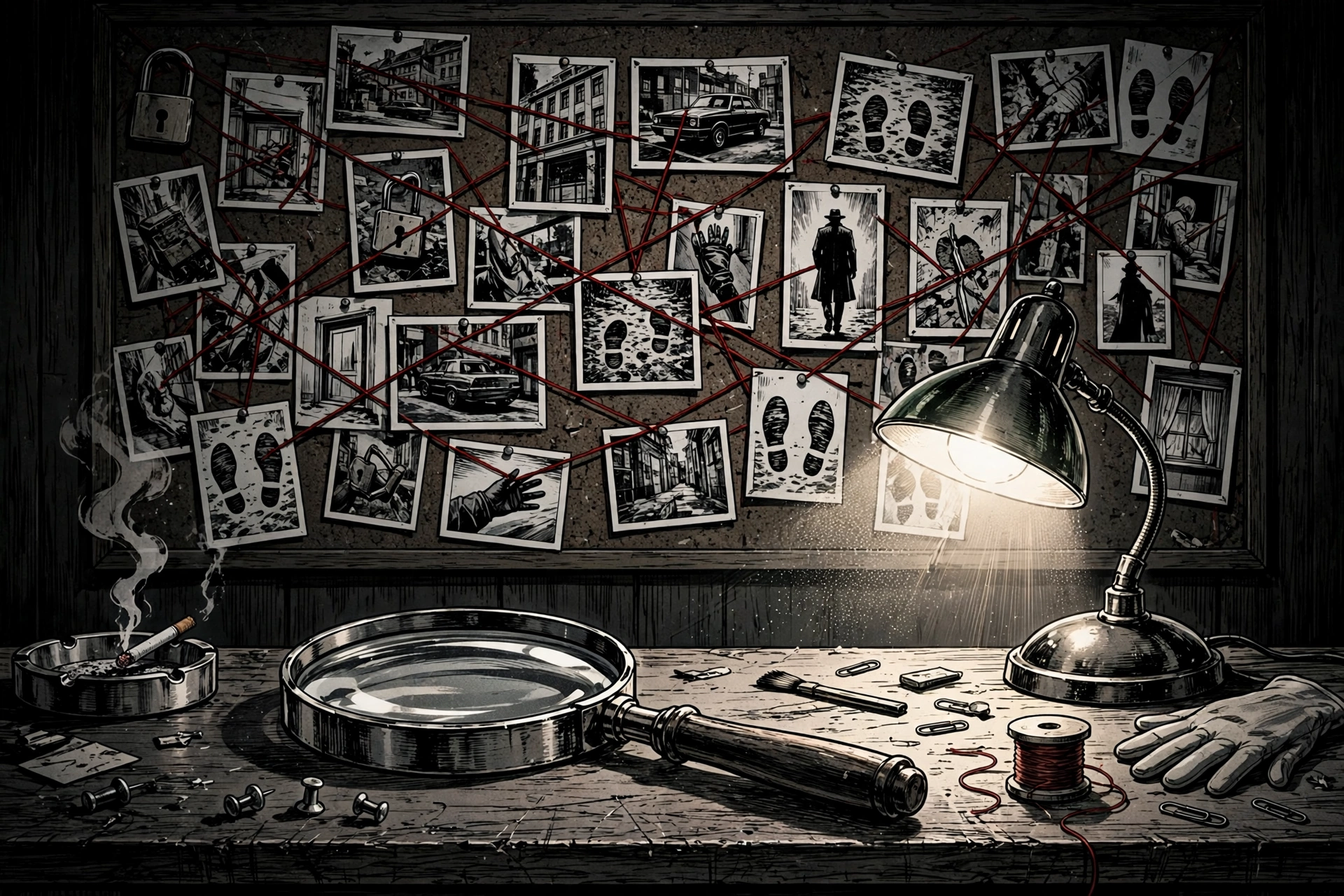
Supernatural mystery adds something impossible to the puzzle: a notebook that kills, a town where time loops, a spirit only one person can see. The rules of the world are part of the mystery, and the detective has to solve the case and the rules at the same time. This is where mystery meets fantasy manga, and the two genres borrow from each other constantly.
Suspense and survival is mystery under pressure. The characters are trapped or racing a clock, and the puzzle has to be solved before the next victim. The tension comes from the danger as much as the deduction, and it overlaps with horror manga whenever the threat turns dark.
Puzzle and logic is mystery as a pure game: locked rooms, coded messages, impossible alibis, and rules the reader can follow along. These series trust the reader’s brain completely.
| Subgenre | What it does best | Good starter title |
|---|---|---|
| Detective and whodunit | Clues that snap into one answer | Detective Conan |
| Psychological thriller | A battle of minds, not fists | Monster |
| Supernatural mystery | An impossible rule to unravel | Death Note |
| Suspense and survival | A puzzle solved under pressure | The Promised Neverland |
| Puzzle and logic | A fair contest with the reader | Erased |
Landmark Mystery and Psychological Manga Worth Reading
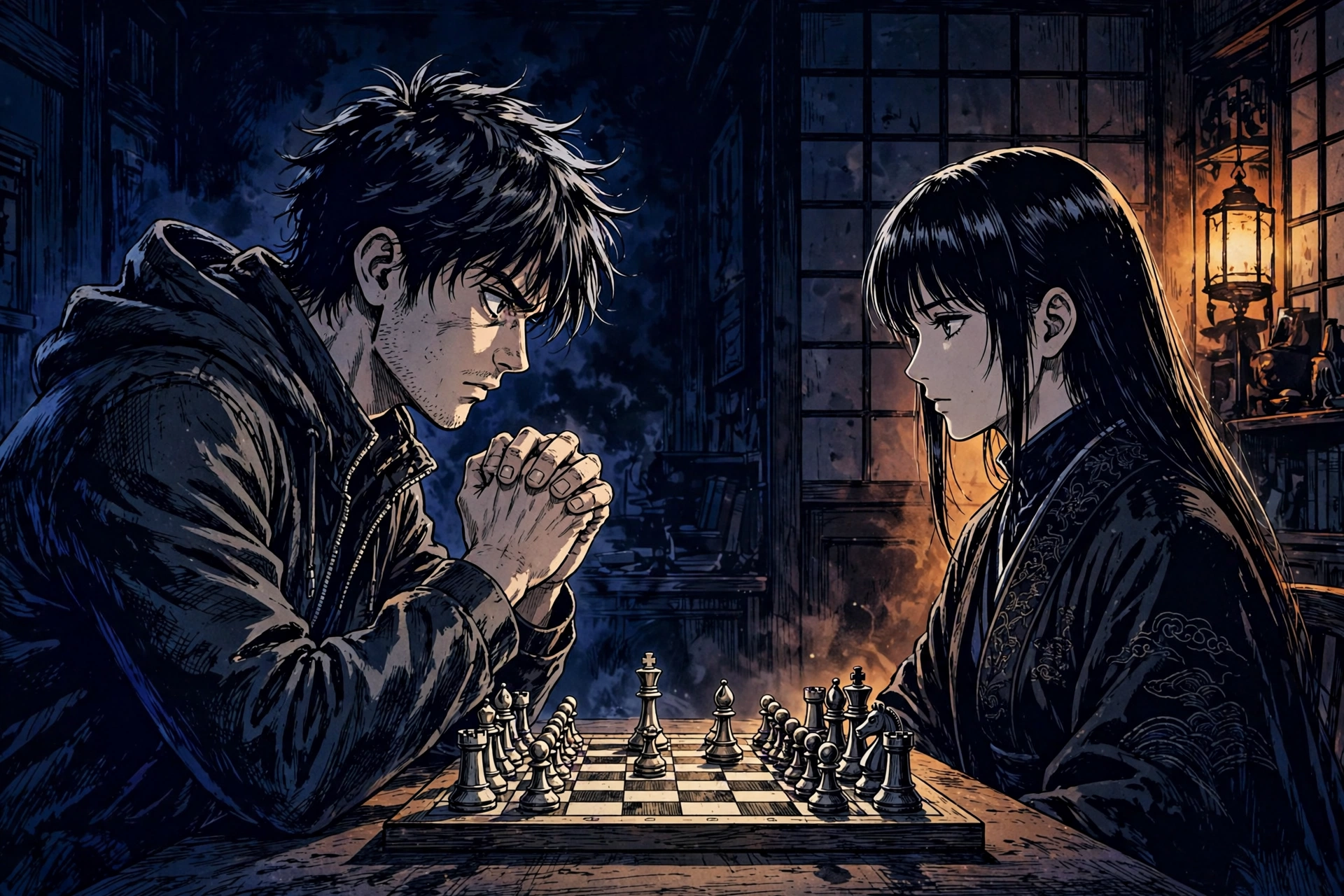
Death Note by Tsugumi Ohba and Takeshi Obata is the series that made psychological manga huge. A brilliant student finds a notebook that kills anyone whose name is written in it, and a strange detective sets out to stop him. It is a chess match between two geniuses, played in public, with the whole world watching.
Monster by Naoki Urasawa follows a surgeon who saves a boy’s life, only to discover years later that the boy grew up to be a killer. It is the most grown-up entry point: a slow, careful thriller about guilt, responsibility, and what one good decision can cost.
Detective Conan by Gosho Aoyama takes the opposite route: a teenage detective trapped in a child’s body solves a new case almost every week. It is the friendliest entry point — clever puzzles, likeable characters, and mysteries you can solve alongside the hero.
The Promised Neverland by Kaiu Shirai and Posuka Demizu asks an uncomfortable question: what if the orphanage you grew up in was a farm, and you were the livestock? Three children have to outthink the adults who run their world, and every escape plan depends on noticing what everyone else missed.
Erased by Kei Sanbe is a time-loop mystery with a heart. A man who can rewind a few minutes to prevent a disaster is thrown back to his childhood, where he has one chance to stop a murder that ruined several lives. It is the most emotional entry point in the genre.
Who Is Mystery and Psychological Manga For?
Mystery and psychological manga suits readers who enjoy thinking as much as feeling — a natural next step after action or adventure manga, with the same pace grounded in something real: a clue, a suspect, a secret to uncover. It is mostly for teenagers and older readers, but lighter detective series are a gentle way in for younger readers, while the darker psychological titles go deeper into guilt and obsession. Our manga age ratings guide explains what the ratings mean, and our complete guide to sports manga covers a very different corner of the shelf — one where the contest is played on a court instead of in a mind.
Where Beginners Should Start
Start with the tone you already like. Want a puzzle you can solve yourself? Start with Detective Conan. Want a battle of wits that never lets up? Start with Death Note. The familiarity makes the first chapters easier.
If you have no favourite, start with Erased — the shortest entry point, a complete story in a single sitting. If you prefer something longer and deeper, start with Monster, and if you want something stranger, start with The Promised Neverland. If you are new to manga itself, our manga reading order guide shows how to start without getting lost.
Frequently Asked Questions
What is the best mystery manga to start with?
Detective Conan is the friendliest first pick: a new puzzle in almost every story, clues you can follow yourself, and a hero who explains his reasoning. Death Note is the classic choice if you prefer a psychological battle.
Do I need to read mystery manga in order?
Most mystery series follow one continuous story, so start at volume one. Detective Conan is the exception: many of its cases stand alone, so you can dip in almost anywhere and still follow the puzzle.
Is psychological manga the same as horror manga?
No. Psychological manga unsettles you by getting inside a character’s head; horror manga frightens you with what it shows. The two overlap — a psychological thriller can be deeply disturbing — but their tools are different.
Are mystery manga suitable for younger readers?
Many are. Lighter detective series are written for younger readers, while darker titles about murder and obsession are aimed at older teens and adults. Check the age rating before handing a series to a younger reader.
Conclusion
Mystery and psychological manga works because it respects the reader. A locked room, a hidden motive, a smile that means something else: the page shows what a careful mind looks like, and what it costs. The puzzle gives the story its shape, but the feeling is universal — the desire to understand what is really going on.
Start with one title that matches your taste and give it a few chapters. If you find yourself re-reading a page at two in the morning because you finally spotted the clue, you have found your genre.